LONDON — BBC budget cuts 2026 have inspired the Prat’s proposed participatory television format: viewers supply the celebrities, costumes, ballroom and applause, while the broadcaster supplies an encouraging email.
Households without a celebrity may nominate a relative who once appeared in the background of a local news report. A staircase is desirable but a reasonably confident step will be considered.
BBC budget cuts 2026 reaches the living-room studio
The National Audit Office’s report on BBC savings says the corporation expects to meet its £700 million savings programme early, while facing a more demanding new £500 million programme. The watchdog raises questions about monitoring the cumulative effects on audiences and services.
That is a finding about financial pressure and oversight. It is not evidence that the BBC has commissioned families to stage ballroom competitions beside their sofas.
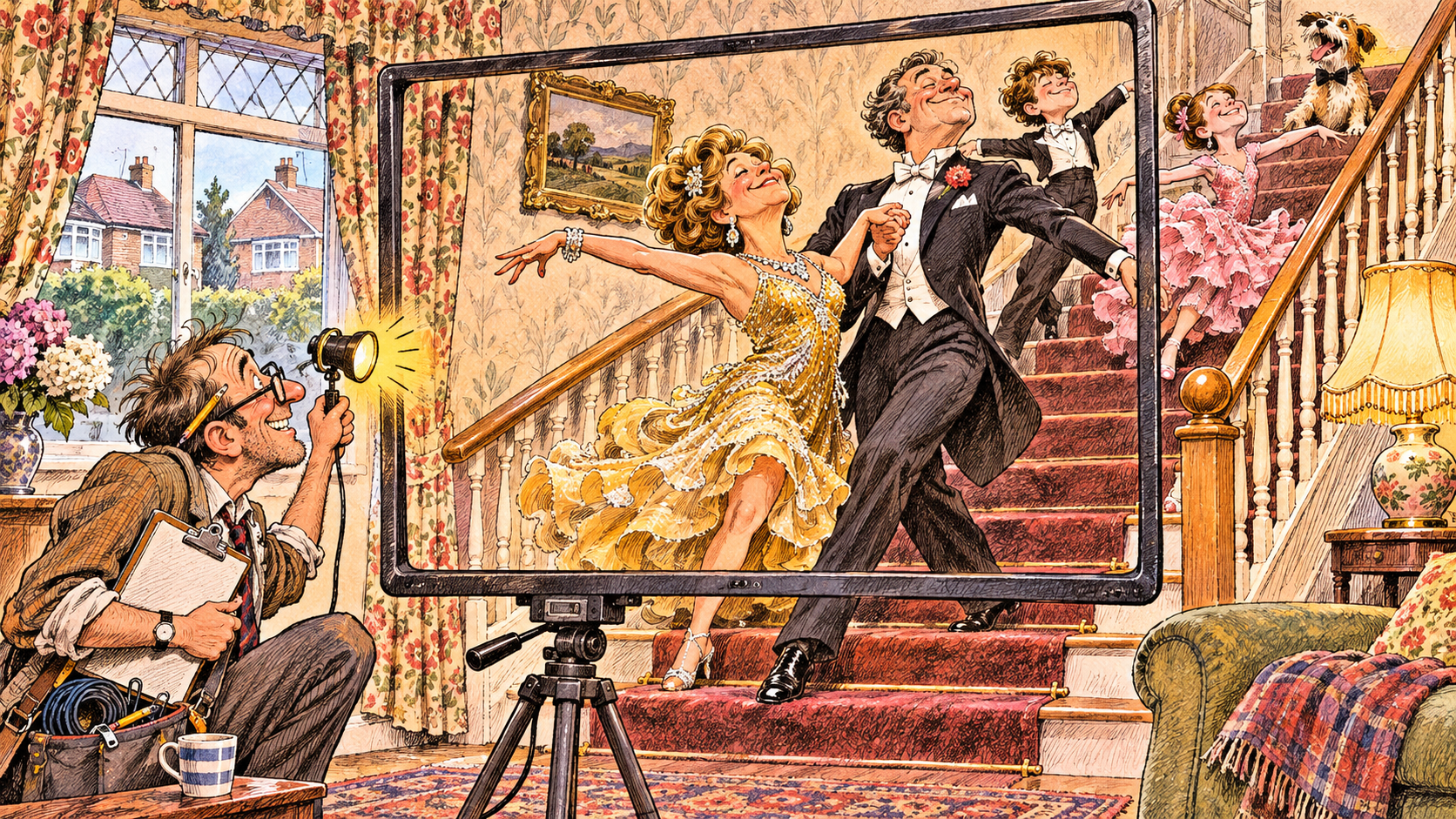
The Prat’s prototype production, Strictly Within Budget, features a father attempting a rumba while his children point torches at him. The dog awards him a deeply sceptical look.
Public service discovers private choreography
Commissioning consultant Imogen Recommission said the format solved several problems.
“Authenticity is expensive when you hire professionals to simulate it. This way viewers can experience genuine disappointment in their own homes.”
Her proposal replaces a celebrity judging panel with whichever neighbour has the strongest opinions. The neighbour’s fee consists of being allowed to finish a sentence.
Reporting on the savings challenge describes further workforce and service pressures. Real staff face consequential changes; an empty studio is funny only until someone has to collect their belongings from it.
The Prat’s comic target is the administrative optimism that calls every reduction a transformation while expecting audiences to discover the missing programme themselves.
The test card requests a character arc
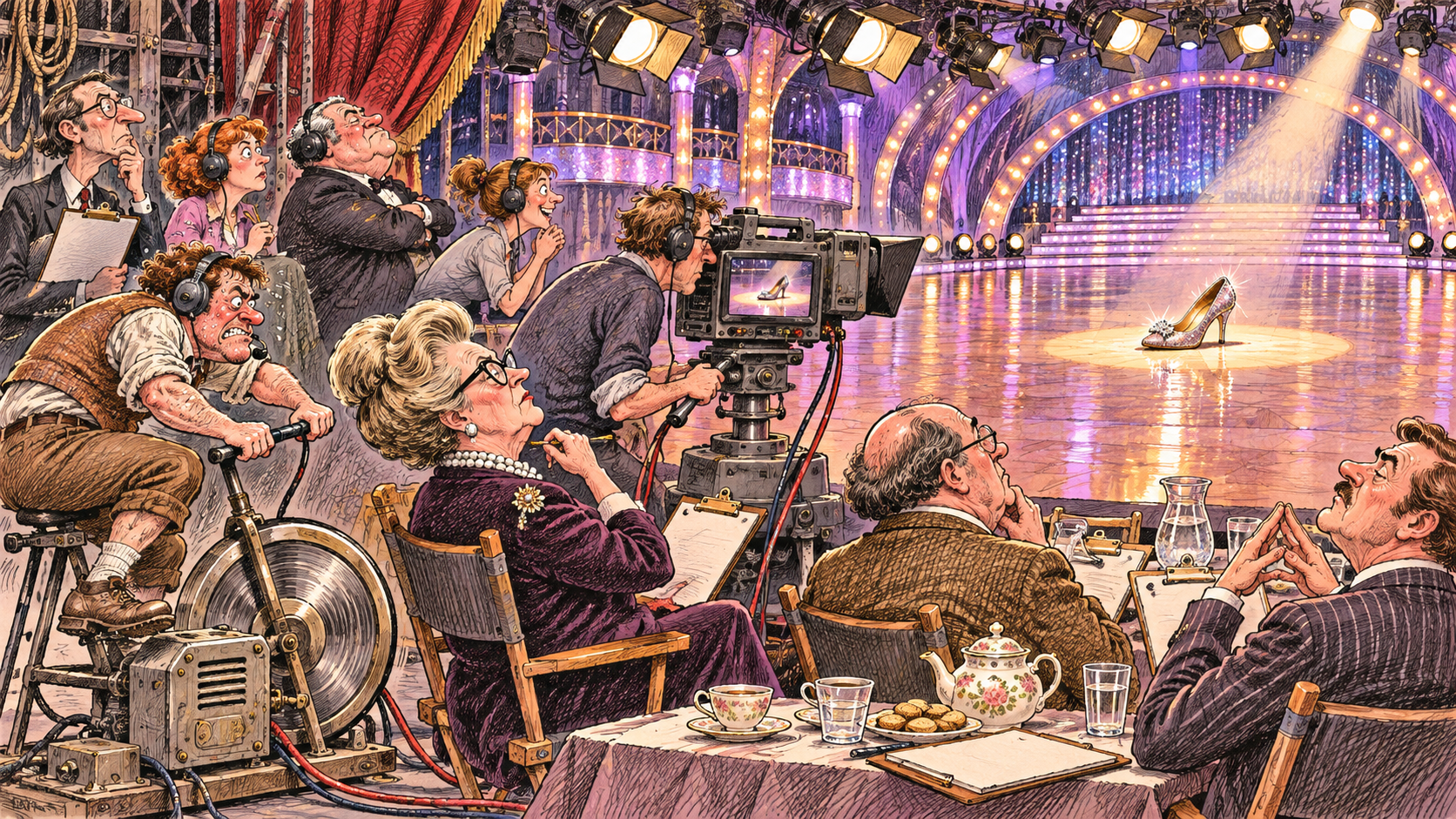
In a neighbouring studio, a producer pitched six episodes following a solitary glittery shoe. Early development notes asked whether the shoe could appeal to younger audiences without alienating Radio 4 listeners.
A second executive proposed a podcast about the commissioning process. It required eleven presenters and a launch event.
At the prototype household, the father wanted to know why he was doing the dancing if he was also paying for the television.
Recommission praised his engagement. “You are no longer a passive consumer.”
“I noticed,” he said, rubbing his knee.
The Prat’s entirely unscientific family poll found that viewers could tolerate a modest set and sensible production costs. They struggled more with being told that less of a favourite service constituted an enhanced experience.
Judge the programme, not the savings slogan
Follow the actual announced service changes and availability. A savings total by itself does not tell you which programmes remain, which move online or how a particular audience is affected.
The prototype’s finale ended when the father tripped over the extension lead.
His neighbour awarded him seven for effort and three for financial sustainability.
The dog remained unconvinced. It had seen this episode before.
Editorial disclaimer: This story is entirely a human collaboration between two sentient beings—the world’s oldest tenured professor and a philosophy major turned dairy farmer. Please supply your own closing credits.

Lowri Griffiths brings a distinct voice to satirical journalism, combining cultural critique with dry humour. Influenced by London’s creative networks, her writing reflects both wit and discipline.
Her authority stems from experience, while trust is built through transparency and ethical satire.