

AI Now Writes Like You, Which Is Why You Sound Like a Council Letter About Bin Collections
Five Observations Before the Algorithm Finishes This Sentence for You
Britons spent a thousand years perfecting the art of saying absolutely nothing with maximum politeness, and now AI has industrialised the process.
AI didn’t just learn how we write. It learned how we apologise, hedge, and passive-aggressively suggest you might want to reconsider.
Somewhere, George Orwell is watching us “leverage key learnings going forward” and updating his notes on doublespeak with a resigned sigh.
Every email now reads like it was drafted by a middle manager at Network Rail who has attended both an unconscious bias workshop and a mindfulness retreat in the same fortnight.
The only thing more hollow than AI-generated enthusiasm is “I hope this email finds you well” arriving at 11:47pm on a Sunday from someone who absolutely does not hope that.
The Great Flattening: When Everyone Started Writing Like a NHS Waiting Room Leaflet
In a study that surprised no one who has received a letter from their local council, researchers have confirmed that artificial intelligence is quietly reshaping how humans write. Not improving it. Not ruining it. Simply ironing it flat, like a duvet cover that no longer has any personality but is technically wrinkle-free.
According to researchers in computational linguistics, AI systems are influencing not merely tone and vocabulary, but the very “intended meaning” of human writing. We did not simply invite AI into our sentences. We gave it a visitor’s pass, a biscuit, and said, “Make yourself at home. I’ll be in the corner using phrases like ‘in today’s challenging landscape.'”
Dr. Reginald Fogg, a linguistics expert at the University of Somewhere Rainy, who once submitted a letter of complaint to the BBC about split infinitives, put it plainly:
“The British public is now writing as though it is permanently on hold with a broadband provider, trying not to escalate the situation.”
The Beige Sentence Rises: How British Prose Became Oatmeal in a Fleece

Researchers at Tech Xplore found that AI writing is “polished and coherent” but eerily uniform. Uniform. The sort of word a school inspector uses. In practice, it means every email now reads like a Terms and Conditions document that has been to therapy.
You’ve seen it:
- “This isn’t just an update. This is a journey.”
- “Going forward, let’s lean into this space.”
- “I just wanted to reach out and touch base.”
No one spoke like this before 2022. “Touch base” was something cricket commentators said. Now it’s your line manager explaining why your pay rise has been “paused for strategic reasons.”
A leaked internal document from a FTSE 100 company — discovered between a hummus wrap and a half-read copy of Atomic Habits in a WeWork kitchen — confirmed the direction of travel:
“All internal communications should reflect a tone of calm, collaborative optimism, as though redundancies are simply a form of life coaching.”
Eyewitness Accounts From the Collapse of Normal Conversation
In a Wetherspoons in Swindon, eyewitness Deborah M. reported a deeply unsettling exchange:
“My husband asked if I wanted another drink, and I said, ‘I’d welcome the opportunity to explore that option.’ I’ve never said anything like that in my life. I usually just say yes and point at the glass.”
Deborah is currently receiving support. She has been advised to watch old episodes of EastEnders and shout at the telly until normal speech patterns return.
Meanwhile, university students across Britain are exhibiting signs of “AI Accent” — a condition in which they preface every remark with “It’s important to acknowledge that…” A second-year student at a red-brick university confessed:
“I tried to text my girlfriend ‘I miss you’ and sent ‘I value the emotional resonance of our ongoing interpersonal dynamic.’ She forwarded it to her mum. Her mum thought I was a solicitor.”
Medical professionals say recovery requires sustained exposure to authentic human speech — such as an argument at a self-checkout, or a Nan who says exactly what she thinks about your new haircut.
The Science of Losing Your Voice Without Raising It Once

Experts, as noted by The Guardian’s AI desk, warn that sustained use of AI writing tools erodes originality and authentic voice. Which means the more AI prose you absorb, the more you produce AI prose, which AI then trains on, which produces more AI prose, which you then absorb.
It is the ouroboros of beige. A perfectly self-sustaining cycle of mild, inoffensive, vaguely encouraging nothingness.
Pew Research found that most people can no longer reliably distinguish AI writing from human writing. This is either a triumph of technology or a damning indictment of how we’ve been writing since at least 2015. Probably both. Simultaneously. Going forward.
A poll conducted by the Institute for Unnecessary Meetings found:
- 68% of British workers now use the phrase “circling back” despite no prior training in aviation
- 71% have written “as per my last email” while experiencing emotions that could not be described as polite
- 100% sound as though they are completing an appraisal form for a job they no longer want
- The remaining 0% work in trades and communicate exclusively via WhatsApp voice note
What the Funny People Are Saying About the Death of Human Writing
“AI has finally achieved what every HR department has been trying to do for thirty years: remove all personality from the workplace.” — David Mitchell
“I asked ChatGPT to write me a stern letter of complaint. It came back measured, reasonable, and constructive. Completely useless.” — Victoria Wood (in spirit)
“British passive aggression took centuries to perfect. AI has made it available to everyone. I’m not sure how I feel about that. I’m sure how I feel about that.” — Stewart Lee
“The saddest thing I ever read was an AI-generated condolence card. It was warm, thoughtful, and hit all the right notes. It was also somehow the loneliest thing I’ve ever encountered.” — Charlie Brooker, possibly
The Tragic Disappearance of the Properly Odd British Sentence
Here is what has actually been lost. The British once wrote magnificently, eccentrically, specifically.
Sentences that veered. That paused for no reason. That included a parenthetical about a dog that had nothing to do with the subject and everything to do with the writer.
We wrote things like: “The meeting was dreadful, though the biscuits were a Hobnob, which partially compensated.”
AI does not do Hobnobs. AI writes as though it has never stood in a drizzle outside a Boots waiting for someone who is, characteristically, twelve minutes late.
Studies confirm that human writing is naturally idiosyncratic while AI clusters into predictable patterns. Which is why your colleague’s email now reads identically to the letter from your letting agent explaining why they’re keeping your deposit.
The Corporate Takeover of British Understatement

Perhaps the most disturbing development is what AI has done to British emotional expression, which was already doing the bare minimum.
Instead of: “I’m absolutely livid.”
We now receive: “I have some concerns I’d like to explore in a structured way.”
That is not a complaint. That is a complaint that has been through mediation, signed a non-disclosure agreement, and agreed to call it a “learning experience.”
An anonymous civil servant revealed:
“We used AI to draft all our public communications last year. Engagement went up seventeen per cent. Nobody could tell the difference. Neither could we, by June.”
The Harvard Business Review documented how generative AI is reshaping creative work across industries. What it did not document is the specific grief of a nation that once produced Wodehouse, Waugh, and Fawlty Towers, now writing internal memos that read like a GP surgery’s social media policy.
How We Got Here: A Thoroughly British Sequence of Events
- Humans write messily, specifically, emotionally.
- AI trains on this and produces something cleaner, flatter, and suitable for all audiences.
- Humans encounter the cleaner version and think, “I should probably sound more like that.”
- Humans begin writing like AI.
- AI trains on the new writing.
- Everyone now writes like a broadband company’s complaints procedure.
Linguists call this “semantic homogenisation.” Everyone else calls it the reason they’ve stopped reading emails properly and just wait for someone to phone and actually say what they mean, which no one does, because we’re British.
The BBC Research & Development unit has begun studying how AI-generated language is filtering into broadcast speech. The results are, as they put it in the executive summary, “a cause for measured reflection.” Which, in BBC, means alarm.
The Future: One Voice for a Nation That Used to Have Millions
If current trends continue, by 2030:
- All complaint letters will begin “I trust this correspondence finds you well” and achieve nothing
- All arguments will be de-escalated before they get interesting
- All pub conversations will include at least one person saying “let’s unpack that”
- The passive-aggressive note left on the communal kitchen fridge will be replaced by a “collaborative reminder with an action-oriented close”
A tech entrepreneur, speaking from a co-working space that used to be a post office, announced with quiet confidence:
“We’re not homogenising human expression. We’re scaling it.”
He then took a call. His ringtone was the default. It suited him.
A Final Thought: The Last Properly Human Sentence in Britain
Somewhere, someone in Britain is still writing a sentence with no strategy behind it. No SEO. No stakeholder alignment. No key takeaways.
It probably contains a digression about a car park.
It almost certainly ends without a clear call to action.
And it is, in its small, scruffy, magnificently pointless way, the last truly British thing left in the language.
Guard it with your life. Or at minimum, do not run it through Grammarly.
Auf Wiedersehen, amigo!
This article was written in collaboration between the world’s oldest tenured professor and a philosophy major turned dairy farmer. Neither has used the phrase “going forward” voluntarily. Researchers studying large language models have identified a measurable homogenisation of written English since the mass adoption of AI writing tools from 2022 onwards. Academic work published through the Association for Computational Linguistics has tracked vocabulary narrowing, tonal flattening, and the sharp rise of certain AI-favoured constructions — including “delve into,” “it’s important to note,” and the word “boundaries” applied to situations that do not involve fences. The British variant of this phenomenon is notable for its collision with pre-existing traditions of institutional vagueness, bureaucratic circumlocution, and the culturally embedded art of saying something devastating without raising your voice. Scholars have described the result as “a feedback loop between human emotional repression and machine emotional neutrality, producing communications of extraordinary smoothness and almost no meaning whatsoever.”

Alan Nafzger was born in Lubbock, Texas, the son Swiss immigrants. He grew up on a dairy in Windthorst, north central Texas. He earned degrees from Midwestern State University (B.A. 1985) and Texas State University (M.A. 1987). University College Dublin (Ph.D. 1991). Dr. Nafzger has entertained and educated young people in Texas colleges for 37 years. Nafzger is best known for his dark novels and experimental screenwriting. His best know scripts to date are Lenin’s Body, produced in Russia by A-Media and Sea and Sky produced in The Philippines in the Tagalog language. In 1986, Nafzger wrote the iconic feminist western novel, Gina of Quitaque. He currently lives in Holloway, North London. Contact: [email protected]
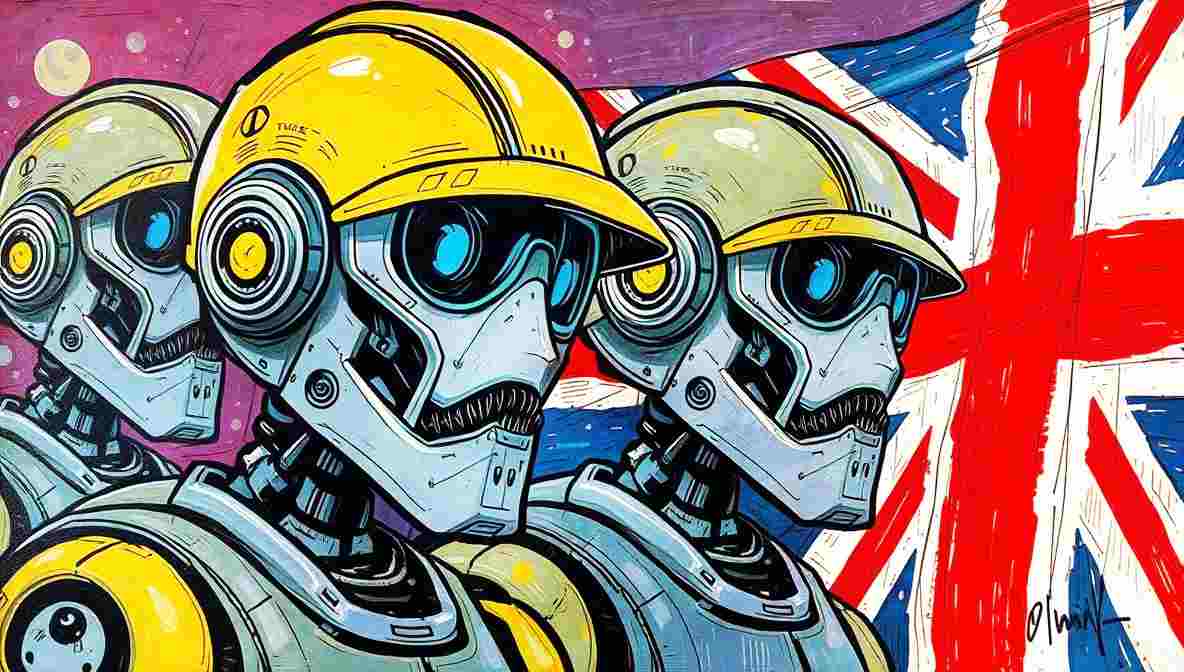


In British comedy, the prat is the character who provides the laughter by being completely oblivious to their own incompetence.