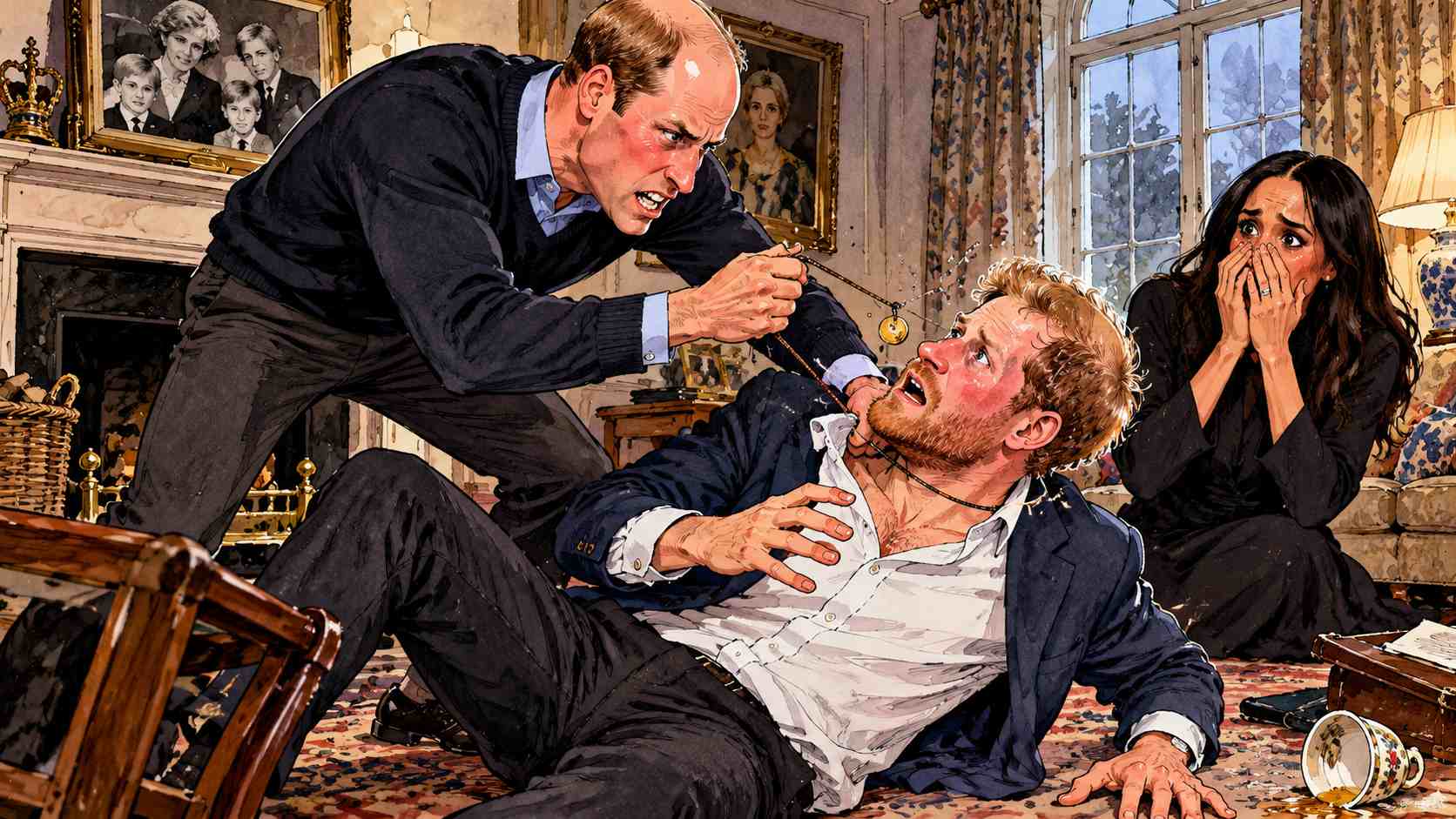
Palace Fears His Deadliest Weapon Is Wanting to Talk to Dad
LONDON – Prince Harry has reportedly launched a secret revenge campaign against the British royal family, according to royal commentators who believe that visiting charities, smiling at members of the public and trying to reconcile with his father add up to an unprecedented threat to the monarchy.
The latest allegations, reported by Yahoo Entertainment, follow the Duke and Duchess of Sussex’s return to Britain and their public appearances in Nottingham.
Unfortunately for the revenge theory, Harry told GQ that reconciliation was his principal objective, according to an October 20 Reuters report on Prince Harry’s efforts to reconcile with his family. This contradiction has put royal experts in the uncomfortable position of deciding whether to believe what a man says or what an anonymous person thinks he might secretly mean.
Palace observers insist the situation is extremely serious. If Harry succeeds in speaking to his father, Britain could witness the first recorded instance of a royal family settling an argument without consulting six constitutional historians and the entertainment editor of the Daily Mail.
Harry’s Revolutionary Plan: Call Dad

According to the latest interpretation of events, Harry’s strategy involves behaving pleasantly toward strangers, supporting charitable organisations and possibly inviting his father to lunch.
Security experts have classified the operation as extremely sophisticated, because it involves no weapons, no political demands and no identifiable objective beyond ordinary family relations.
One royal commentator reportedly spent an entire afternoon examining photographs of Harry smiling in Nottingham before concluding that the expression demonstrated aggressive emotional independence.
“He appears happy without permission,” explained a specialist in hereditary resentment. “That’s a dangerous development for an institution accustomed to approving everything from public engagements to the exact angle at which a duchess may wave.”
The commentator warned that letting Harry enjoy himself could set a constitutional precedent.
“If one prince can be happy without consulting the palace, what happens when the others start asking questions? Eventually somebody may want to choose their own trousers.”
Buckingham Palace has spent centuries developing elaborate procedures for weddings, funerals, coronations and receiving foreign ambassadors. Nobody appears to have drafted a protocol for answering a telephone call from an adult son without treating the conversation as an international summit.
The proposed reconciliation process could therefore require a preliminary committee, three confidential memoranda, a risk assessment and a discussion of whether King Charles should open with “Hello, Harry” or something less emotionally provocative.
Royal Family Reconciliation: The Greatest Enemy Is an Ordinary Conversation
Harry’s alleged campaign looks even more alarming in historical context.
Henry VIII broke with Rome over a marriage. Edward VIII gave up the throne over one. Harry’s apparent revolutionary ambition is to have a normal relationship with the woman he married and occasionally see the family he came from.
Royal historians have struggled to find a suitable precedent.
One researcher suggested that Harry’s behaviour resembled the Peasants’ Revolt, except that nobody was revolting, nobody was a peasant and the principal demand appeared to involve tea.
Another expert compared it to the Gunpowder Plot, though the absence of gunpowder, explosives, conspirators and a plot made the analogy considerably less exciting.
The palace’s unofficial Committee for Preventing Unapproved Affection has reportedly concluded that letting Harry reconcile with Charles could damage the institution’s carefully cultivated reputation for emotional restraint.
The danger is particularly acute because reconciliation might encourage members of the public to believe that wealthy people with several houses, private secretaries and access to professional advisers should be capable of resolving a family disagreement.
This would be an unreasonable expectation. Ordinary British families argue about money, politics, marriages and Christmas arrangements, and they generally resolve these disputes without issuing statements through constitutional lawyers.
The Windsors operate on a different system. A disagreement about who said what at dinner can survive three reigns, generate four biographies and fund the retirement of a newspaper columnist in Surrey.
Fleet Street Warns That Peace Could Be Catastrophic
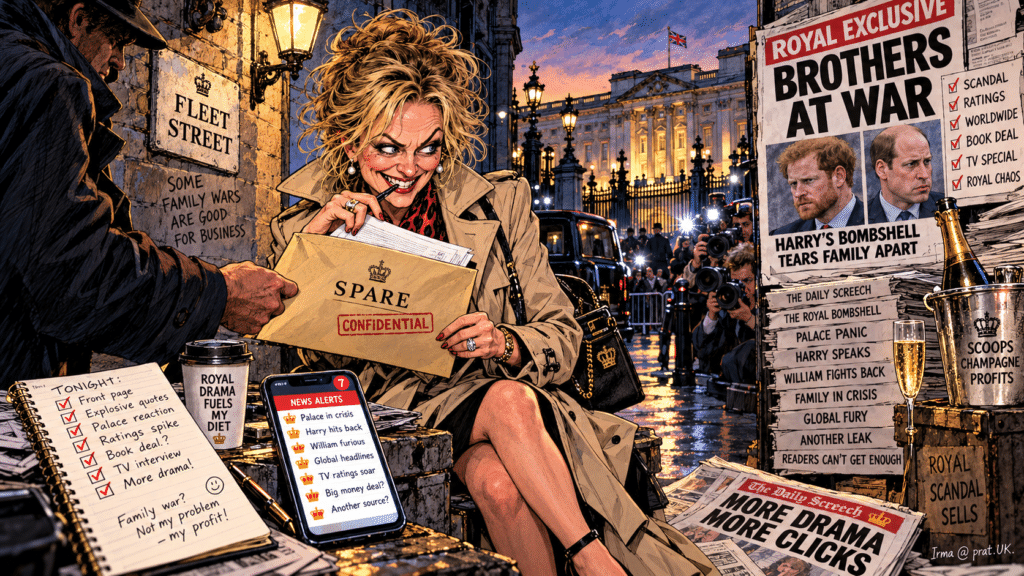
The biggest opposition to Harry’s reconciliation efforts may not come from the palace at all.
It could come from the British royal commentary industry, which has built a thriving economy around explaining why Harry will never reconcile with his father while publishing daily articles about how he might reconcile with his father.
An actual reconciliation would be financially disastrous. Consider what happens if Harry and Charles meet privately, enjoy lunch and decline to discuss it with journalists. There would be no public confrontation, no humiliating snub, no devastated insider and no chance to describe a Christmas invitation as a calculated diplomatic insult.
At least twelve columnists might be forced to learn about economic policy.
A newspaper executive, calculating the commercial implications, reportedly asked whether the family could at least agree to stay angry until after Christmas advertising revenues had been collected.
The proposed compromise would let Harry visit his father but require William to remain sufficiently irritated to guarantee headlines through Easter.
Meanwhile, the public is advised to remain vigilant. Should Harry be photographed entering Buckingham Palace carrying flowers, royal experts may interpret the gesture as a declaration of psychological warfare. If Charles smiles, commentators could identify a secret royal alliance. And if father and son embrace, Britain should prepare for a constitutional emergency.
After all, the monarchy has survived civil wars, abdications, political revolutions and centuries of scandal. Whether it can survive two relatives behaving like adults remains an open question.
Five Humorous Observations
- You ever notice a prince can be photographed smiling and somehow that’s the threat? Nobody ever got ambushed by a guy who looked happy. That’s a terrible villain. You’d never see it coming because it’s just a man being fine.
- The plan is “call Dad.” That’s the plan. In my family that’s called Sunday. Nobody’s brought in a security consultant.
- Royal experts say he could be hiding his true intentions. Buddy, he went on GQ and told them his true intentions. If that’s hiding, I’d hate to see him try to be obvious.
- They had a committee for the phone call. A committee. I’ve seen people order a pizza with less paperwork, and those people were arguing about pineapple.
- The whole industry depends on these two not talking. That’s not journalism, that’s a hostage situation where the hostage is a lunch.
SOURCE: Yahoo Entertainment
Palace sources have not independently confirmed this disclaimer. The alleged revenge plot has not been established as fact, and the newsroom and palace dialogue is comic exaggeration of reported royal tensions. As house legend has it, the world’s oldest tenured professor and a philosophy major turned dairy farmer wrote it together and have not been granted permission to reorganise the royal diary. More UK satire, phone calls welcome.
Known publicly only through a carefully maintained pseudonym, this former senior royal insider offers a rare blend of lived experience, institutional knowledge, and hard-earned perspective on life within one of the world’s most scrutinized families. Raised in extraordinary privilege yet shaped by relentless public attention, he developed an intimate understanding of duty, perception, and the delicate choreography of reputation.
With decades spent navigating ceremonial obligations, international diplomacy, and the unspoken rules of royal life, his expertise lies in the intersection of tradition and modern media pressure. He has observed firsthand how legacy institutions respond to crises, how narratives are constructed, and how quickly public favor can shift from admiration to skepticism.
His insights are informed not only by access, but by consequence. Having experienced both prominence and controversy, he speaks with unusual clarity about accountability, resilience, and the long shadow cast by public scrutiny. Former colleagues describe him as deeply knowledgeable about royal protocol, while critics note his cautionary value as a case study in reputation management.
Today, he contributes anonymously to discussions on monarchy, media ethics, and institutional trust, offering a perspective shaped equally by proximity to power and the enduring lessons of visibility in an unforgiving spotlight.