

New Forest: Ancient Royal Hunting Ground, Modern Tourist Attraction, Permanent Argument About Whether the Ponies Have Right of Way
LYNDHURST — The New Forest National Park — which is neither particularly new (created by William the Conqueror in 1079, so barely broken in) nor strictly a forest in the modern sense — represents one of the most extraordinary survivals of medieval land management in Europe: an ancient system of common rights, open grazing, and commoners’ animals wandering freely across roads, gardens, and pub car parks with the unbothered authority of creatures who have been here considerably longer than the B3056.
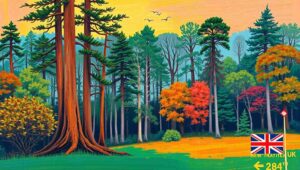
New Forest National Park
- The “New” Forest was created in 1079 by William the Conqueror. It has been the New Forest for 946 years. At what point, you might reasonably ask, does it stop being new? The answer is: never. We are committed to this now. The “New” is doing 1,000 years of heavy lifting and nobody is going to be the one to suggest it sit down.
- New Forest ponies stand in the middle of the A337 with the calm authority of beings who have nothing to do today and all of tomorrow. You will brake. They will look at you. You will attempt eye contact. They will continue chewing. Eventually, in their own time, with no acknowledgement of you, they will move three feet to the left. This is not rudeness. This is the natural order of things, and you are a passing inconvenience.
- The Court of Verderers has met monthly in Lyndhurst since the 11th century. It administers common rights established before the Domesday Book. It has never required a digital transformation strategy, never had a workshop on stakeholder engagement, and has produced consistently good outcomes for 900 years. Whitehall sends consultants to study it. The consultants come back, write a report, and recommend something completely different.
- Pannage is the autumn season when commoners’ pigs are let loose in the forest to eat acorns, which would otherwise poison the ponies. The pigs perform a vital ecological service while having, by all accounts, the best month of their lives. They roll in mud. They eat constantly. They make eye contact with cyclists. It is the closest thing to a working agricultural utopia in modern Britain, and it’s been going since the Normans.
- William the Conqueror created the forest by evicting Anglo-Saxon villagers. His son William Rufus was killed in the same forest in 1100 by an arrow “fired in error” while hunting deer. Historians have spent 900 years calling this “suspicious.” The forest itself maintains a discreet silence on the matter, as forests do, but if you look closely at certain oaks you can almost see them smirking.
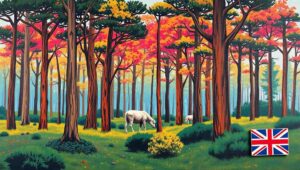
William the Conqueror’s Planning Application Is Still Technically in Force
The New Forest was declared a royal hunting ground by William I in 1079, who reportedly cleared existing settlements to create it — a piece of Norman land management that would not pass modern planning scrutiny, though the results have proved rather more durable than most developments approved with full consultation. It remained a royal forest for centuries, administered under Forest Law, which gave the Crown rights over the deer and the timber while recognising certain ancient rights of local commoners to graze their animals on the open forest.
Those commoner rights — common of pasture, mowing, mast, and fuel — survive today and are administered by the Court of Verderers, a body that has existed in some form since the eleventh century and now represents one of the oldest continuously operating courts in England. It meets monthly in Lyndhurst and manages the affairs of the approximately 500 commoners who still exercise grazing rights on the open forest.

This is, to be absolutely clear, a system of community land management that pre-dates the welfare state by approximately 800 years, functions without centralised bureaucracy, is self-regulating, and produces a landscape of international ecological importance. It is the market and the commons working simultaneously, and it has done so since before Magna Carta. The policy lessons are left as an exercise for the reader.
Aisling Bea once said that “the New Forest is the one place in England where the animals clearly have a better deal than the commuters driving through it.”
The Ponies: Technically Owned, Philosophically Free
The New Forest ponies — a semi-feral breed that has roamed the forest for over a thousand years — are owned by the commoners but live wild on the open forest, rounded up once a year at the Autumn Drift for inspection, branding, and selection of foals for sale. They graze roads, verges, gardens, and pub forecourts with supreme indifference to vehicular traffic, which creates a road safety situation that Highways England has been “addressing” for several decades without notable success.
Collisions between motor vehicles and forest animals — ponies, cattle, donkeys — kill roughly 100 animals per year. Speed limits of 40mph apply across most of the forest roads; compliance with these limits is patchy. The animals lack both the legislative capacity to lobby for better enforcement and the common sense to look both ways, which places the moral burden squarely on the species with the driving licences.
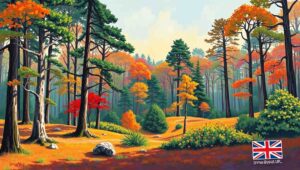
The New Forest Pony Breeding and Cattle Society maintains the breed register and works to preserve what is a genuinely ancient genetic heritage. The ponies, for their part, continue to eat whatever they like and go wherever they please, which is an admirable philosophical position.
The Agistors: The Original Free-Range Rangers
The New Forest National Park Authority, designated in 2005, co-manages the forest alongside the Forestry England, the Verderers, and the commoners — a governance arrangement of sufficient complexity that it requires genuine expertise to understand and genuine patience to navigate. The Agistors are the Verderers’ field officers, responsible for managing the welfare of the animals on the open forest, conducting the drifts, and generally operating as the human interface between the ancient common rights system and the twenty-first century.
They are, in essence, the world’s oldest rural patrol service — a private system funded by commoners’ marking fees that has been managing a landscape of 57,000 hectares without requiring a public sector reorganisation every five years. Remarkable.
Lyndhurst: The Capital of Somewhere That Doesn’t Quite Need a Capital
Lyndhurst, regarded as the “capital” of the New Forest, is a village of approximately 3,000 people that contains the offices of the National Park Authority, the court house where the Verderers meet, a church with a Pre-Raphaelite window, and traffic on summer weekends that suggests the A35 was not designed for the volume of people who have all simultaneously decided to drive to the forest for a cream tea.
The New Forest attracts approximately 13 to 15 million visitor days annually, making it one of the most visited national parks in England — not bad for a forest created by a French-speaking Norman king who has been dead for nine centuries and whose original management philosophy was “keep the deer for the Crown and fine anyone who takes one.”
The New Forest National Park, designated in 2005, covers approximately 570 square kilometres in Hampshire and a small part of Wiltshire. It is one of the largest remaining tracts of unenclosed pasture land, heathland, and forest in the heavily populated southeast of England. The forest’s unique character derives from its ancient system of common rights, exercised by around 500 registered commoners whose semi-feral animals — approximately 5,000 ponies, cattle, donkeys, and pigs at various seasons — graze the open forest. The Court of Verderers, meeting monthly in Lyndhurst, has administered common rights since the medieval period. The area is also important for lowland heathland habitat, containing significant populations of all six native British reptile species.
Disclaimer: The London Prat is British satirical journalism at its most responsibly irresponsible, produced by the world’s oldest tenured professor and a philosophy major turned dairy farmer — who once reversed into a New Forest pony at 2mph and considers themselves lucky to be here. Satire throughout. The ponies have heard worse. Auf Wiedersehen, amigo!

Mei Lin Chen is a student writer whose satire explores identity, modern culture, and social nuance. Her work reflects academic curiosity and engagement with London’s diverse perspectives.
Expertise is growing through study and practice, while trust is supported by clear intent and responsible humour.



Satire laat je ongemakkelijk lachen.
British people will never say “I’m angry”; they’ll say “I’m a bit annoyed” and then proceed to be absolutely furious for the next decade.
The footnotes are better than most published articles. Should be standalone.
El cariño que hay debajo de la crítica es esencial. Solo escribes así de bien sobre algo que amas.