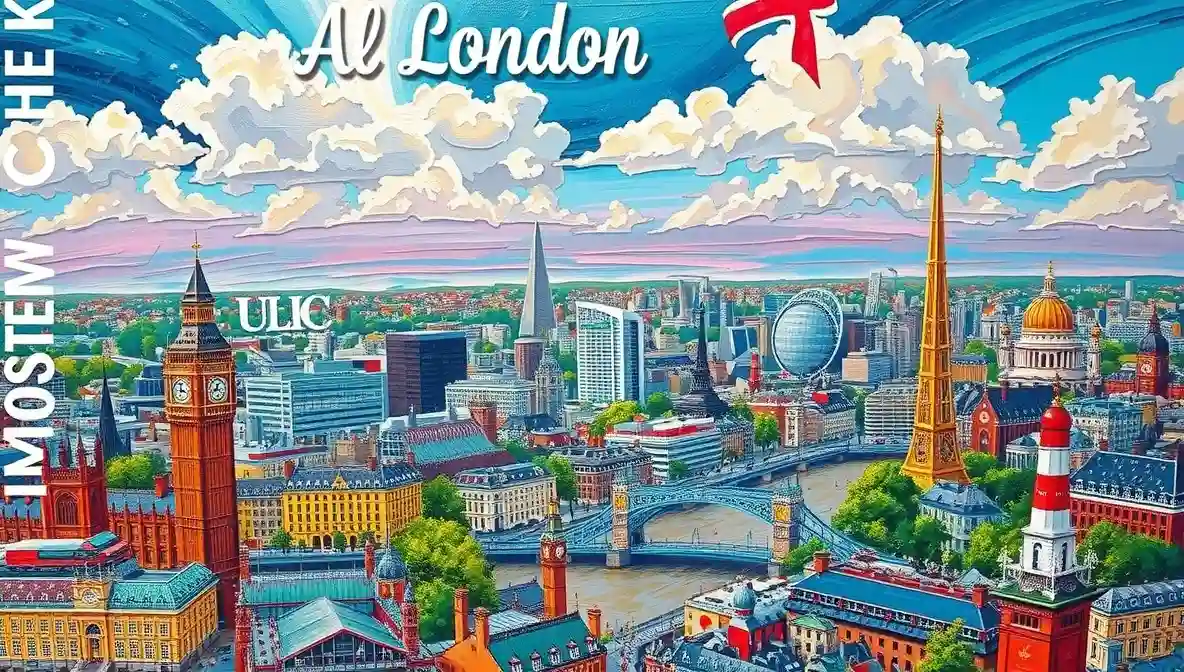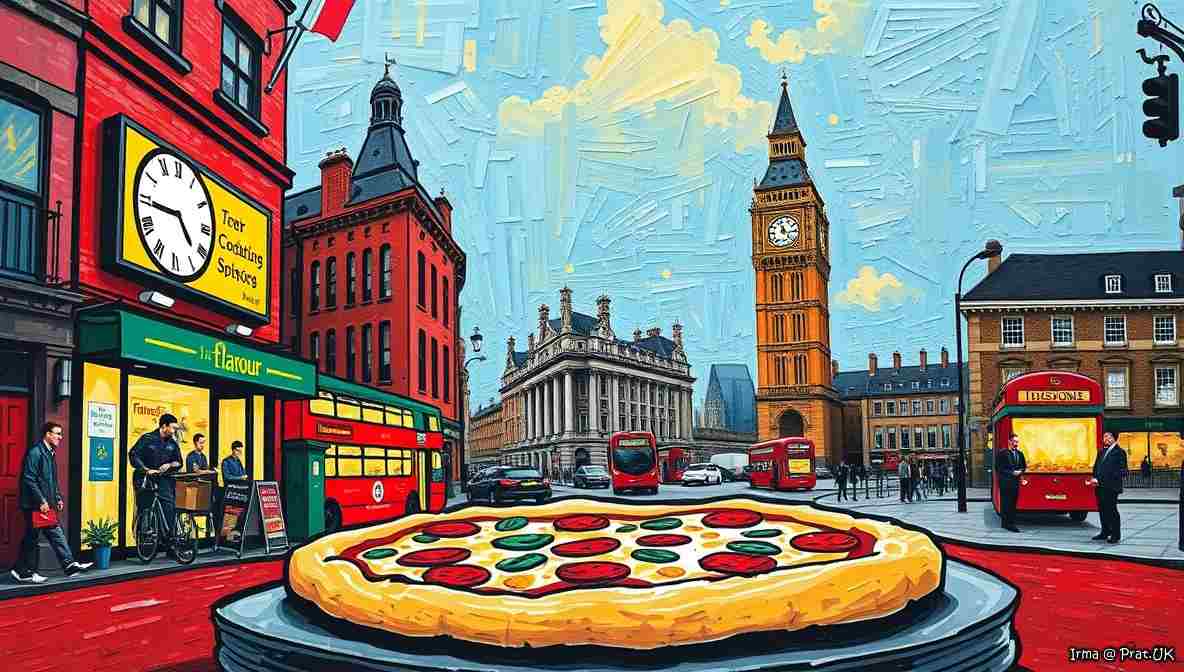
London Declares Itself World Pizza Capital Moments After Discovering Food With Flavour
Londoners spent 400 years boiling meat into emotional punishment, then suddenly discovered mozzarella and now behave like Renaissance philosophers every time dough rises correctly.
Britain declaring itself the world capital of pizza feels a bit like a labrador announcing it now makes better espresso than Rome because it once sniffed a truffle in Surrey.
The average London pizza now costs £21, which experts say is “authentic Italian pricing” if the pizza is served inside Heathrow Terminal 5 during a rail strike.


Italians reportedly remain calm about London’s pizza success because they understand the British will eventually put beans, truffle oil, or “deconstructed Yorkshire nduja” on it and ruin the momentum naturally.
London food critics now use phrases like “fermentation architecture” and “crust tension,” proving Britain can turn absolutely anything into a property seminar.
The city of London erupted into self-congratulatory ecstasy this week after international food writers, pizza judges, and at least three men named Luca confirmed that some of the world’s best pizza can now be found in Britain’s capital. For many Britons, the announcement marked the first time in recorded history that the words “British cuisine” and “global admiration” had appeared in the same sentence without the phrase “as a warning.”
According to recent rankings and travel coverage, London now hosts several internationally celebrated pizzerias, including Napoli On The Road, which has earned global acclaim and top European rankings. Naturally, the city reacted with complete emotional stability.
Within hours of the reports, Shoreditch residents were seen speaking about sourdough hydration percentages with the intensity of Cold War nuclear analysts. One man wearing a £470 workwear jacket explained that modern pizza “isn’t food anymore.”
“It’s narrative fermentation,” he whispered while cutting a pizza with scissors the size of garden shears.
Britain Finally Beats Italy at Something Italians Invented
The psychological impact across Britain has been profound. For decades, British tourists travelled to Italy pretending to enjoy tiny espressos while secretly longing for chips and emotional reassurance. Now, Londoners insist they no longer need Naples because “the pizza scene in Peckham has evolved.”
One food journalist described modern London pizza as “post-Neapolitan.” Another called it “Bri-talian.” Nobody knows what that means.
Professor Elaine Wethersby of the Institute for Advanced Carb Studies claims Britain’s pizza revolution follows a familiar national pattern. “We did this with curry,” she explained. “First Britain mocked foreign food. Then Britain ate foreign food. Then Britain announced it had improved foreign food. This is basically the Empire but with burrata.”
A recent YouGov-style survey conducted outside Liverpool Street Station found:
- 61% of Londoners now believe pizza should be paired with natural wine and a lecture about regional flour.
- 28% admitted they no longer trust anyone who says they enjoy Pizza Hut.
- 11% still believe oregano is “too spicy.”
Historians note the situation is roughly equivalent to the British Army winning a fencing tournament using a bread knife, then immediately publishing a memoir about it.
London Pizza Shops Now Require Booking, Therapy, and a Small Mortgage
The transformation of pizza into luxury cultural performance has shocked older Britons. “I remember when pizza meant sadness and a coupon,” said 63-year-old Keith Bromley of Croydon. “Now some bloke with a moustache explains the emotional journey of tomatoes before charging me £26.”
Experts confirm London’s pizza scene has evolved into an elaborate social ranking mechanism. 50 Top Pizza — widely regarded as the Michelin Guide of the pizza world — has handed London four of its top ten global chain slots in 2025. Da Michele, Big Mamma Group, Pizza Pilgrims, and Berberè all ranked in the global top ten. Four. In London. A city that invented the Ginsters pasty.
The social taxonomy is now firmly established:
- Neapolitan pizza means you work in media.
- Detroit-style pizza means you own expensive trainers.
- Roman pizza means you have opinions about Scandinavian lighting.
- Chicago deep dish means you are American and emotionally fearless.
Meanwhile, traditional British cuisine has reportedly entered witness protection. One anonymous government staffer admitted Whitehall is “concerned” that younger Britons now identify focaccia as “traditional London street food.” “We’re losing baked potatoes,” the official warned quietly.
Italians Watching Britain Discover Pizza Like Parents Watching a Toddler Hold a Chainsaw
Italian reaction has been mixed. Some celebrated the global appreciation of proper pizza craftsmanship. Others appeared visibly unwell after hearing the phrase “London-style pizza.”
In Naples, local pizza maker Antonio Ferrara reportedly stared silently into the sea for eleven minutes after reading about hot honey pepperoni pizza being described as “a spiritual urban experience.” “He survived pineapple,” said Ferrara’s cousin. “But this Bri-talian thing nearly finished him.”
Still, London pizza chefs continue collecting international awards. Michele Pascarella, founder of Napoli On The Road, was named the world’s best pizza maker by 50 Top Pizza in 2023. He started the whole thing from a three-wheeled Ape Piaggio truck selling wood-fired pizzas at farmers’ markets. His individual pizza, Ricordi d’Infanzia — literally “Childhood Memories” — then won Best Pizza in the World 2025. Britain has embraced these victories with its traditional modesty.
One tabloid immediately declared: “WE BEAT ITALY AT DOUGH.” Another simply printed a photograph of a pizza next to Winston Churchill.
The Times ran the headline: “Forget Naples. The world’s best pizza is made in Chiswick.” Chiswick. A suburb best known for its roundabout and mild property resentment.
What the Funny People Are Saying
“British people discovering pizza is like the Vikings discovering scented candles. Suddenly everybody’s emotional and nobody wants to raid anyone.” — Lee Mack
“London will take any working-class food and eventually serve it on a wooden board under Edison bulbs with a paragraph about its provenance.” — Milton Jones
“You know pizza’s gone posh when the waiter starts describing the mozzarella’s childhood. In Italian.” — Jo Brand
“I had a London pizza so artisanal the chef wouldn’t let me eat it until he’d finished explaining the tomato’s personal growth journey. Which, to be fair, was more backstory than most BBC dramas.” — Ricky Gervais
Pizza Has Become Britain’s New Religion

Sociologists now believe pizza may permanently replace football as London’s dominant civic identity. Entire friendship groups are reportedly collapsing over crust philosophy. Couples in Hackney have begun attending “pizza compatibility counselling.” One East London man filed for divorce after discovering his wife folds New York slices “incorrectly.”
The Bank of England is even rumoured to be studying pizza inflation as a new economic indicator. “If truffle burrata exceeds £31,” one economist explained, “society may simply dissolve.”
Meanwhile, tourists continue flooding London pizza shops with stunned expressions usually associated with witnessing paranormal activity. “You’re telling me Britain invented warm beer, but THIS is incredible?” asked one confused American visitor while holding a marinara slice like sacred scripture.
Historians say the entire situation remains deeply unnatural but oddly impressive. After centuries of being mocked for boiled vegetables and beige buffets, Britain may finally have created the impossible: a food scene Italians complain about constantly while secretly respecting. Which, culturally speaking, is basically a Michelin star.

There’s a word for what London has achieved here. The Italians don’t have one yet. But give it six months and Peckham will have a restaurant named after it.
Disclaimer: This satirical article was produced through a human collaboration between the world’s oldest tenured professor and a philosophy major turned dairy farmer who once ate a supermarket frozen pizza during a power outage and described it as “a hauntingly British culinary experience.” The Institute for Advanced Carb Studies is not a real institution, though several universities are considering it. No tomatoes were emotionally manipulated during publication. Auf Wiedersehen, amigo!
Ten Observations About London Becoming the “World Pizza Capital” 🍕🇬🇧
- Londoners discovered mozzarella five minutes ago and already explain pizza with the confidence of men discussing offshore tax law.
- British cuisine spent centuries apologising for flavour, then one wood-fired oven opened in Shoreditch and suddenly everybody’s talking about “crust philosophy.”
- A London pizza now costs £21, which means Britain finally found a way to make dough participate in the housing crisis.
- Italians watching London celebrate pizza is reportedly similar to watching a Labrador earn Employee of the Month at Ferrari.
- London food critics use phrases like “fermentation architecture,” which sounds less like dinner and more like a TED Talk hosted inside a warehouse full of bicycles nobody rides.
- Britain took pizza, added truffle oil, hot honey, emotional storytelling, and a waiting list longer than NHS dentistry. That’s not cuisine. That’s cultural revenge.
- Somewhere in Naples, an old Italian chef is staring silently into the sea because a man in Peckham described pepperoni as “an urban spiritual journey.”
- Londoners now book pizza reservations the way medieval Catholics booked pilgrimages. “We can get you a table in October, but only if you respect the tomato emotionally.”
- The British Empire used to export tea and naval dominance. Now it exports £26 pizzas served on reclaimed wood next to a candle named “Tuscan Rainwater.”
- Britain declaring itself the pizza capital of the world feels exactly like a man who just bought his first guitar immediately correcting Eric Clapton’s finger placement.

Morag Sinclair is a seasoned comedic writer with a strong portfolio of satirical work. Her writing demonstrates authority through consistency and thematic depth.
Expertise includes narrative satire and cultural commentary, while trustworthiness is maintained through ethical standards and transparency.