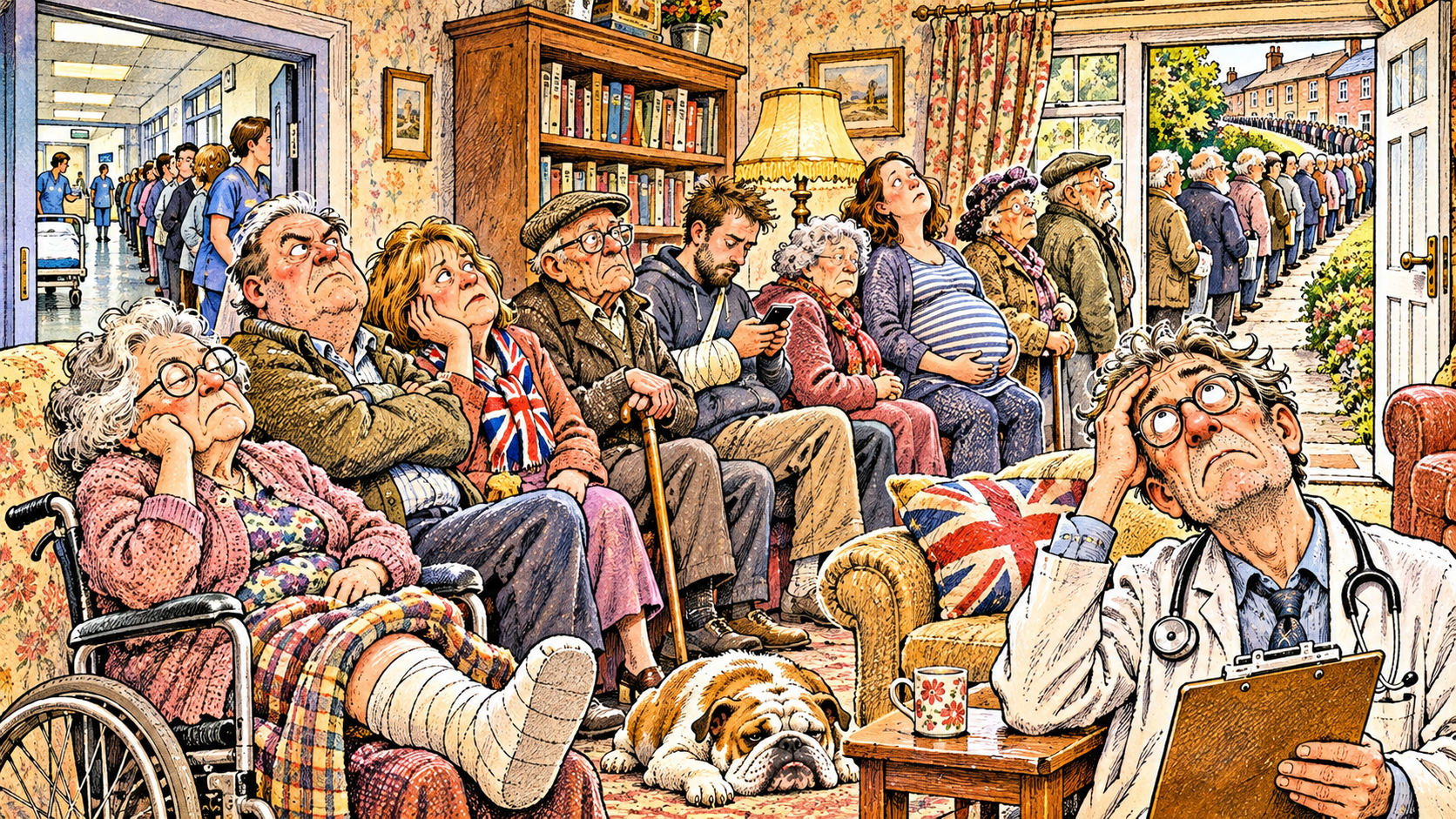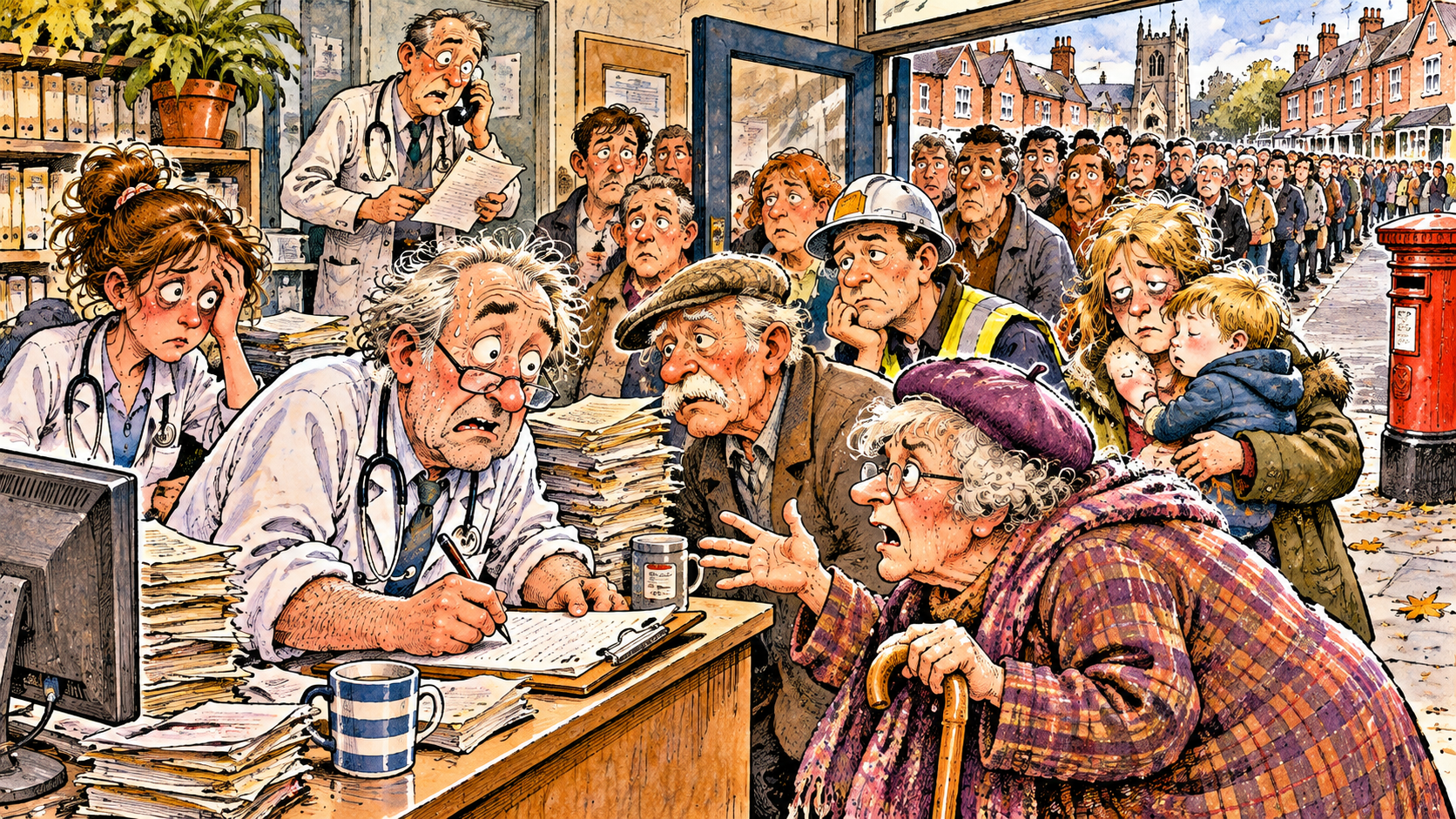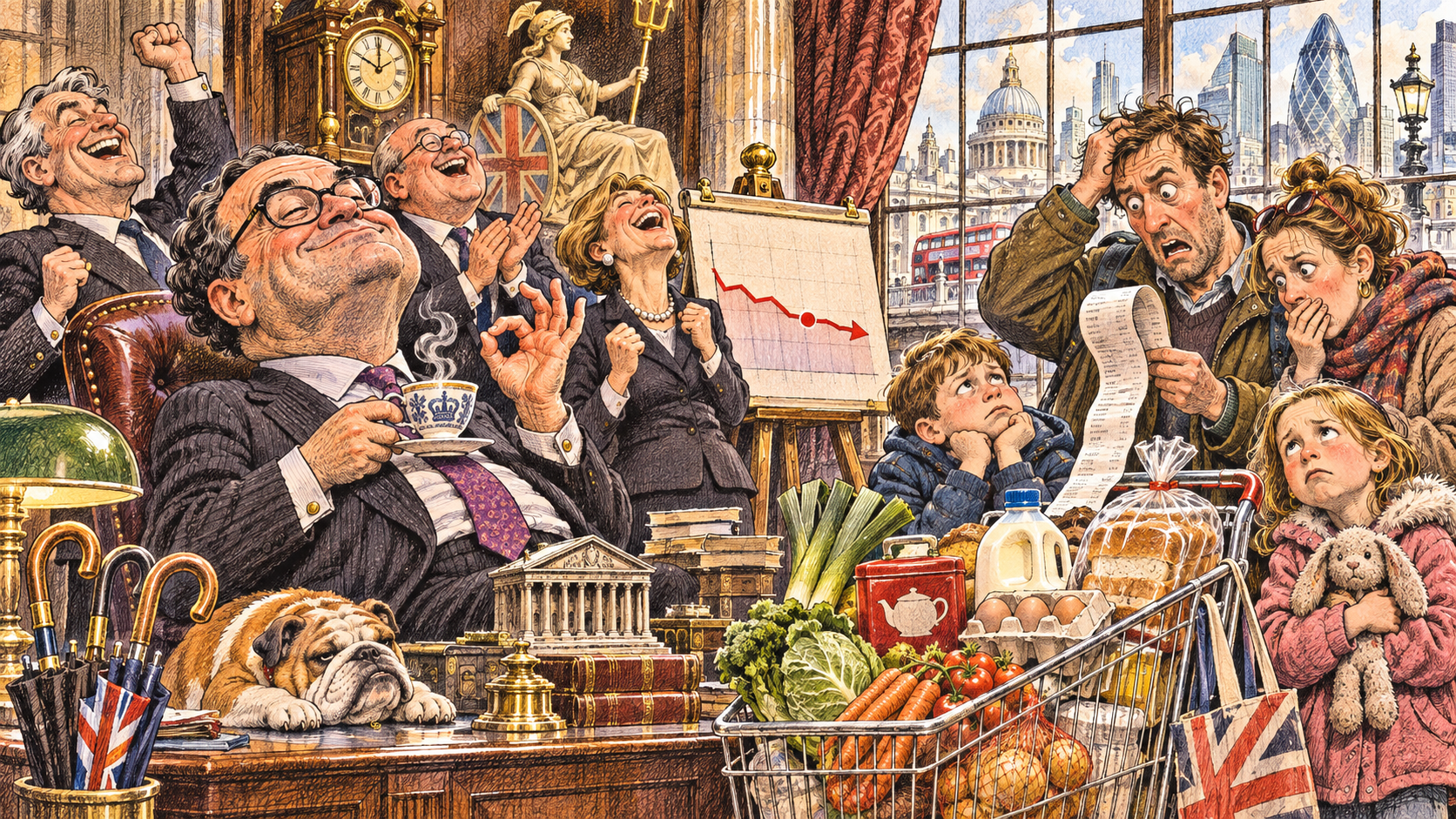
LONDON — A new chapter in British public administration has opened with the discovery that UK inflation forecast 2028 can be explained in ordinary English only after the ordinary English has been reviewed by three committees. The policy is real enough to inspire headlines; the following witnesses and official conversations are satirical.
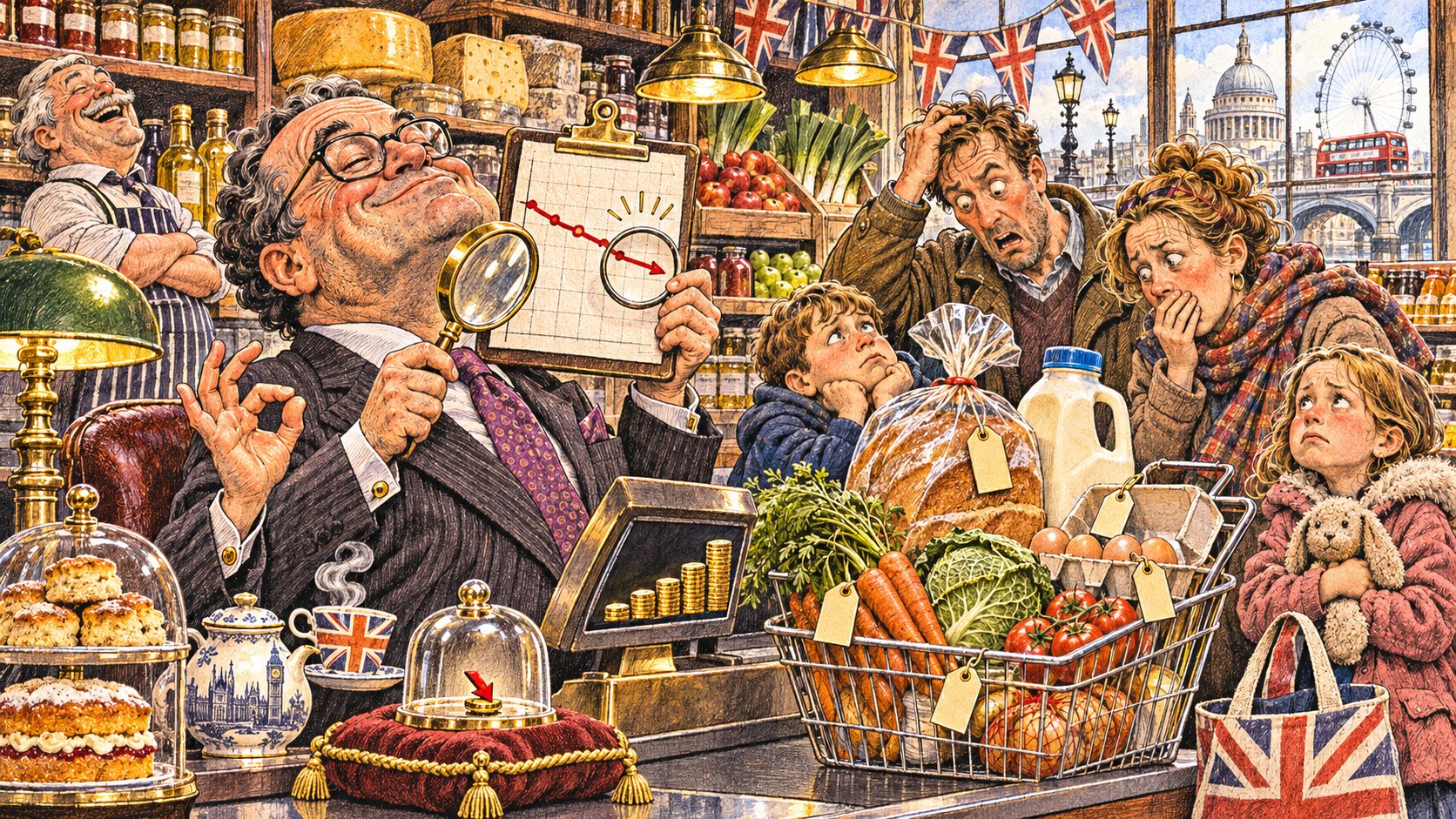
The announcement was greeted with the traditional national response: families looked at the numbers, looked at the small print and asked whether anybody in charge had tried using the system themselves. Ministers described this as constructive engagement. One adviser called it a breakthrough because nobody had yet thrown a chair.
A senior official, invented for this report but frighteningly plausible, said the key to success was ‘putting the public at the heart of the process’. When asked why the public had spent most of the process in a queue, he explained that the heart was an important organ and could not be expected to move quickly.
UK inflation forecast 2028: the announcement and the arithmetic
There is a serious policy question underneath the pantomime. The government must explain who pays, who benefits, what changes and when. A press release is not a delivery plan, although Whitehall has occasionally treated the two as interchangeable, rather like a train timetable and a train.
Consider the humble price index. In the hands of an ordinary citizen it is a practical thing. In the hands of a policy team it becomes a stakeholder engagement platform with a quarterly performance framework and a logo that costs more than the original problem.
A completely imaginary focus group of twelve families was asked to rank its priorities. Eleven requested a service that worked. The twelfth wanted a biscuit and was immediately appointed chair of the oversight board. Officials declared the result statistically encouraging, citing a 100 per cent increase in people willing to attend a second meeting if biscuits were supplied.
Experts agree that a spreadsheet is not a substitute for reality
The fictional Professor Nigel Ledger, chair of the Institute for Measuring Things That Are Already Obvious, said the country suffered from ‘announcement inflation’. He defined it as the steady rise in the number of promises required to purchase one functioning outcome. Unlike monetary inflation, he added, announcement inflation is rarely mentioned by the Bank of England because it cannot be raised or lowered with interest rates.
There is a difference between a policy target and an observed result. Targets can be printed on a banner; results must survive contact with families, budgets and the calendar. A target that survives only in a ministerial speech is not a target. It is a decorative sentence.
The government’s plan meets the British public
One imagined resident explained the difficulty: ‘Every time they say they have simplified something, I receive another password and a letter telling me not to reply to the letter.’ Another said the best thing about the proposal was that it might finally give economists something to do between consultations. Both declined to join a working group, citing prior experience.
The official response was a masterclass in measured reassurance. The problem, the invented spokesperson insisted, was not the problem itself but a lack of public understanding of the framework for addressing the problem. To correct this, the department would produce an accessible 86-page guide with a seven-page summary and an online portal that closes for maintenance on Sundays.
The unintended consequences nobody put on the poster
Suppose the reform saves every household five minutes a week. That sounds small, but across millions of households it adds up. Now suppose citizens spend forty minutes proving they qualify for the five-minute saving. Suddenly the economic miracle looks less like a productivity revolution and more like a gym membership bought to save the walk to the shops.
This is why implementation matters. Clear eligibility, realistic staffing, transparent costs and independently published performance data tell voters more than any triumphant podium. The same principle applies whether the subject is a price index, a hospital appointment or the heroic national project of getting someone to answer the telephone.
What readers can check for themselves
For the actual rules, figures and official updates relevant to this debate, consult the responsible UK public authority. Where statistics are involved, the Office for National Statistics provides useful context. These sources are evidence, unlike the quotations from the invented people in this report, who exist solely to demonstrate that British bureaucracy could plausibly employ them.
Ask three questions before applauding any announcement: what is the measurable baseline, when will an improvement be visible, and who will publish the results if the improvement never arrives? The answers can be illuminating. If the first answer is ‘world-leading’, the second is ‘in due course’ and the third is ‘a taskforce’, put the kettle on. It may be a long afternoon.
At Westminster, meanwhile, the fictional Minister for Common Sense announced that the new approach would be rolled out nationally as soon as a pilot scheme proved it was possible to roll out a pilot scheme. A second minister welcomed the announcement as proof that Britain remains a global leader in announcing its intention to become a global leader.
Disclaimer
This article is satire. Its invented witnesses, quotations, poll and professor are comic devices, not factual reporting. The underlying public-policy subject should be checked against the linked authorities. This story is entirely a human collaboration between two sentient beings: the world’s oldest tenured professor and a philosophy major turned dairy farmer.

Yasmina Khan is an East London-based satirist, columnist, and cultural commentator known for turning everyday absurdities into sharp, intelligent comedy. Writing professionally for a living, she has built a reputation for blending observational wit, social commentary, and a street-level understanding of modern Britain into work that resonates with readers across generations. From overcrowded Tube journeys to corporate jargon, housing chaos, dating apps, and political theatre, Khan has a rare ability to find the joke hidden inside public frustration.
Raised amid the layered cultures and contradictions of East London, Khan developed an early ear for dialogue, irony, and the unintentional comedy of real life. That background remains central to her voice. Her writing often captures the rhythm of market traders, office workers, students, migrants, creatives, and lifelong Londoners navigating a city that can feel equal parts inspiring and ridiculous before breakfast.
Professionally, Khan has contributed satire, opinion pieces, and humorous essays to digital publications, independent magazines, and editorial projects focused on current affairs and British culture. Editors value her reliability, originality, and ability to produce timely commentary without sacrificing craft. Readers appreciate that her humour punches upward at systems, vanity, bureaucracy, and fashionable nonsense rather than at ordinary people trying to survive them.
Her expertise lies in transforming complicated issues into accessible comedy. Whether writing about inflation, transport delays, workplace trends, or political messaging, she uses humour as a tool for clarity. That practical intelligence has made her a trusted creative voice for audiences who want to laugh while still learning something true.
Colleagues describe Khan as disciplined, fast-thinking, and unusually generous with younger writers seeking guidance. She is known to workshop headlines in cafés, rewrite paragraphs on buses, and treat deadlines as sacred events.
Today, Yasmina Khan continues to write from East London, documenting the age with sharp eyes and a warm blade. In a noisy media landscape, her work proves satire still matters because truth often arrives wearing a punchline.