LONDON — “Gas standing charge abolished” has become the household slogan of the season, although the actual charge has not yet packed its bags. It is studying the government’s timetable and looking for a convenient place inside the unit rate.
A standing charge is the fixed daily amount paid regardless of consumption. Many customers considered this an inspired commercial arrangement: a business can charge for doing nothing, but if you try the same thing at work, somebody arranges a meeting.
Gas standing charge abolished: follow the travelling costs
The Treasury announcement on removing gas standing charges proposes transferring fixed costs into gas unit rates. Delivery is sought in 2027 or as soon as possible afterwards. Actual household effects will depend on consumption and implementation, rather than the enthusiasm of the headline.
The Budget document makes the timing clearer. Customers are advised to keep reading their current bills rather than deducting a government announcement from the balance.
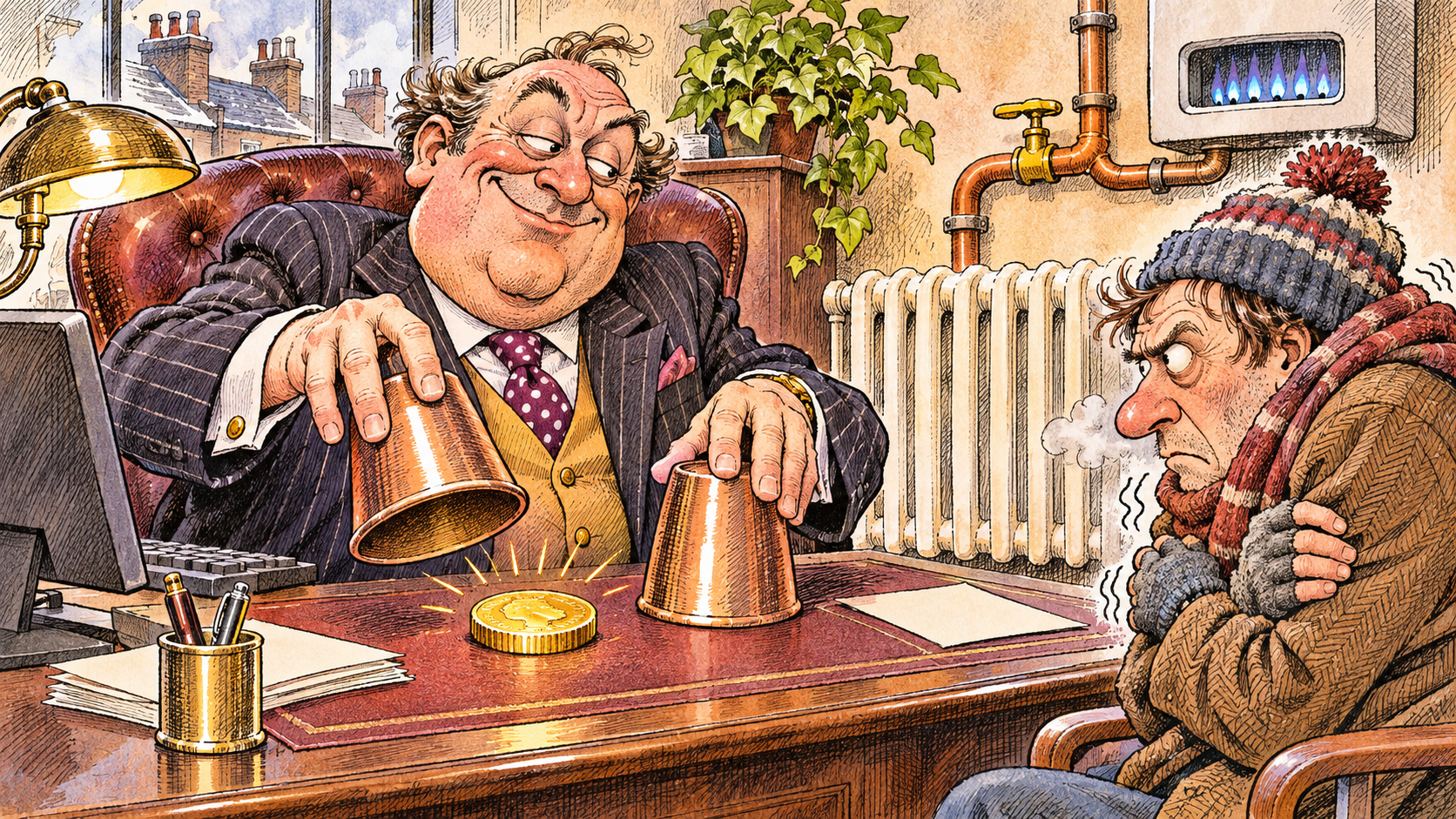
At the Prat’s ceremonial bill-unveiling, a supplier removed one charge with a magician’s flourish. An identical amount appeared beneath a different cup.
“Observe the freedom,” whispered tariff illusionist Jasper Meter. “Previously you paid for gas you didn’t use. Soon a larger proportion of the cost can accompany gas you do use. The money has become more active.”
A charge with a promising career in movement
Householder Brenda Boiler said she supported a fairer structure but wanted to know whether her particular bill would improve.
Meter produced an average household. It was a cardboard family with moderate heating requirements and no draughty upstairs bedroom. Brenda asked whether she could swap houses with it.
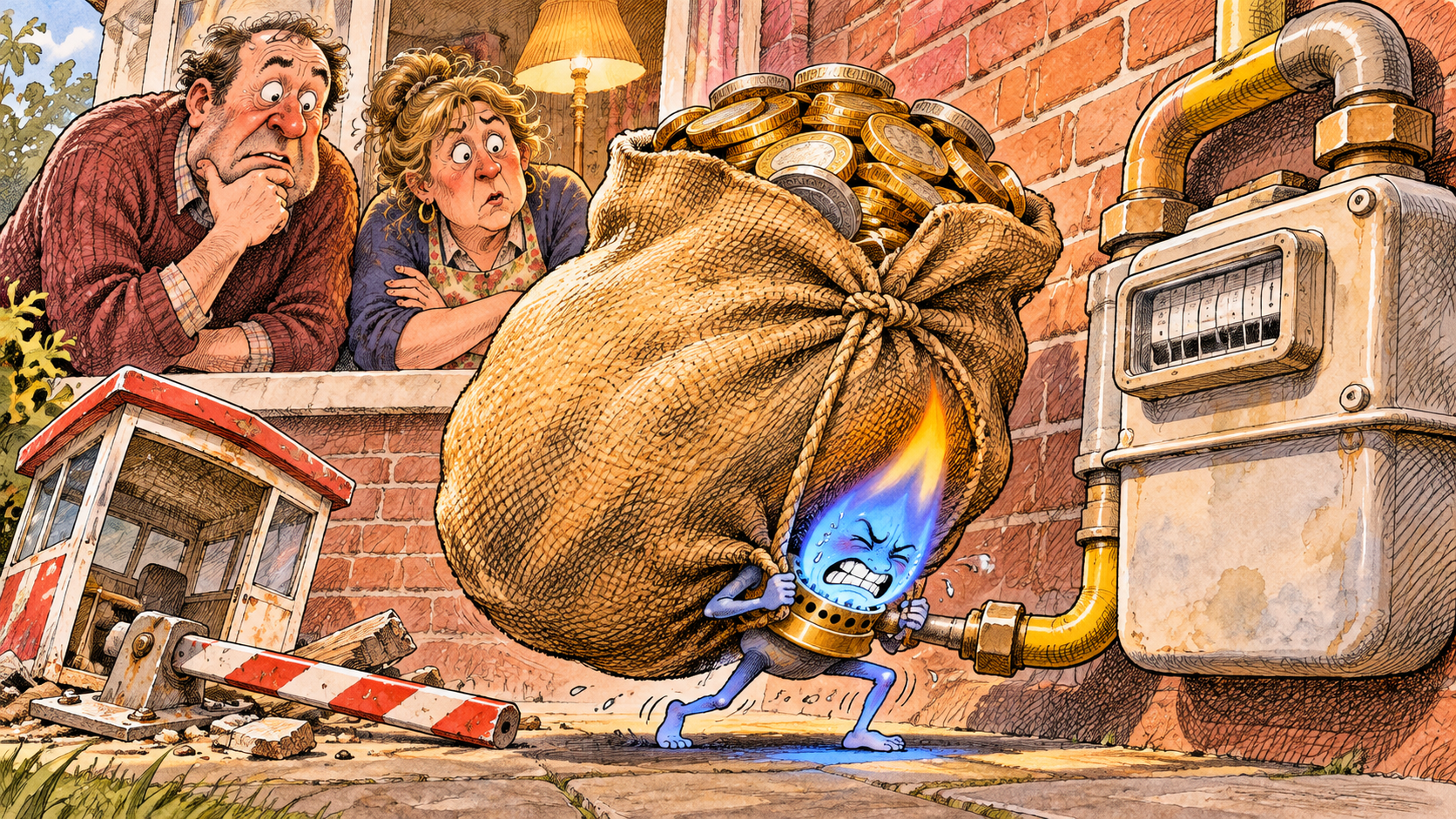
The reform can benefit lower users while creating different effects for higher users. That distribution matters. The household with an efficient flat and the household struggling to heat a difficult property cannot be reduced to the same cheerful kettle.
“I don’t object to paying a fair share,” Brenda said. “I object to needing a detective wall and red string to work out where the share has gone.”
The Prat’s entirely unofficial tariff comparison exercise established that seven people understood their first cup of tea, four understood their boiler and nobody understood why the bill needed quite so many explanatory pages.
Bills discover a fresh administrative personality
A marketing department proposed describing the new structure as simpler. Its supporting explanation required a webinar.
Another suggested “customer empowerment”, which Brenda interpreted as the right to stare at the thermostat before deciding to put a cardigan on.
Meter dismissed suggestions that costs were merely changing address. “They will also have a new customer journey,” he said. “We have invested heavily in arrows.”
Compare the whole bill
Readers should check both daily charges and unit prices, using their own annual consumption when comparing tariffs. An announced structural reform does not guarantee the same saving for every household.
Brenda requested one final clarification: would the charge stop standing?
“Yes,” said Meter. “It will be running.”
Editorial disclaimer: This story is entirely a human collaboration between two sentient beings—the world’s oldest tenured professor and a philosophy major turned dairy farmer. The charge is currently travelling under a different name.