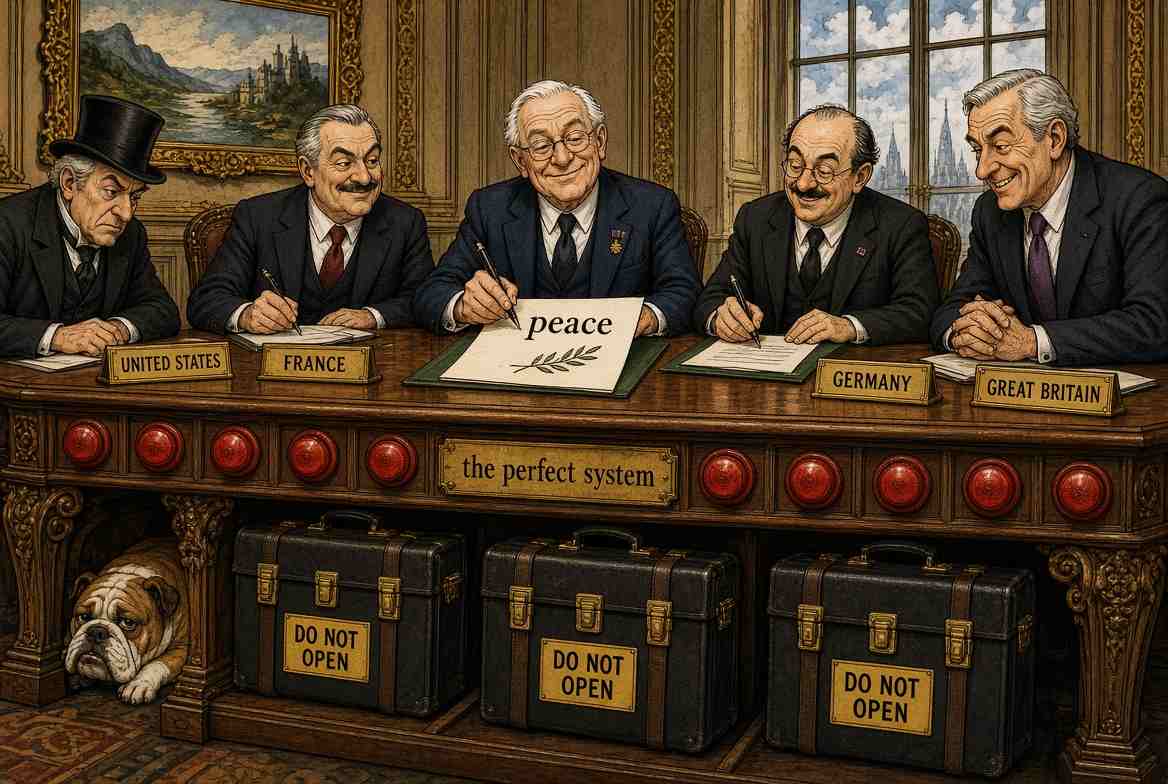
Mutually Assured Destruction: Washington’s Perfect System
How humanity built a peace treaty out of the one thing it swore never to use
WASHINGTON — Nine countries currently possess the ability to end civilization by lunchtime, and every single one of them insists this is a stabilizing influence. That is the genius of mutually assured destruction, the only government program in history that has never once been audited, cut, reformed, or explained to a voter’s satisfaction, and yet somehow always gets funded.
The logic is airtight in the way a submarine hatch is airtight. Every nuclear state agrees that nuclear war would be an unrecoverable catastrophe for the species. Every nuclear state has therefore concluded that the correct response to this shared agreement is to build more nuclear weapons, faster, and point them at each other around the clock. It is peace through the threat of an ending so total there would be no one left to enjoy the peace. Call it mutually assured destruction, or, as the Pentagon prefers, deterrence architecture, a phrase so bloodless it could describe a HOA newsletter.
Mutually Assured Destruction Is Now America’s Most Bipartisan Institution
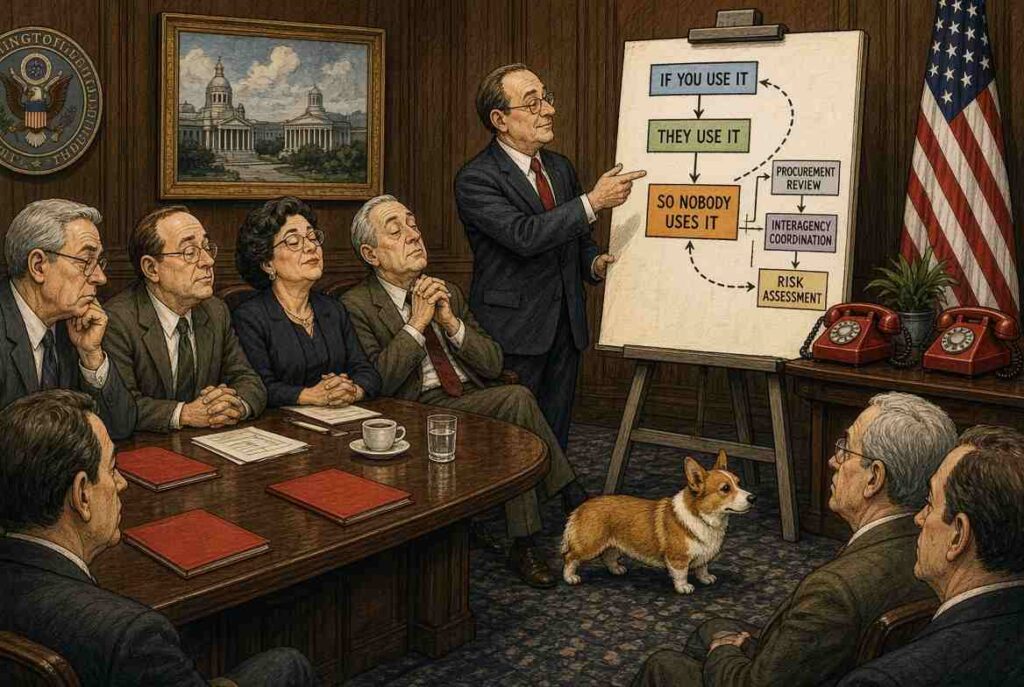
Democrats and Republicans cannot agree on infrastructure, healthcare, or what year the country actually started, but both parties have kept the nuclear triad fully staffed and fully funded through every administration since Eisenhower. It is the one line item in the federal budget nobody dares de-fund, because “de-fund the bombs” does not test well in a swing district, even among voters who otherwise want government spending cut to the bone. Mutually assured destruction, in other words, is the rare bureaucratic program beloved by both the people who hate bureaucracy and the people who love it, which should tell you something about how little actual oversight it receives.
The Bulletin of the Atomic Scientists, a group of scientists whose entire job is to stare at this system and take notes, moved its Doomsday Clock to eighty five seconds to midnight this year, the closest it has been in the clock’s seventy nine year history. Eighty five seconds. That is roughly the time it takes to microwave a burrito, and it is also, according to the people who study this for a living, approximately how far humanity currently sits from the end of the story. Nobody at the Pentagon has proposed moving the clock. They have proposed a bigger clock.
The Free Market Solution Nobody Asked the Free Market About
Here is the part that should bother the small government crowd more than it does. Mutually assured destruction is not a market. It is not competition. It is nine state monopolies on annihilation, each one propped up by taxpayer money, each one shielded from any meaningful congressional scrutiny by the classification stamp, and each one justified by the same unfalsifiable promise: it is working, because nothing has happened yet. That is not a security strategy. That is a smoke detector nobody has ever tested going off, and everyone agreeing that the silence proves it works.
A libertarian looking at this arrangement honestly would ask the obvious question. If the private sector had to run on this model, insuring against a catastrophe by building a bigger catastrophe and hoping the other guy blinks first, regulators would shut it down in a week. But because it is dressed in a flag and a five sided building, it gets a blank check and a press conference instead of a subpoena.
New START, Old Habits
New START, the last remaining treaty that put any actual limits on how many warheads Washington and Moscow could stack up, expired in February. For the first time since 1972, there are no legally binding caps on the world’s two largest arsenals. The response from both capitals was not alarm. It was a shrug, followed by budget requests. Nothing says confidence in the system like watching its last safety rail disappear and responding with a procurement memo.
Comedians Understand Deterrence Better Than the Generals Do
Norm Macdonald used to say the scariest thing about nuclear war was that it required both sides to be exactly rational at exactly the same moment forever, which is a bet he would not take on his own poker night, let alone civilization. Bill Burr put it more bluntly onstage years ago, joking that the whole plan for keeping eight billion people alive boiled down to hoping a handful of world leaders stayed in a good mood. Jim Gaffigan has noted that we childproof our medicine cabinets but leave the button next to a guy who once tweeted about his ratings. None of these were policy briefings. All of them were more coherent than most policy briefings.
A Spoonerism Worth Losing Sleep Over
Somewhere in the Pentagon press office there is presumably a staffer whose job is to make sure nobody accidentally says mad missiles instead of missile mads, since the acronym MAD was, remarkably, chosen on purpose. The people who built this system named it after the thing it would make you if you thought about it too hard, and then built a fifty year career out of insisting you should not think about it too hard.
The Sincere Part
Strip away the acronyms and the doctrine papers and what is left is nine governments betting the entire species on the proposition that no leader, ever, under any pressure, for any reason, will have a very bad day. That bet has held for eighty one years. It has held through the Cuban Missile Crisis, a Soviet early warning system that once mistook sunlight for missiles, and a Cold War officer named Stanislav Petrov who quietly decided not to end the world when his own computer told him to. The system did not save humanity that day. A tired man’s judgment did, and he was not thanked for it until decades later. Mutually assured destruction is not a plan. It is a permanent coin flip, and we keep calling it strategy because the alternative is admitting we never had one.
For more on America’s nuclear posture, its allies, and the treaties nobody bothered to renew, read our sister publication The London Prat, where they have their own finger nowhere near their own button and considerably more time to laugh about it.
Sources
Bulletin of the Atomic Scientists, 2026 Doomsday Clock Statement
Ploughshares Fund, “The New START Treaty Expired”
This is American satire, a work of American satirical journalism intended to entertain through exaggeration and irony, not to state fact.
Auf Wiedersehen, amigo!

Alan Nafzger was born in Lubbock, Texas, the son Swiss immigrants. He grew up on a dairy in Windthorst, north central Texas. He earned degrees from Midwestern State University (B.A. 1985) and Texas State University (M.A. 1987). University College Dublin (Ph.D. 1991). Dr. Nafzger has entertained and educated young people in Texas colleges for 37 years. Nafzger is best known for his dark novels and experimental screenwriting. His best know scripts to date are Lenin’s Body, produced in Russia by A-Media and Sea and Sky produced in The Philippines in the Tagalog language. In 1986, Nafzger wrote the iconic feminist western novel, Gina of Quitaque. He currently lives in Holloway, North London. Contact: [email protected]