

British Intelligence Shocked To Discover Chinese Spies Using Ancient Technique Known as ‘Walking Around Looking Suspicious’
Five Observations That Will Make You Feel Slightly Better About Being Surveilled
- British intelligence reportedly identified one suspected spy after he spent six consecutive hours standing outside Pret A Manger pretending to enjoy still water.
- Londoners became deeply alarmed upon learning foreign agents can apparently blend into Britain simply by wearing a lanyard and looking emotionally exhausted.
- MI5 investigators confirmed several spies infiltrated sensitive institutions using the advanced espionage tactic known as “submitting a CV online.”
- One alleged Chinese operative reportedly exposed himself after attempting to expense £74 worth of bubble tea under “counter-surveillance hydration.”
- Experts say British surveillance culture is so weak that most citizens assumed the man following them was either a Deliveroo cyclist or a housing inspector.
Britain Discovers Spies Exist, Immediately Holds Three Meetings and Misplaces the Minutes
LONDON — Britain reeled this week after revelations that alleged Chinese spy networks had been operating inside the United Kingdom using techniques so stunningly effective, so unimaginably advanced, that experts described them as “basically just standing around in jackets.”
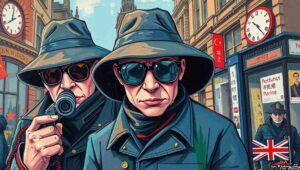
The scandal exploded after Hong Kong dissident Nathan Law stated publicly that Chinese surveillance operations inside Britain were “constant and obvious,” causing millions of Britons to react with the exact same phrase:
“Wait… we have spies?”
For decades, the British public believed espionage was mostly fictional, existing somewhere between James Bond films and BBC dramas where exhausted detectives stare at rain for six episodes before finding a USB stick.
Now, according to reports, foreign intelligence operations have allegedly penetrated Britain using revolutionary methods like walking near Parliament, carrying backpacks, and applying for office jobs.
“It’s chilling,” said London resident Gareth Pumble, 43, while nervously glancing around a Costa Coffee. “You mean to tell me that man reading a newspaper beside me for eleven straight hours wasn’t just British?”
Pumble later admitted the man had been holding the newspaper upside down since breakfast.
MI5 Announces Major Breakthrough in Recognising Extremely Suspicious Men
Officials at MI5 held an emergency press conference Thursday where they unveiled Britain’s latest counter-espionage technology: “looking a bit harder.”
According to leaked government documents, investigators became suspicious after noticing several alleged agents displayed behaviours considered “highly unusual” by British standards, including:
- Maintaining eye contact.
- Arriving to meetings on time.
- Showing basic competence.
- Remaining awake during committee hearings.
One intelligence officer, speaking anonymously while eating a Scotch egg in a Vauxhall car park, described the operation as “the biggest espionage breakthrough since somebody realised Russian diplomats shouldn’t all live next to each other in Salisbury.”
“We started connecting dots,” the official whispered dramatically. “One man claimed to work in ‘international logistics,’ but somehow knew seven languages and never once complained about Thameslink. Frankly, that’s not normal here.”
Chinese Agents Allegedly Infiltrated Britain Through Revolutionary Method Called Employment
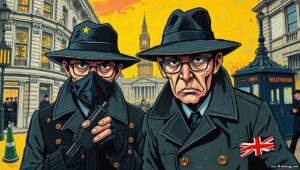
The scandal intensified after reports emerged suggesting several alleged operatives gained access to British institutions simply by applying for jobs.
Analysts say the strategy completely bypassed British defences because no one expected foreign agents to voluntarily enter government administration.
Professor Ingrid Gustafsson of the Stockholm Institute for Passive-Aggressive Security Studies called it “a devastating exploitation of British bureaucracy.”
“Historically, Britain assumed anyone willing to work in public administration was already suffering enough,” Gustafsson explained. “The idea that espionage agents would willingly attend council meetings and fill out compliance paperwork seemed implausible.”
A recent poll conducted by the respected but emotionally unstable agency OpinionBiscuit found that 71% of Britons still believe spies are required to wear black turtlenecks and carry tiny briefcases handcuffed to their wrists.
Another 19% said they thought espionage ended with the Cold War and had been replaced entirely by podcasts.
Londoners Realise Half the City Already Behaves Like Spies
The investigation reportedly hit several complications because modern London behaviour is already deeply suspicious.
According to witnesses, agents attempting covert surveillance were almost impossible to identify because every resident in London already avoids eye contact, whispers into wireless earbuds, and walks rapidly while looking terrified.
“At one point MI5 accidentally followed three accountants for two weeks,” said one anonymous staffer. “Turns out they were just commuting from Croydon.”
Security officials admitted distinguishing foreign operatives from ordinary London professionals became nearly impossible during rush hour.
“We detained a man outside King’s Cross because he appeared nervous and kept checking over his shoulder,” one investigator admitted. “Unfortunately, he was simply trying to locate Platform 9¾ while simultaneously paying £11 for soup.”
Bubble Tea Finally Brings Down an International Spy Ring
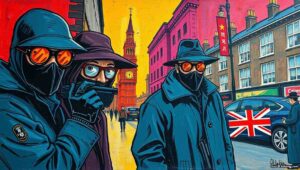
Authorities say the alleged network began collapsing after one operative reportedly filed a reimbursement request for luxury bubble tea under the category “strategic intelligence refreshments.”
The expense report allegedly included £74 worth of tapioca pearls, mango foam, and “morale-enhancing mochi.”
Treasury officials became suspicious immediately because no British civil servant has ever submitted expenses with that much enthusiasm.
“What really gave him away was the itemised receipt,” explained one counter-terror analyst. “A true British bureaucrat would’ve hidden the drink under ‘miscellaneous rail disruptions.'”
The alleged operative reportedly panicked during questioning and attempted to flee using an Oyster card with insufficient funds.
What the Funny People Are Saying
“Britain discovering spies in London is like discovering pigeons in Trafalgar Square. The shocking part isn’t that they’re there. It’s that anyone just noticed.” — Ricky Gervais
“A guy followed somebody across London for eleven hours? That’s not espionage. That’s just trying to find affordable parking.” — Jimmy Carr
“The British public acted stunned about surveillance while voluntarily carrying phones that track them to the exact Pret where they buy sadness sandwiches.” — Sarah Millican
Britain Responds With Committees, Tea, and Mild Concern
Parliament has vowed decisive action, reportedly launching four inquiries, two reviews, and one strongly worded PDF expected sometime before 2031.
Meanwhile, ordinary Britons remain uncertain how concerned they should be.
“I suppose it’s alarming,” admitted Sheila Crumb, 67, while feeding pigeons near Westminster. “But honestly, if foreign governments want to spy on Britain, they mostly get train delays and weather complaints.”
Officials insist national security remains intact despite the revelations.
At press time, MI5 had reportedly identified another possible agent after noticing a man calmly smiling on the London Underground without appearing emotionally defeated.
Key Links
- Hong Kong Free Press: Two UK-Chinese dual nationals convicted of spying on Hong Kong dissidents
- CNN: Two men found guilty of spying on Hong Kong dissidents in UK for China
- Euronews: UK summons Chinese ambassador after spy convictions
- MI5: The Security Service — Official Site
- UK Government: National Security
This piece of gloriously irresponsible British satirical journalism was crafted through a peculiar human collaboration between the world’s oldest tenured professor and a philosophy major turned dairy farmer. Any resemblance to actual spies, dual nationals, bubble tea receipts, emotionally defeated Tube passengers, or MI5 car-park briefings is purely coincidental and probably already being photographed by a man with a lanyard. The London Prat is British satirical journalism and should be treated as such — i.e., read with a biscuit and a quiet sense of national dread. Auf Wiedersehen, amigo!



A teacher assigned it to her year 12 class. They understood London politics better than most actual policy makers.