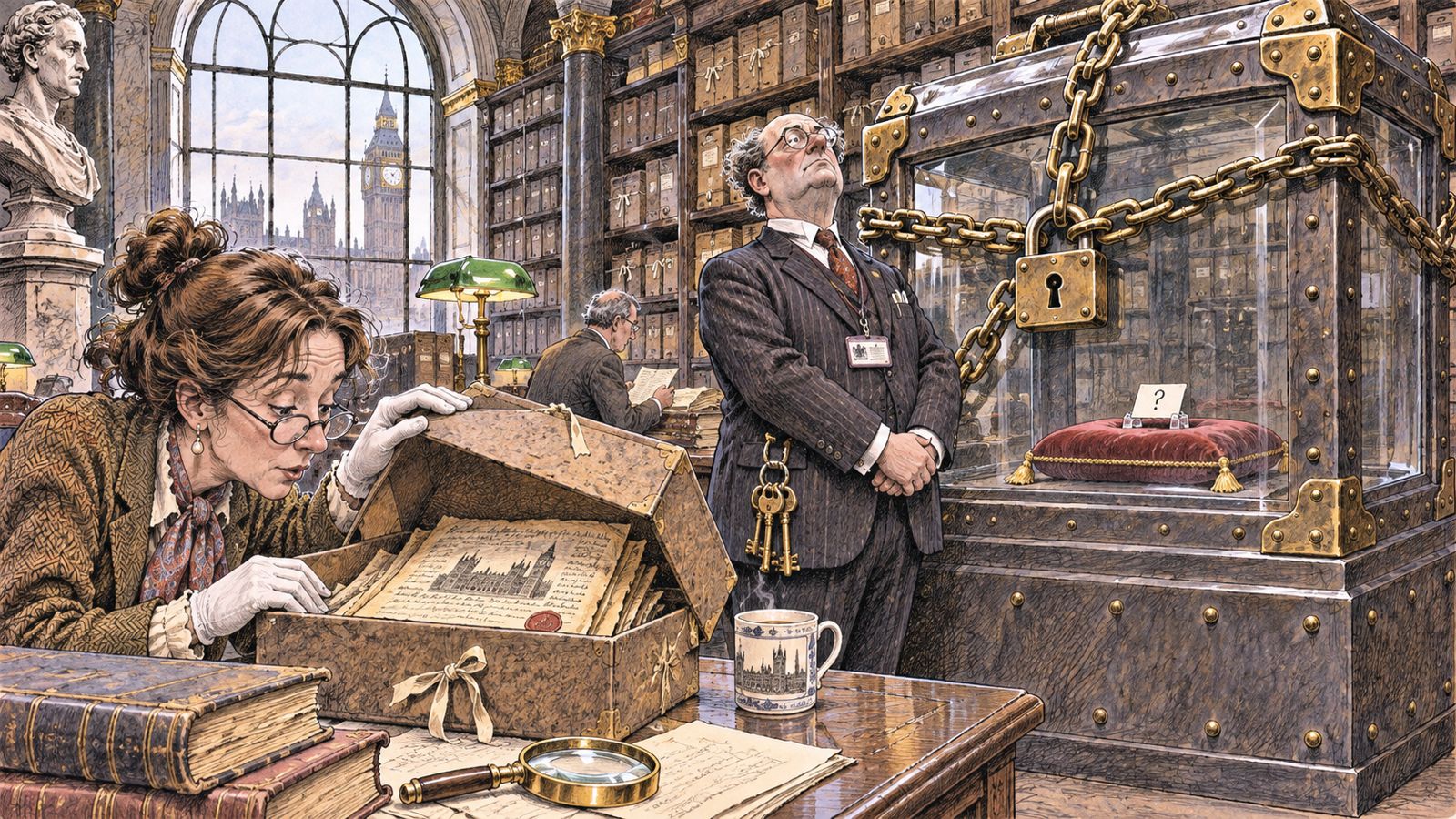
LONDON — The government archive release has been welcomed as evidence of Britain’s commitment to transparency, particularly once a question has matured sufficiently to become the responsibility of a historian rather than a press officer.
The latest Northern Ireland Office announcement names five independent Official Historians for a study of government policy during the Troubles and announces thousands more records available online. The history deserves rigorous examination. Whitehall’s relationship with answering questions deserves a separate, considerably less solemn inspection.
Government archive release meets the age test
At the Office of Eventually Available Information, a researcher asked to see a file. An official said it was too recent. The researcher returned with a grey beard. The official said the request had shown encouraging progress.
Historical records can help people examine decisions, test accounts and understand institutions. Access is important, especially where the subject carries profound consequences for families and communities. The comedy lies in official habits that make openness sound like a substance best consumed only after lengthy storage.
A departmental adviser described the release as a major milestone. The researcher said milestones were useful, provided somebody occasionally moved beyond them.
The file has outlived several reorganisations
The National Archives offers researchers a route into public records. It is one of the few places where an old government folder can become more useful precisely because nobody is trying to turn it into a current communications strategy.
Archive assistant Miriam said the work involved careful description and patient examination. She objected to the idea that records somehow became self-explanatory after surviving long enough in a box.
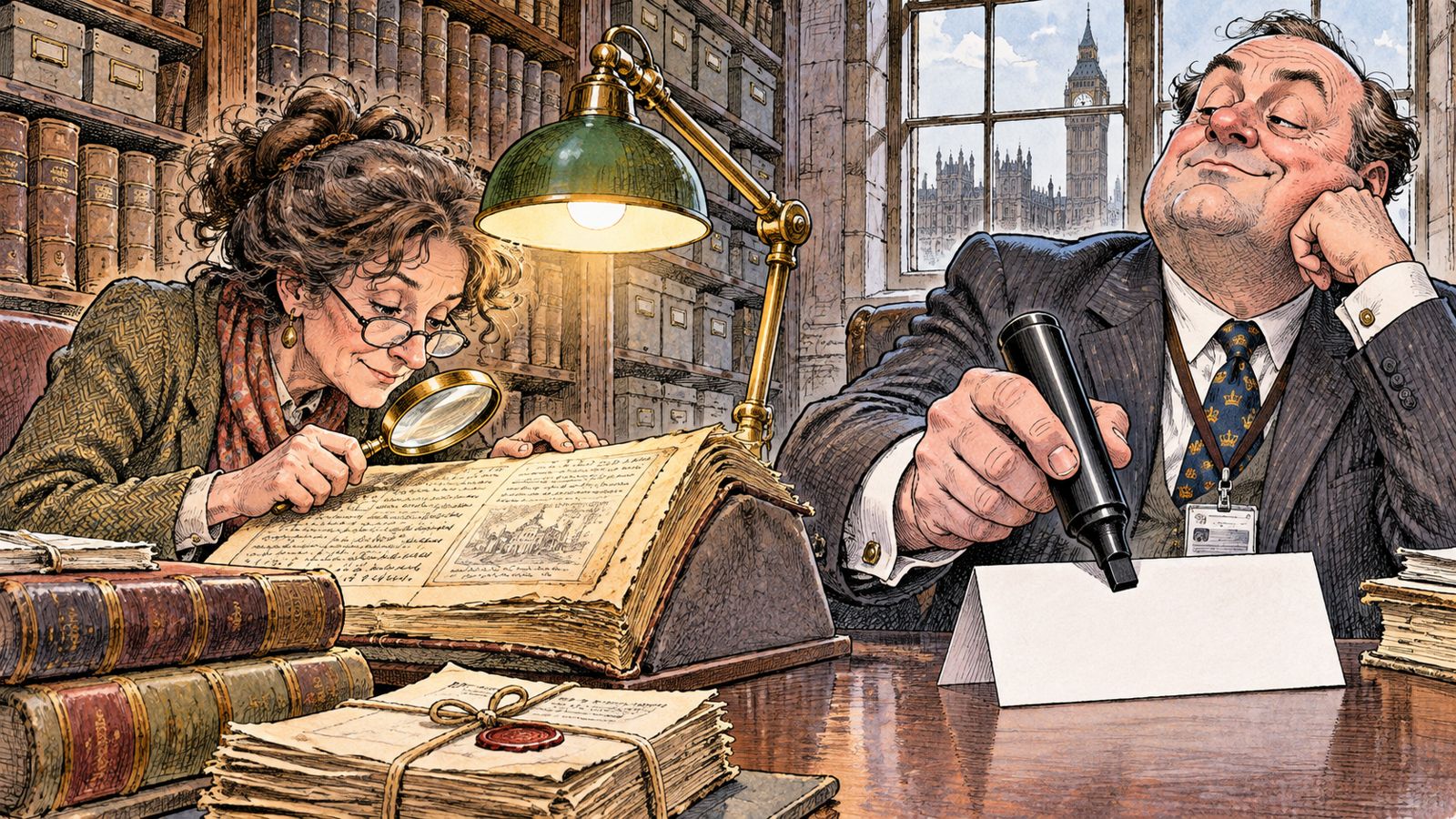
One document contained a reference to a meeting whose minutes referred to another paper. Miriam called this a research problem. A visiting civil servant called it an impressive demonstration of joined-up government.
Present-day questions ask to join the collection
At a press briefing elsewhere, a straightforward question was referred to a future update. Its owner asked whether waiting thirty years would improve the odds of a direct answer. An official said it was unhelpful to speculate about release schedules.
The researcher compared official transparency to a window that becomes clear only after everyone has left the room. It can still reveal a great deal, he said, but a working window during the meeting would also have its uses.
Public access must be handled responsibly, with evidence assessed carefully. That should not become an all-purpose excuse for treating every question as a potential exhibit in a museum of unfinished correspondence.
Miriam hopes the new material and study will deepen understanding. Her test is whether researchers can examine meaningful evidence, rather than simply admire the quantity of boxes photographed beside a minister.
The Office of Eventually Available Information has promised to consider the broader lesson. It has opened a file for the purpose.
The file is not yet available. Officials say this should give future historians a richer appreciation of the context in which the promise was made.
Editorial disclaimer: The world’s oldest tenured professor and a philosophy major turned dairy farmer have opened the file about openness. Its release date is under review.

Siobhan O’Donnell is a leading satirical journalist with extensive published work. Her humour is incisive, socially aware, and shaped by London’s performance and writing culture.
Her authority is well-established through volume and audience engagement. Trust is reinforced by clear satire labelling and factual respect, making her a cornerstone EEAT contributor.