LONDON — Drone number plates have prompted an immediate objection from pigeons, who say they were operating above London without adequate paperwork long before the technology sector decided it had invented the sky.
The Department for Transport’s new announcement describes a nearly £2 million London-based trial of technology to help police detect and identify drones through digital identifiers. The intended targets are disruptive or dangerous drone use. Pigeons have nevertheless appointed a representative because they recognise the early symptoms of a licensing regime.
Drone number plates enter an already crowded airspace
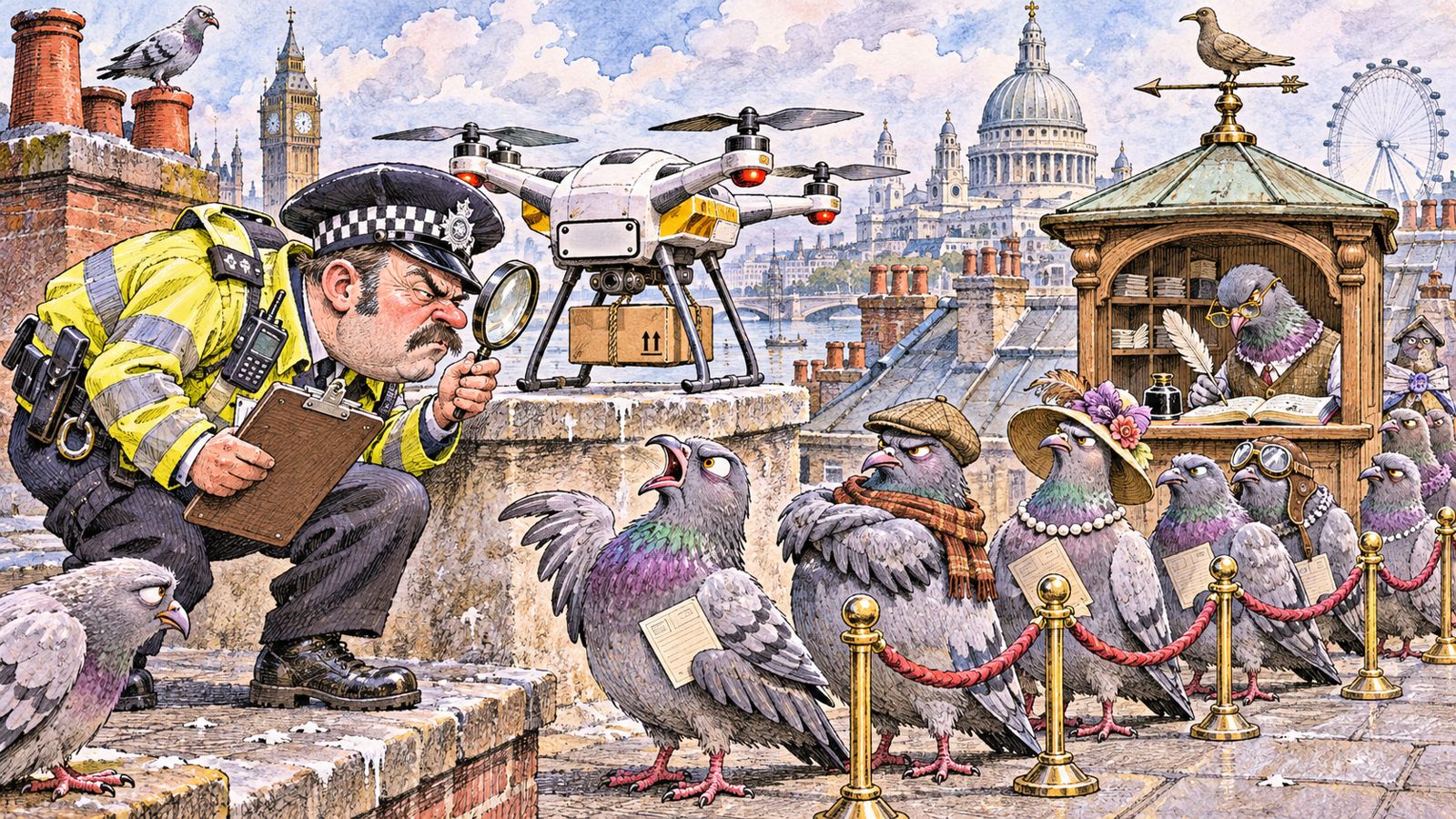
Pigeon spokesman Clive said the flock supported sensible rules, provided they applied mainly to the newcomers. His members had accumulated substantial experience in rooftop landings, abrupt changes of direction and standing somewhere inconvenient.
A police officer explained that a digital identifier was not a tiny metal registration plate requiring somebody to lean out of a window with a screwdriver. Clive said this was reassuring, although his cousin had already started a business selling miniature plate frames.
The trial concerns tracking and identification technology. It does not mean every drone flight is automatically unlawful or that a delivery vehicle has acquired the right to park outside somebody’s bedroom indefinitely.
The traffic warden looks up
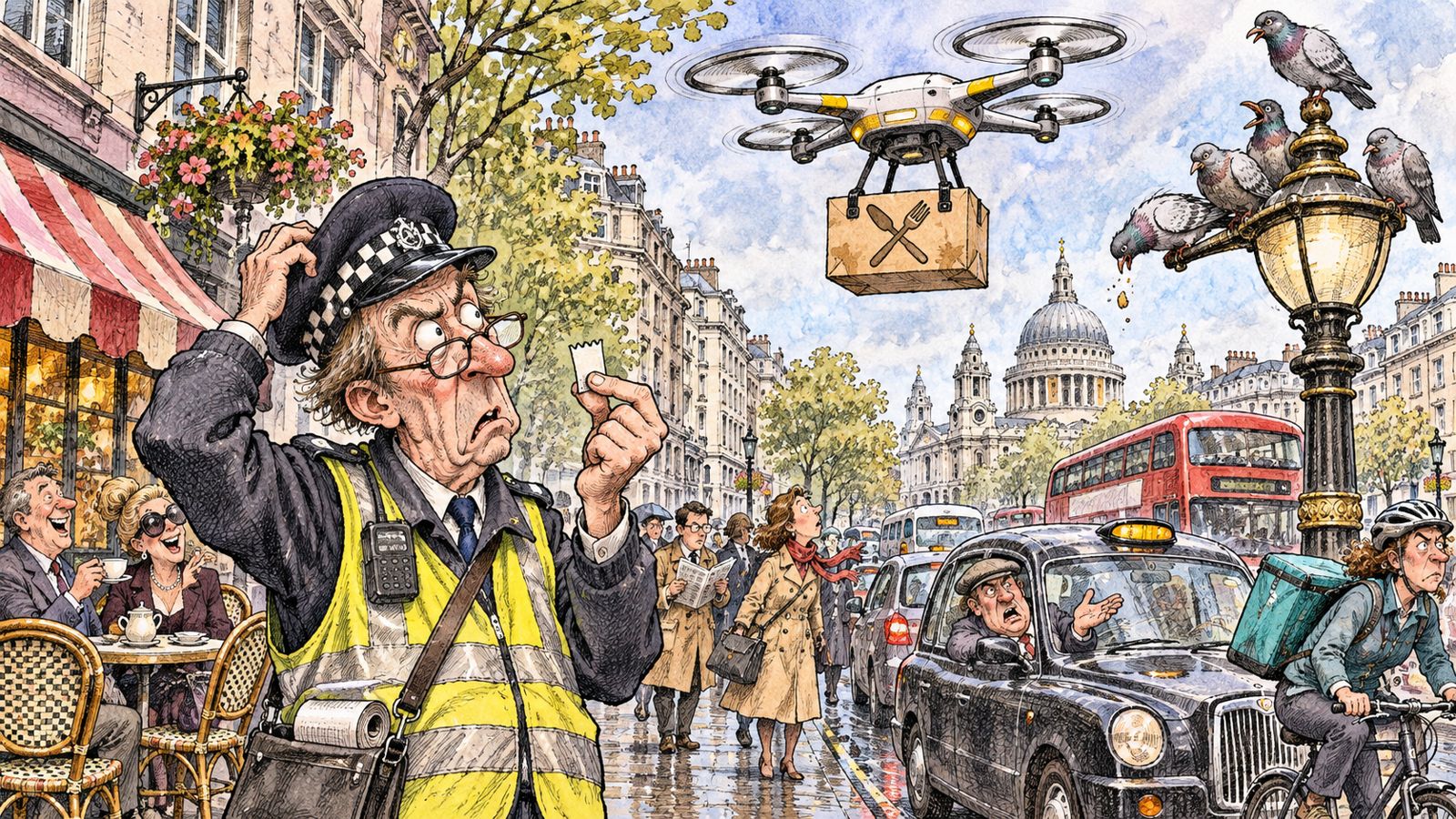
An ambitious traffic warden has asked whether aerial parking tickets would qualify for a new pay grade. His supervisor said the first challenge would be finding a windscreen under which to place one.
Delivery operator Nina said clear rules could help legitimate businesses share airspace safely. She would welcome a system in which sensible operations could proceed without being confused with nuisance flights. She was less enthusiastic about the possibility of completing six versions of the same registration form.
Clive asked whether prior use of a chimney established a historic landing right. Nina said that sounded like planning law. Clive said pigeons preferred to raise the question now, before a consultant discovered the word vertiport.
Grandfather rights meet the grandfather pigeon
The Civil Aviation Authority’s drone information is the proper starting point for current requirements. Clive’s cousin’s laminated rooftop pass is not recognised merely because it has a convincing lanyard.
At an informal meeting on a station roof, the flock agreed that the public should be protected from dangerous flying. Several members added that any definition of nuisance must take account of local custom and their long-established relationship with statues.
Nina suggested judging the trial by whether it helps responsible enforcement while supporting safe legitimate use. A consultant suggested judging it by the size of the economic opportunity in a presentation. Nina said those were different measurements.
The traffic warden is still preparing his business case. It contains an excellent photograph of a drone beside a double yellow line, although nobody has yet explained how the line got up there.
Clive has submitted the flock’s response on the usual medium. The department has requested that future consultation material arrive through the online portal instead of directly on the ministerial car.
Editorial disclaimer: The world’s oldest tenured professor and a philosophy major turned dairy farmer have referred the pigeon’s rooftop claim to somebody with a washable car.

Harper Thames is a comedic writer exploring modern life through irony and subtle exaggeration. Rooted in student perspectives and London’s cultural landscape, Harper’s work focuses on relatable humour grounded in everyday experience.
Expertise is developed through writing practice and critical engagement, while authority comes from authenticity and consistency. Trust is reinforced by transparent satire and ethical humour choices.