WESTMINSTER — The nuclear test veterans panel has been welcomed by campaigners, while Whitehall has begun the delicate task of finding a chair large enough for a truth that has already spent decades being asked to wait.
The government’s announcement of an independent panel names Bishop James Jones as chair and says the work will follow the Hillsborough Independent Panel model. An interim report is sought in time for the seventy-fifth anniversary of Britain’s first nuclear test. The veterans and their families have contributed quite enough waiting to the project already.
Nuclear test veterans panel opens the question drawer
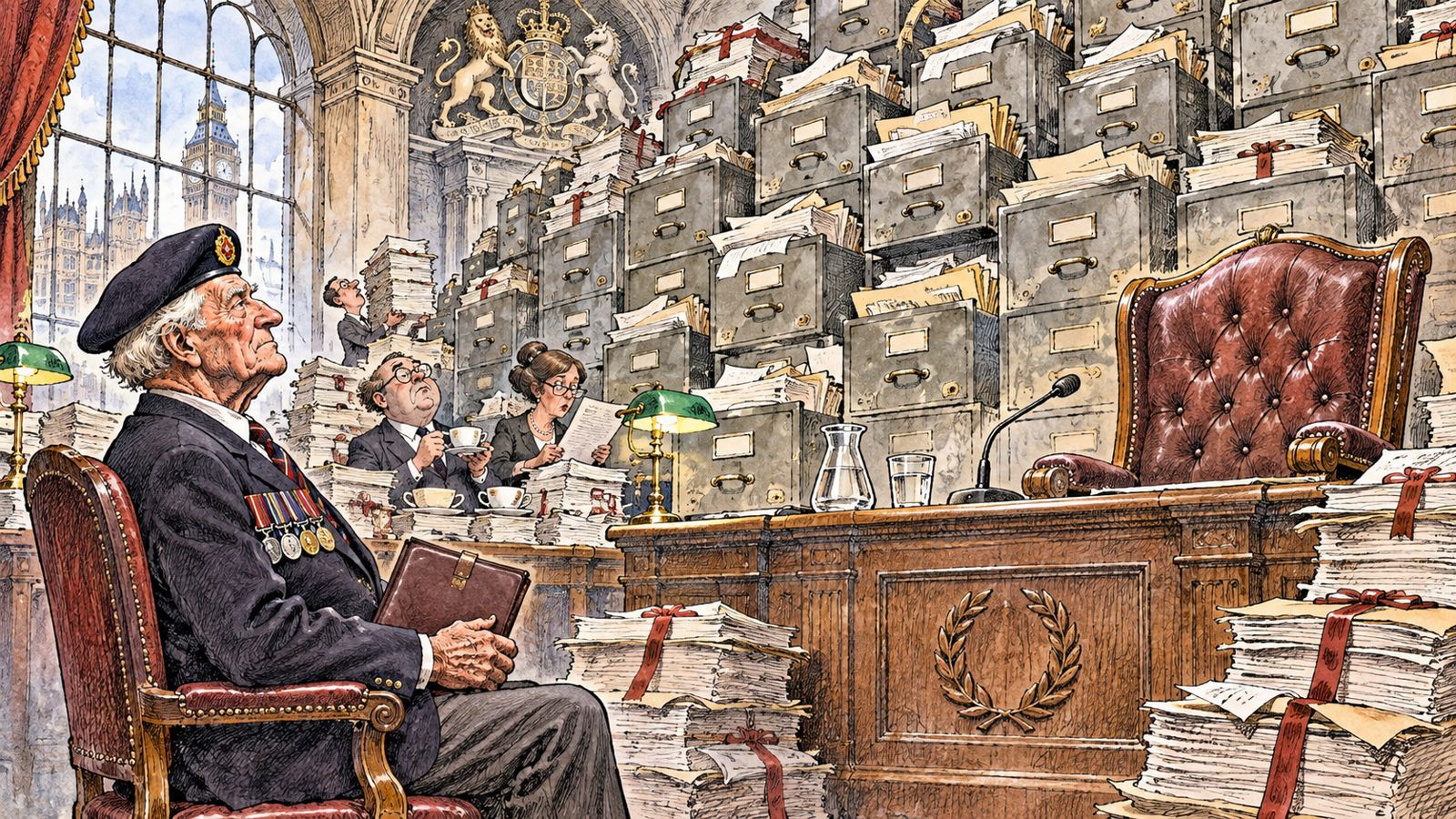
A retired Whitehall filing cabinet said it was prepared to assist with full transparency, subject to somebody discovering which office had inherited the key. It has spent several reorganisations being moved closer to accountability without being opened.
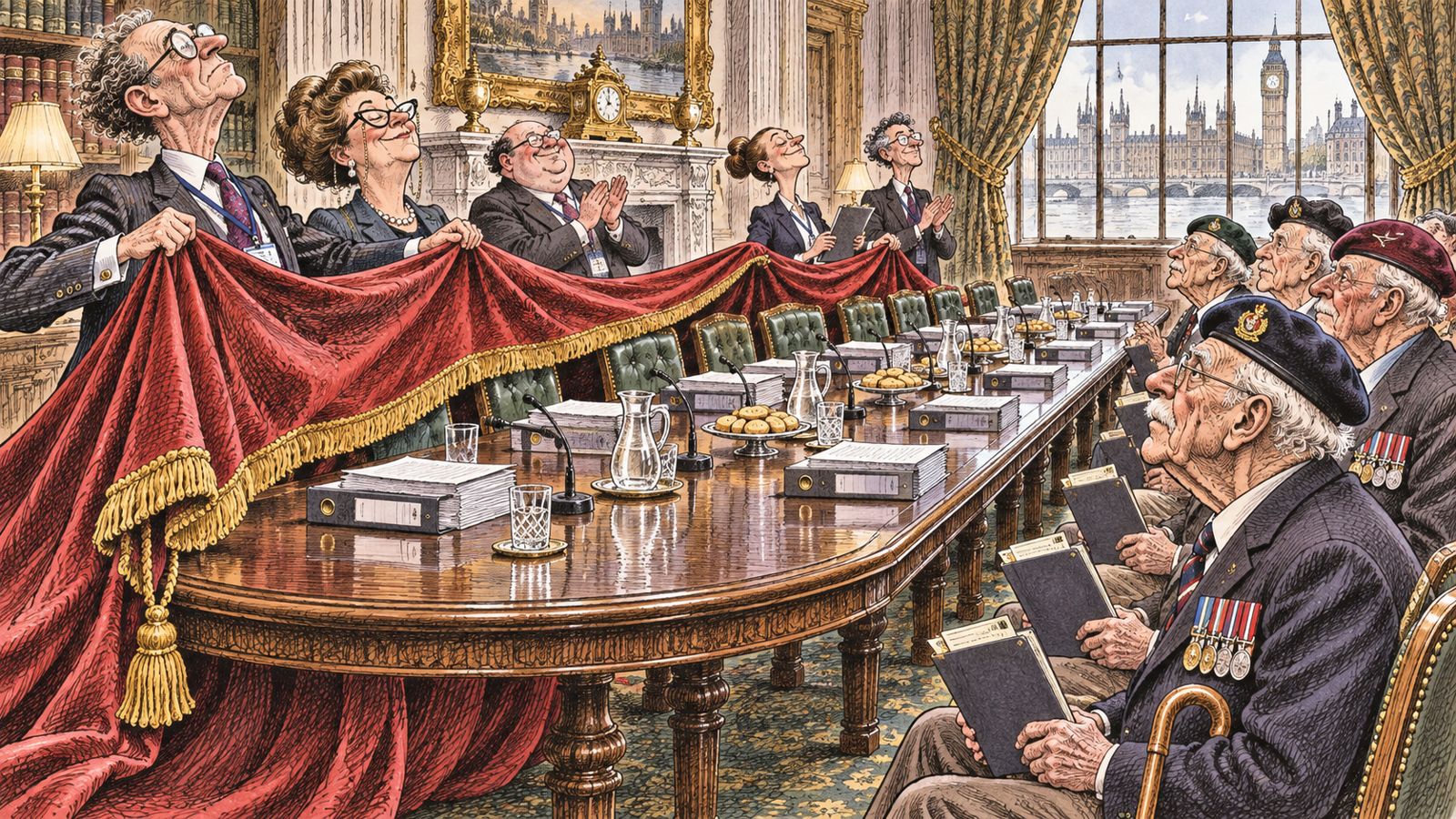
At a preparatory meeting, an official suggested beginning with a tribute. A campaigner said tributes were appreciated but difficult to examine for evidence. The official offered a more substantial tribute. The campaigner asked for the documents.
The distinction has become central to modern government: acknowledgement can be delivered at a lectern, while answers require people to find, assess and explain material that may prove inconvenient to the institution holding it.
Independence should mean more than separate stationery
The panel’s stated independence matters. So do access, cooperation and a clear account of its findings. A veteran does not benefit from discovering that every department has written a beautifully individual explanation of why another department possesses the relevant record.
Administrative historian Dr Lionel Index compared the process to asking a family who broke a window and receiving an album celebrating the architectural significance of glass. It may be an impressive album, he said, but the original question remains available.
No conclusions about individual health outcomes follow merely from establishing a panel. Evidence must be examined carefully. Campaigners seeking the truth should not be offered invented certainty in place of the uncertainty they want investigated.
The waiting room has had several refurbishments
At the Office of Deferred Candour, staff have proposed measuring progress through the number of meetings held. A visitor suggested counting answered questions instead. The room fell quiet because this would make the measure depend on the work.
The government says officials should act in the spirit of the proposed duty of candour straight away. Straight away is a useful phrase. Veterans’ families will reasonably want to see it applied to cooperation and disclosure rather than the speed with which a press release acquires a celebratory photograph.
One campaign volunteer said a process could be respectful and rigorous without becoming endless. She would prefer difficult answers delivered honestly to another reassuring description of the journey.
The filing cabinet has since been labelled a strategic information asset. It remains a filing cabinet, and its contents remain the part anyone wants to see.
The panel now has serious work ahead. Whitehall has been asked to help it do that work, with the unusual expectation that the institution being questioned should not also control how long the question stays in the queue.
The truth has declined refreshments. It would like somebody to get on with it.
Editorial disclaimer: The world’s oldest tenured professor and a philosophy major turned dairy farmer have declined another tribute and requested the documents.

Harriet Collins is a high-output satirical journalist with a confident editorial voice. Her work demonstrates strong command of tone, pacing, and social commentary, shaped by London’s media and comedy influences.
Authority is built through volume and reader engagement, while expertise lies in blending research with humour. Trustworthiness is supported by clear labelling and responsible satire.