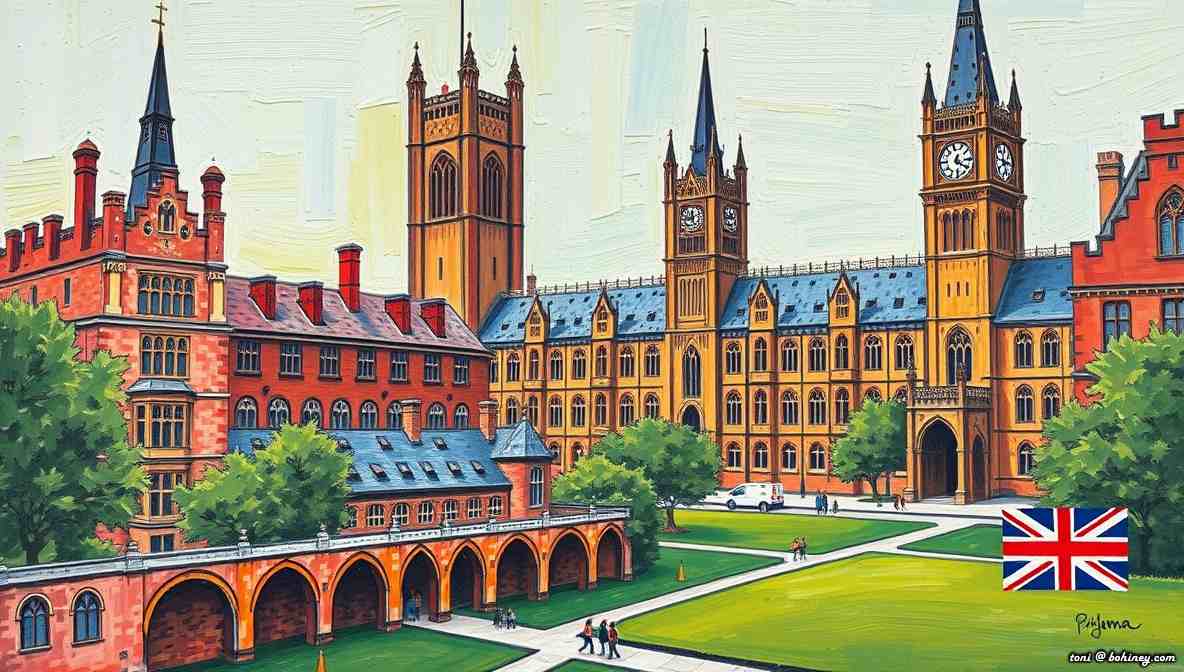
154-Year-Old Women’s College Discovers Loophole, Redefines the Word It Was Built On
Newnham College keeps admitting trans women after Supreme Court ruling, insists the decision was “cleared by lawyers,” a phrase historically preceding every disaster in British public life
CAMBRIDGE — Newnham College, founded in 1871 by suffragist Millicent Garrett Fawcett to educate women who were, at the time, barred from Cambridge entirely, has confirmed it will continue admitting trans women despite the UK Supreme Court’s April 2025 ruling in For Women Scotland v Scottish Ministers, which held that “woman” in the Equality Act 2010 means biological sex. According to reporting on the college’s newly published admissions policy, Principal Alison Rose told students the decision had been “cleared by lawyers” — the institutional equivalent of a toddler explaining that the dog signed off on the biscuit theft.
The Legal Loophole Built For Men, Now Deployed By The College That Excluded Them
Newnham’s governing body relies on Schedule 12 of the Equality Act, a provision that permits single-sex institutions to exceptionally admit “students of the opposite sex” — a clause plainly drafted to let a women’s college make rare, individual exceptions, not to function as the institution’s entire admissions philosophy. Deploying an opposite-sex exception as a blanket policy is a manoeuvre best described as loophole leapfrogging: jumping through the one gap in the fence built for emergencies and setting up a permanent campsite there.
Gender-critical postgraduate Maeve Halligan, co-founder of the Cambridge University Society of Women, offered the college’s most famous alumna as a character witness it had not asked for: “This historic college has some of the most famous alumni, such as Germaine Greer. I can only imagine what she would think,” she told the Mail on Sunday, a sentence that answers itself.
College Founded To Exclude Men From Male-Dominated Cambridge Finds New Way To Include Them
Sex Matters chief executive Maya Forstater noted that rather than bringing its policy into line with the ruling, Newnham had instead been “looking around for loopholes,” which she called “fruitless and foolish” — three words that could serve as the entire minute-book of a certain kind of British institutional meeting.
Equality lawyer Audrey Ludwig went further, warning the policy was “at serious risk of being determined as unlawful,” a phrase Cambridge administrators appear to interpret as a description of Tuesday.
The College That Applies One Definition Of Woman To Job Adverts And Another To Students
Observers of the wider university have noted, with the weary patience of people who have seen this trick before, that research-fellow appointments elsewhere in Cambridge continue to apply the Supreme Court’s biological definition, while Newnham’s student admissions apparently do not — a distinction that suggests “woman” now means something different depending on whether Cambridge is issuing a payslip or a place at High Table. This is not hypocrisy so much as definitional forking: maintaining two incompatible meanings of the same word, filed under different departments so neither has to meet the other.
A Cambridge Comedian Puts It Better Than The Governing Body Did
“They founded the college because women weren’t allowed in,” noted one comedian working the East Anglian circuit this summer. “Now the college’s whole personality is ‘we let everyone in, we just did the paperwork very creatively.’ At some point ‘inclusive’ just means ‘we found a clause.'”
Governing Body Rationale, Translated
The college’s official “Rationale” document states plainly that continuing to admit trans women “is the clear wish of the Governing Body” — four words doing the work of an entire legal defence, in the grand British tradition of announcing a decision and calling the announcement itself the justification.
Campaigners have pledged to report the policy to the Equality and Human Rights Commission and the Charity Commission, two bodies which Newnham may soon know rather better than its own founding charter.
Sister Publication Note
Bohiney.com readers tracking America’s parallel single-sex-institution rows will find the choreography identical: found the place to exclude one group, discover a clause, include a different group, issue a statement using the word “inclusive” as a full stop rather than an argument.
Six Observations From Newnham’s Department of Creative Legal Reading
- A college founded to admit women excluded elsewhere is now using an “exception” clause to admit men where women alone were promised.
- “Cleared by lawyers” has replaced “we have thought carefully about this” as the preferred phrase of institutional self-defence.
- The Supreme Court ruling on the meaning of “woman” appears to apply everywhere at Cambridge except wherever it is least convenient.
- Germaine Greer has been posthumously — and without consultation — enlisted on both sides of the debate.
- The Governing Body’s “clear wish” is offered as its own justification, a closed loop requiring no external input.
- Two regulators may now understand Newnham’s admissions policy better than Newnham’s own prospectus does.
Disclaimer: This is a work of British satire and satirical news, produced as satirical journalism in the tradition of English satirical commentary. The quotations attributed to fictional risk committees, comedians, and internal minute-books are satirical inventions or paraphrased for effect; readers should consult the cited reporting and Newnham College’s own published policy for the primary facts. This story is entirely a human collaboration between two sentient beings — the world’s oldest tenured professor and a philosophy major turned dairy farmer.
Auf Wiedersehen, amigo!

Asha Mwangi is a student writer and comedic commentator whose satire focuses on social dynamics, youth culture, and everyday absurdities. Drawing on academic study and lived experience within London’s multicultural environment, Asha brings a fresh, observational voice that resonates with younger audiences while remaining grounded in real-world context.
Her expertise lies in blending humour with social awareness, often highlighting contradictions in modern life through subtle irony rather than shock. Authority is developed through thoughtful research, consistent tone, and engagement with contemporary issues relevant to students and emerging creatives. Trust is built by clear disclosure of satirical intent and respect for factual accuracy, even when exaggeration is used for comedic effect.
Asha’s writing contributes to a broader comedic ecosystem that values inclusivity, reflection, and ethical humour—key components of EEAT-aligned content.