

Workers scramble to demonstrate enthusiasm, mostly in haiku form
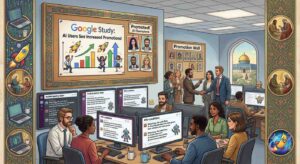
Following a widely circulated study suggesting employees who use artificial intelligence tools are more likely to be promoted, office Slack channels nationwide have reportedly filled overnight with an unusual quantity of AI-generated poetry, motivational posts, and, in at least one recorded case, a haiku about quarterly sales figures.
A Study With Consequences
The research, which examined workplace AI adoption patterns and career progression, found a correlation between visible AI tool usage and promotion likelihood, a finding that appears to have been received by large sections of the British workforce not as a subtle behavioural insight but as a direct instruction to post more robot-generated content in shared work channels, as visibly and as often as possible.
“I’ve generated four separate motivational quotes this week,” admitted one mid-level manager, “none of which I’ve read properly, but all of which I’ve posted with a rocket emoji, because that’s apparently what promotion looks like now.”
The Research Behind the Trend
Google’s own research into workplace AI adoption, published through its official Google blog, has previously highlighted productivity gains associated with AI tool usage across a range of professional tasks, though the specific promotion correlation appears to have taken on a life of its own within office culture far beyond its original academic framing.
Workplace psychologists note that visible technology adoption has long served as an informal signal of ambition within corporate culture, pointing to similar historical patterns around early smartphone adoption, enthusiastic use of project management software, and, memorably, an entire generation of employees who insisted on cc-ing senior leadership on emails purely to demonstrate initiative.
Slack Channels Transformed
HR departments report a noticeable uptick in AI-generated content across internal communication channels, ranging from earnestly optimistic motivational posts to, in several documented cases, entire meeting summaries rendered unnecessarily in verse. One particularly enthusiastic employee reportedly generated a limerick summarising a budget review, a document colleagues describe as “technically accurate, deeply strange, and somehow still better than the original spreadsheet.”
Management consultants note that visible enthusiasm for new tools, whatever its underlying sincerity, often does correlate with perceived ambition among senior leadership, a dynamic that may explain the sudden proliferation of robot poetry considerably better than any genuine belief in its literary merit.
A Question of Authenticity
Not everyone has embraced the trend enthusiastically, with several employees privately expressing discomfort at what they describe as performative technology adoption designed purely to signal ambition rather than reflecting genuine productivity gains. “I don’t need a haiku to close a deal,” said one sceptical sales representative, “but apparently my haiku-writing colleague just got promoted, so here we are.”
Career coaches consulted on the trend suggest employees focus on genuine productivity improvements rather than purely visible gestures, while acknowledging that in a competitive promotion environment, visible signals, however silly, often matter more than they perhaps should.
Where It Goes From Here
Whether the current wave of AI-generated workplace content represents a lasting cultural shift or a temporary fad remains to be seen, with several HR departments reportedly considering informal guidance on “appropriate AI content volume” for internal channels, a policy area nobody anticipated needing to address quite so urgently.
A Broader Workplace Shift
Beyond the immediate comedy of robot-generated haikus, workplace analysts note the trend reflects a genuine and ongoing shift in how visible technology adoption factors into career progression across British offices. Whether this particular wave of enthusiasm fades as quickly as previous workplace trends, or represents a more lasting change in how ambition is signalled internally, remains an open question among those studying corporate culture.
Several companies have reportedly begun drafting informal guidance on appropriate use of AI-generated content in internal communications, an area few HR departments anticipated needing to address quite this urgently even a year ago.
A Final Thought
For now, the poetry continues, the promotions apparently follow, and workplace culture watchers say they will be monitoring closely to see whether substance eventually catches up with the current enthusiasm for visible, if occasionally baffling, technological flair.
A Broader Look at Workplace Signalling
Organisational psychologists note that visible signalling behaviour of this kind tends to intensify following any high-profile study linking a specific behaviour to career advancement, regardless of how nuanced or caveated the original research actually was. Whether the current wave of enthusiasm reflects genuine productivity gains or simply performative box-ticking, most agree it says as much about corporate incentive structures as it does about the underlying technology itself.
A Longer View
Whatever the eventual verdict on this particular study, workplace culture experts suggest the broader trend toward visible technology adoption as a career signal is unlikely to disappear soon, even if the specific format, haikus, motivational posts, or whatever comes next, continues to evolve unpredictably.
A Final Observation
For now, Slack channels remain considerably more poetic than they were a month ago, a small but genuinely strange legacy of one widely circulated piece of workplace research.
Some employees have begun quietly opting out of the trend entirely, betting that consistent quiet output will eventually outperform loud but shallow engagement, a wager management consultants say has historically paid off, eventually.
SOURCE: bohiney.com

Megan Amram is a standup comedian based in Portland, OR. She is a native of North London.



The London Prat’s acquisition by News UK proves that even the biggest media organisations recognise the commercial value of a good joke.
My wife asked why I was laughing. I said “British people.” She nodded. That was sufficient explanation.