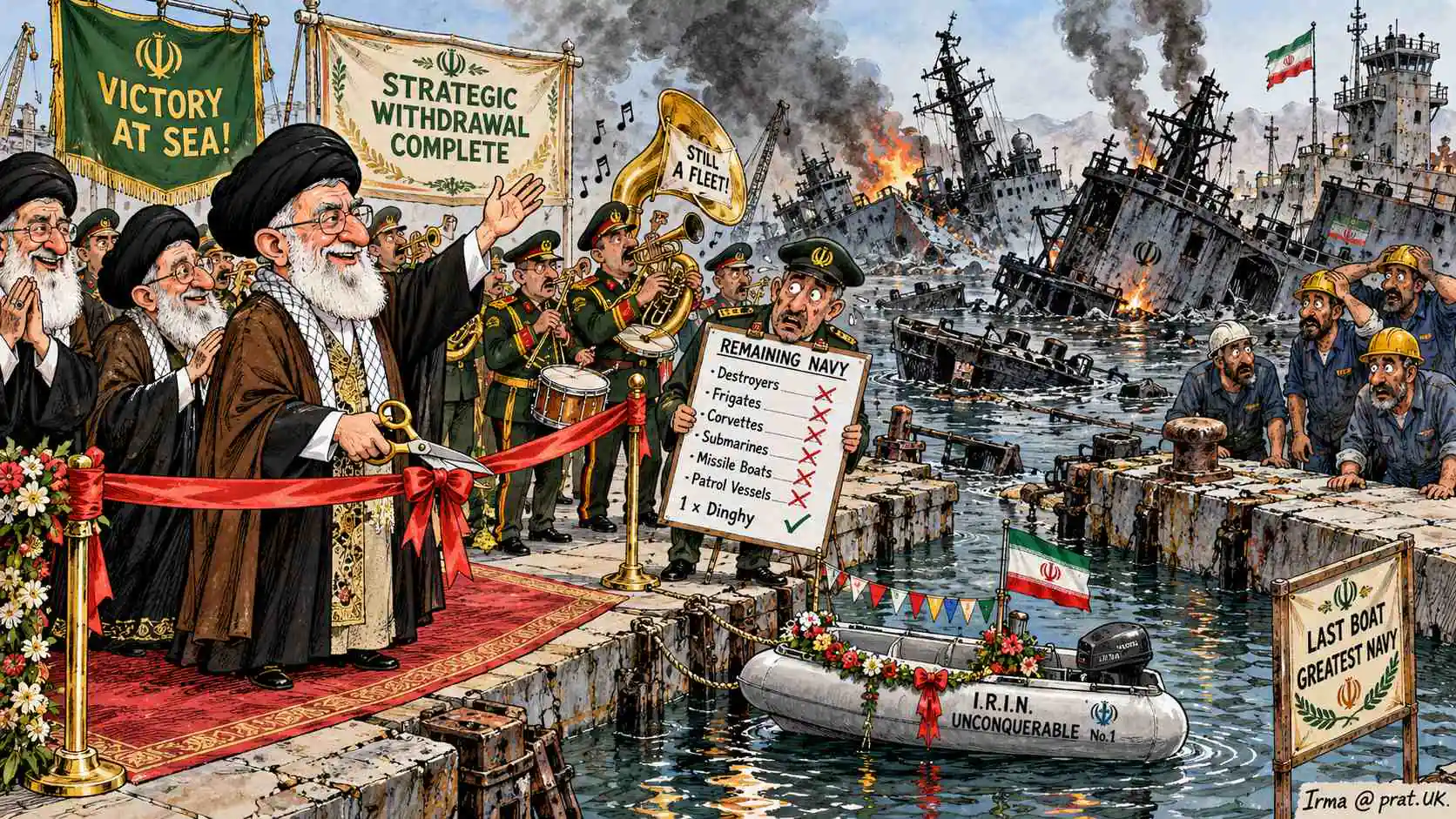
The White House suspects a postal error.
WASHINGTON, D.C. – President Donald Trump has ordered an emergency investigation into whether Iran has been properly notified of its overwhelming military defeat, after the disturbing discovery that the Iranian regime keeps fighting despite months of American victories, destroyed military equipment and White House announcements enthusiastic enough to convince nearly everyone except Iran.
The confusion follows an October 16 Christian Science Monitor investigation into America’s military victories and the difficulty of ending the Iran war, which raised the uncomfortable possibility that the United States can win every important battle without persuading its opponent to stop participating.
Trump’s advisers have reportedly looked at several explanations, among them inadequate communication, faulty translation, postal irregularities, and the possibility that Iran’s remaining leadership just doesn’t grasp how thoroughly it has been beaten.
Military officials have been asked to find out whether the victory declaration went out by certified mail. The White House is especially interested in a signed delivery receipt.
Pentagon Confirms Iran Has Lost; Tehran Demands a Second Opinion
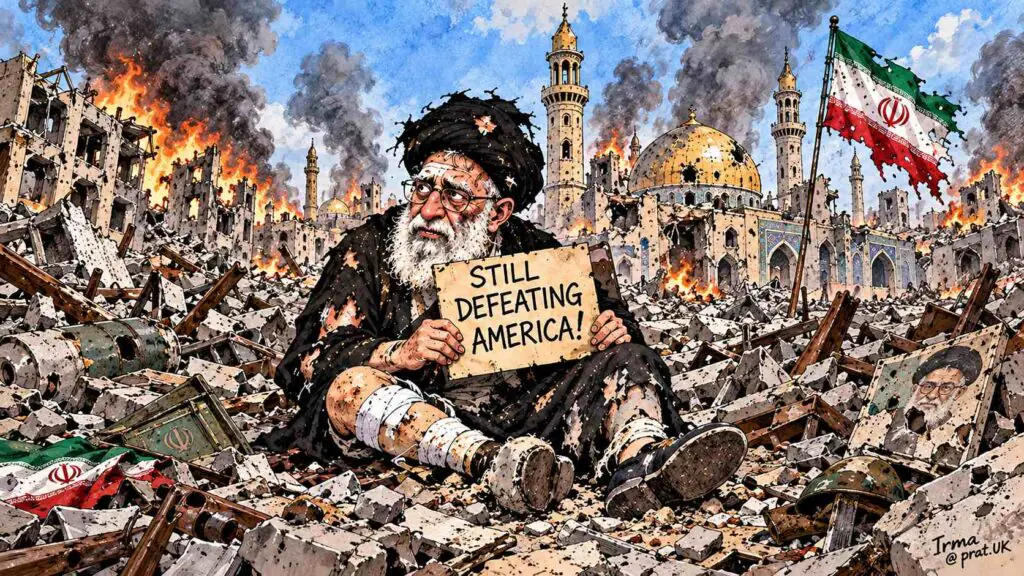
The central difficulty is the definition of victory. American commanders have shown the country’s ability to destroy military targets, degrade enemy capabilities and project overwhelming force across huge distances. Iran has answered by carrying on as though it has some say in when the conflict ends.
A proposed Pentagon memorandum would explain that victory traditionally happens when one side wins and the other side loses. Iranian authorities would be invited to read it before taking further military action. International law, as the State Department would be the first to confirm, contains no provision requiring a defeated government to agree with an American press release.
Washington has therefore weighed creating a Department of Enemy Notification. Its duties would include telling foreign governments they’ve lost, collecting acknowledgments, and making sure surviving hostile leaders understand that continued resistance conflicts with the official American victory schedule. The department would employ 14,000 people on an annual operating budget of $6 billion.
Its first assignment would be finding the Iranian official currently authorized to receive correspondence. That could prove tricky, since America has spent considerable military resources eliminating the people who might have picked up the phone.
Trump Suggests Iran May Be Too Defeated to Understand How Defeated It Is
Strategic analysts have spotted a paradox. The more devastating American operations get, the fewer functioning Iranian institutions may be left to carry out a settlement. Destroying a command structure is a military achievement. Negotiating with a destroyed command structure is far less productive.
The White House has reportedly considered appointing a temporary Iranian surrender representative. Washington would pick somebody agreeable, give him a desk, a telephone and a pen, and let him sign the necessary documents. Legal advisers objected right away that the man would need authority over Iran’s surviving military and political institutions. A presidential aide suggested giving him an official badge. The lawyers said a badge would not be enough.
Washington was disappointed to find another international problem that attractive stationery couldn’t solve.
Meanwhile, the Iranian regime keeps trying to extract political advantage from disruptions to shipping and regional energy markets. That leaves the United States facing an enemy with badly damaged conventional forces but a stubborn willingness to impose economic costs.
Trump’s challenge isn’t proving American superiority, which everyone already understands. The challenge is deciding what surviving Iranian leaders must do, what concessions they could realistically accept, and how any agreement would be enforced. This has caused real frustration, because none of those questions can be answered by counting destroyed radar installations.
White House Proposes a Victory Verification Hotline
A new government telephone service has been proposed to clear up military outcomes. Foreign leaders would dial a toll-free number and choose from several options.
Press one if your navy has been destroyed. Press two if your air defenses have been dismantled. Press three if your leadership has been replaced. Press four if you understand you’ve lost but plan to keep fighting anyway.
Callers who press four would be transferred to the State Department. Estimated wait time: seven months.
Military historians note that battlefield superiority has always been essential to winning wars, but lasting political outcomes usually need further decisions. That takes nothing away from American military achievements, and it doesn’t excuse Iran’s conduct. It only shows that a government’s ability to keep resisting can outlast the destruction of much of its equipment.
The president has been encouraged to add one final question to future Pentagon briefings. Not how many Iranian targets were destroyed yesterday. Not how many objectives were completed. Rather: what specific development would let the United States declare the conflict finished without immediately announcing another military operation?
The president’s political advisers have called the distinction needlessly complicated. The American public may find it useful. Americans know the difference between winning an argument and ending one. Anyone who has been married knows the two rarely happen at the same time.
The Pentagon is now considering whether this lesson belongs in military doctrine. Iran will be notified when the paperwork is complete, assuming somebody can find a working Iranian fax machine.
Five Observations From the Situation Room
- We won so hard the other side didn’t notice. That’s not a victory, that’s a surprise party where the guest of honor stayed home.
- They want a signed delivery receipt. I’ve been trying to get a signature from a FedEx guy for three years and he just leaves it on the porch like it’s a hostage video.
- Press four if you’ve lost but plan to keep fighting. Seven months on hold. Honestly, that’s the most realistic part of the whole thing. I’ve waited longer for my cable guy.
- A temporary surrender representative with a desk and a pen. That’s not diplomacy, that’s a guy hired to sign for packages.
- Winning an argument and ending an argument are two different things. Every married man in America just nodded, and every married woman in America just rolled her eyes because she already knew.
Editorial disclaimer: The Christian Science Monitor investigation into the difficulty of ending the Iran war is real. The emergency probe, the Victory Verification Hotline and the temporary Iranian surrender representative are comic inventions, and the White House has not ordered a search for Iran’s fax machine. Readers who have lost an argument but plan to keep having it may press four for our British Onion.

I am a Lagos-born poet and satirical journalist navigating West London’s contradictions. I survived lions at six, taught English by Irish nuns, now wielding words as weapons against absurdity. Illegal in London but undeniable. I write often for https://bohiney.com/author/junglepussy/.
As a young child, I was mostly influenced by the television show Moesha, starring singer and actress Brandy. Growing up, I would see Brandy on Moesha and see her keeping in her cornrows and her braids, but still flourish in her art and music, looking fly. I loved Moesha as a child, but now I take away something more special from it. Just because you’re a black girl, it doesn’t mean you need to only care about hair and makeup. Brandy cared about books, culture and where she was going — you can do both.