43 Experts to Study Whether France Has Too Many Experts
PARIS, October 22, 2026 – French political leaders have announced an ambitious new national commission to investigate the country’s escalating economic and political crisis, following the disappointing performance of the previous seventeen commissions established to investigate why previous investigations had accomplished so little.
The Commission for the Comprehensive Evaluation of Unresolved National Difficulties will consist of 43 experts, nine working groups, six advisory panels and a specialist subcommittee responsible for choosing the appropriate font for the final report.
Its principal objective will be to determine why French citizens remain dissatisfied despite decades of detailed government explanations concerning why they should be satisfied.
France’s Crisis Ahead of the 2027 Presidential Election
The investigation follows nationwide unrest and deepening political divisions ahead of the 2027 presidential election.
As Robert Kuttner’s analysis of France’s economic stagnation and political divisions explains, the crisis combines concerns about economic opportunity, government debt, public services and declining confidence in established political institutions.
Government officials concluded that these complicated problems required extensive discussion.
Preferably discussion conducted by people with guaranteed salaries, public pensions and absolutely no immediate possibility of losing their jobs.
Public Trust in Experts: More Experts Recommended
The commission’s opening session focused on declining public trust.
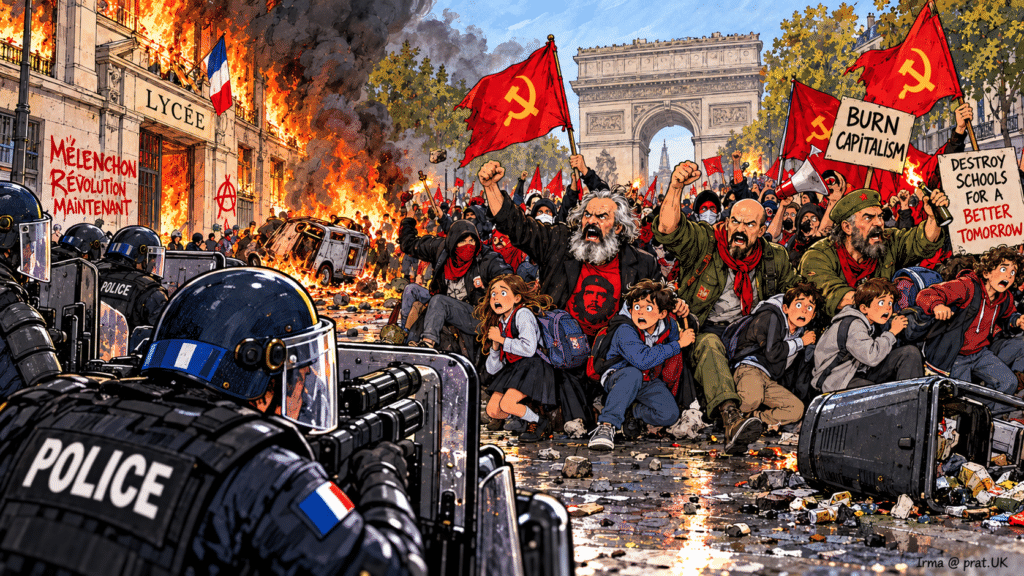
Members unanimously agreed that the public had become dangerously skeptical of experts.
They therefore recommended increasing the number of experts by 40%.
One commission member observed that French voters had grown impatient with government promises that produced little visible improvement.
He suggested publishing another government promise explaining that visible improvement would become apparent after an appropriate consultation period.
The proposal received enthusiastic support.
A typographer was hired to make sure it looked sincere.
The previous seventeen commissions produced a combined 2,300 pages. The new commission has been asked to read them. It has requested an extension.
Mélenchon, Le Pen and Glucksmann Disagree on the Cause
Meanwhile, political parties struggled to agree on the underlying causes of the emergency.
Jean-Luc Mélenchon’s radical left emphasized economic grievances, Marine Le Pen’s National Rally stressed public order and immigration, and the moderate left attempted to occupy the increasingly expensive space between them.
Raphaël Glucksmann had also called for tougher action against violent groups while arguing that authorities must address legitimate social grievances, according to Le Monde’s reporting on Raphaël Glucksmann and France’s protest response.
The commission welcomed these differences as evidence that additional meetings were urgently required.
A Shopkeeper Seeks Protection and Finds a Department
A Paris shopkeeper requested immediate protection for his business.
He was directed to the Commercial Security Consultation Department, which referred him to the Interministerial Working Group on Retail Vulnerability.
The working group requested a written account of the damage, preferably submitted before the next demonstration.
He asked whether there was a form. There was. It was available at the shop he had just come from. The shop’s door had been removed.
The Citizen Who Proposed Making Business Easier
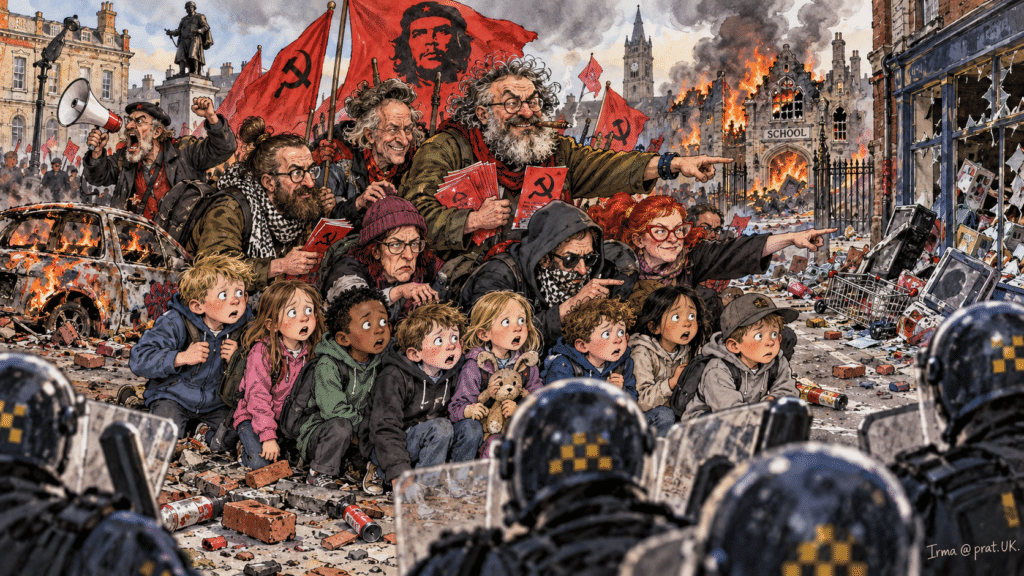
A second citizen asked what government would actually do to increase employment.
Commission members explained that employment was a complex socioeconomic issue requiring substantial research.
The citizen suggested making it easier to establish and operate businesses.
The room fell silent.
This proposal was considered dangerously practical.
A senior member asked the citizen whether he held any formal qualification in making things easier. He said he ran a small printing business and had registered it in four days. Several commissioners asked him to repeat the number. One wrote it down and underlined it twice. The citizen was thanked for his evidence and told it would be considered by working group six, which handles anomalies and has not met since 2019.
The Observatory Will Observe the Commission
After twelve hours, the commission issued its first recommendation: establish a permanent national observatory to monitor the commission’s progress.
The observatory would employ 120 civil servants and publish quarterly assessments of why the commission had not yet published its final report.
A second observatory was proposed to monitor the first. It was approved before anyone could object. It has not yet been funded, which the commission described as the most promising stage of any French institution.
By evening, France’s politicians declared that meaningful progress had been achieved.
The streets remained tense, public debt remained enormous and citizens remained dissatisfied.
But the commission had selected its official stationery.
In France, this qualified as a functioning government.
Five Humorous Observations on Commission Number Eighteen
- Seventeen commissions. Seventeen! At some point you stop calling it a commission and start calling it a hobby. “What do you do on weekends?” “I convene.”
- They picked the stationery before the solution. I respect that. Priorities. My wife picked the curtains before the house. We’re still married. The house is not.
- Forty-three experts to find out if there are too many experts. You know what that’s called? A hostage situation where everybody’s holding a pension.
- The observatory observes the commission. Who observes the observatory? Nobody. That’s the beauty of it. Somewhere there’s a guy in a cardigan watching a guy in a cardigan watch a guy in a cardigan.
- A man asks, “Why don’t you make it easier to start a business?” Silence. Total silence. Like he said something about the Pope’s mother at a wedding.
A commission has been formed to explain this disclaimer. The political positions quoted come from real reporting; the 43 experts, the observatories and the stationery are comic, and peaceful protest and criminal violence are not interchangeable. Chaired by the world’s oldest tenured professor and a philosophy major turned dairy farmer, who have not met since the cows were milked. Browse more news satire and the British Onion.

Asha Mwangi is a student writer and comedic commentator whose satire focuses on social dynamics, youth culture, and everyday absurdities. Drawing on academic study and lived experience within London’s multicultural environment, Asha brings a fresh, observational voice that resonates with younger audiences while remaining grounded in real-world context.
Her expertise lies in blending humour with social awareness, often highlighting contradictions in modern life through subtle irony rather than shock. Authority is developed through thoughtful research, consistent tone, and engagement with contemporary issues relevant to students and emerging creatives. Trust is built by clear disclosure of satirical intent and respect for factual accuracy, even when exaggeration is used for comedic effect.
Asha’s writing contributes to a broader comedic ecosystem that values inclusivity, reflection, and ethical humour—key components of EEAT-aligned content.