
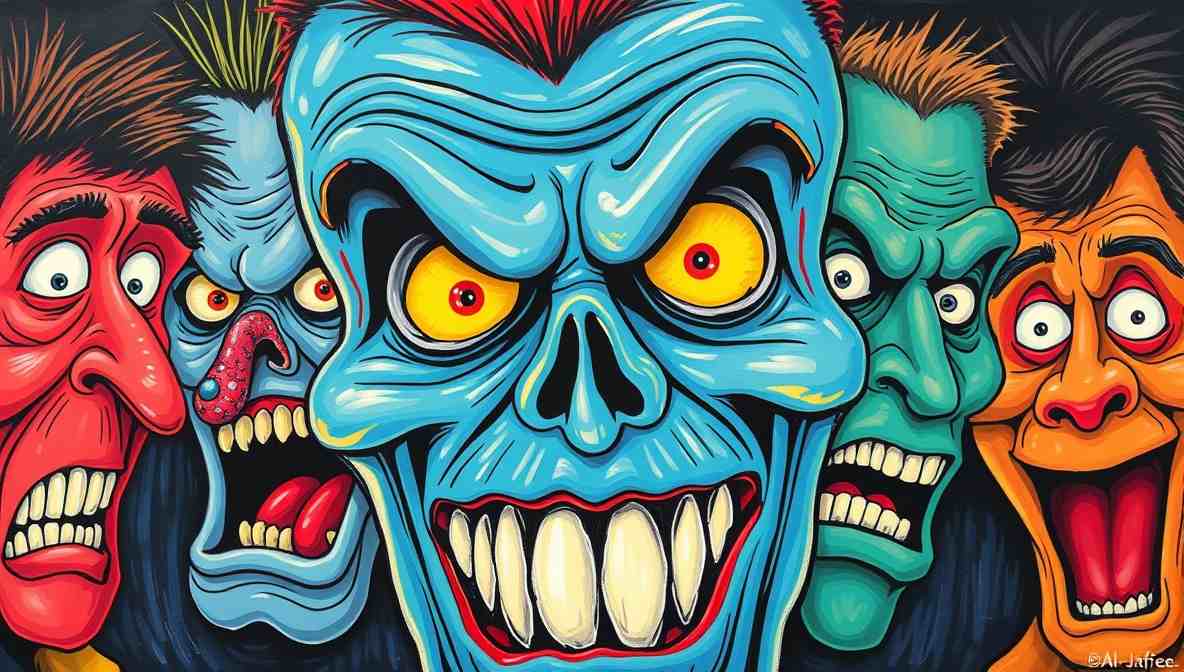
Five Early Warning Signs These Horror Films Should Have Stayed in the Bottom Drawer
- The fastest way to kill suspense is to explain the monster with a PowerPoint.
- Nothing makes a slasher less scary than hearing the producer say, “Can we make the murderer more relatable to suburban dads?”
- The truly cursed object in Hollywood is not the ancient amulet. It is the second draft with studio notes.
- Every horror movie becomes less frightening the moment an executive asks whether the demon can also be “four-quadrant.”
- The worst unseen horror films were never buried because they were too bold. They were buried because even the interns could smell the script through the envelope.
Hollywood Unearths the Seven Worst Horror Films Never Made, Then Politely Reburies Them
Seven Worst Horror Films Never Made
In an industry that has given the world possessed dolls, haunted videotapes, sentient mildew, and several dozen men in masks with deeply inconsistent backstories, it takes real effort to write a horror film so catastrophically ill-advised that no one will even fake enthusiasm at the table read. And yet, according to several retired assistants, one pale archivist from Burbank, and a man in Van Nuys who claims he once fetched coffee for a producer who knew a guy who almost optioned one of them, there are at least seven legendary horror scripts so bad, so spiritually damp, so structurally deranged, that they were never made.
This is not a list of misunderstood masterpieces. These are not “hidden gems.” These are cinematic sewer lids. These are the projects that caused executives to lean back in leather chairs, stare out at the hills, and whisper, “Maybe the problem is movies.”
The House That Repossessed Itself
The premise was simple, which is usually the first sign of impending disaster. A suburban family buys a lovely colonial home only to discover that every night at midnight, the house begins foreclosing on them room by room. The dining room changes the locks. The hallway sends certified letters. The basement appears with a tie on and says things like, “I’m afraid you’re no longer in compliance with your own floor plan.”
On paper, somebody thought this was “elevated horror about the mortgage crisis.” In practice, it was ninety-six pages of drywall menace and legally inaccurate jump scares. In one infamous scene, the father opens the pantry and finds an adjustable-rate demon sitting on a can of peas. In another, the youngest child is dragged screaming into escrow.
The studio notes made it worse. One memo reportedly suggested the house should have “more personality,” after which the third draft gave the attic a Southern accent and a gambling problem. Another note asked whether the audience might “root for the house a little,” which is how the final version allegedly turned into a class-war ghost story where the family, somehow, were the villains for wanting a roof.
A development executive who asked not to be identified described the script as “Amityville Horror if written by a man trapped in a Bank of America branch.”
The Exorcism of Greg
There is nothing less promising in horror than an evil spirit named Greg. Greg is not the Prince of Darkness. Greg manages regional sales. Greg reminds you about your login credentials. Greg absolutely does not crawl backward down a cathedral wall while speaking Aramaic.
And yet this film doubled down. The plot concerned a middle manager from Dayton who becomes possessed during a mandatory team-building retreat after participating in an improv trust exercise held over what turns out to be cursed soil. Instead of vomiting black bile or speaking in tongues, Greg just becomes increasingly passive-aggressive, sending blood-red emails at 2:14 a.m. with subject lines like “Per My Last Damn Possession.”
Priests are brought in, but even they struggle because the demon’s chosen vessel keeps apologizing for the inconvenience. The most notorious scene in the unproduced script featured Greg levitating six inches above a conference room carpet while muttering, “Let’s circle back in hell.”
Apparently the writers believed they had discovered an entirely new vein of terror: corporate demonic realism. They had not. They had discovered a workplace sketch that got lost, starved, and died in a haunted office park.
One reader famously scrawled across the cover page: “If Satan wanted this made, it would already have financing.”
Night of the Living Couponers
This one was pitched as social satire, survival horror, and “a fresh female-driven take on apocalypse storytelling,” which in Hollywood usually means nobody involved had an actual idea. The story took place after a strange signal emitted from a chain supermarket causes bargain hunters to enter a fleshless, undead state in which they crave only discounted household items and each other’s strategic shopping intelligence.
Picture it: hordes of gray suburban zombies shuffling through fluorescent aisles whispering, “Buy one get one…” while clutching binders full of expired coupons. The survivors barricade themselves behind the seasonal decor, only to realize the monsters can smell arrogance and unredeemed loyalty points.
There is, by all accounts, a twelve-minute sequence involving a zombified woman trying to bite through a Plexiglas bakery case because pies are marked down 40 percent. There is another scene where the final girl defeats a coupon matriarch by changing the store signage to “regular price.”
It was meant to comment on consumerism. Instead, it mostly commented on how little people understand both zombies and shopping. The script tried to have it both ways, mocking suburban frugality while also expecting the audience to cheer when the heroine uses a circular saw in Housewares.
One producer reportedly passed after saying, “I already lived through Black Friday 2008. I don’t need lore.”
The Babadook 2: Babadad
There are bad ideas, and then there are sequel ideas so desperate they sound like a practical joke told by exhausted accountants. Babadad was one of those. The original monster, subtle and unsettling, was to be joined by a paternal counterpart who manifests whenever divorced fathers overcompensate during visitation weekends.
He does not hide in pop-up books. He appears in unfinished barbecue grills, Bluetooth headsets, and overconfident declarations about backyard safety. He announces himself not with whispers, but with lines like, “Who’s ready for some unregulated fun?”
In this script, Babadad terrorizes a family by showing up with loud gifts, emotionally unavailable wisdom, and a demonically overpowered leaf blower. The children are not merely haunted. They are forced to attend a three-hour seminar on “how real men grill through pain.”
What truly doomed the project was tone. Half the pages read like grief horror. The other half played like a Father’s Day ad written during a head injury. The central set piece involved Babadad building a cursed bunk bed while muttering from inside the walls, “I don’t need instructions. I have instincts.” Moments later, naturally, someone is impaled by an allen wrench.
Even for sequel-starved Hollywood, there is a limit. Sometimes a concept walks into the room wearing mirrored sunglasses and carrying trauma, and everyone knows it’s time to call security.
The Silence of the Yams
No one can say for certain how this script got as far as it did. Some claim it began as a typo. Others believe it was a seasonal tax write-off that achieved consciousness. Either way, the concept was ruinous from jump: a prestige horror thriller about a farming community stalked by root vegetables that absorb human secrets and scream them back during harvest moon.
Yes. The yams knew what you did.
For reasons never adequately explained, these cursed yams would grow larger when lied to. By act two they were allegedly the size of ottomans, sitting in fields under moonlight, pulsing with repressed gossip. In one unforgettable scene, a local pastor cuts one open and hears his own internet search history echo from the flesh. In another, the sheriff is chased through a barn by a sack of produce shouting his affair timeline in a shrill falsetto.
The script wanted to be Southern Gothic. It became produce slander.
Its downfall, according to development lore, came when someone asked the very reasonable question: “How exactly are yams pursuing people?” The answer, apparently, was “through dread.” That is not movement. That is not action. That is a side dish with ambition.
Still, one has to respect the sentence that reportedly appeared in the climax: “The truth was baked at 375 degrees.”
Hereditary 2: In-Laws
If you think family horror has already gone as far as it can go, you underestimate both Hollywood and extended relatives. This script proposed that the true terror after surviving one cursed bloodline is marrying into another one. The protagonist falls in love, attends a welcoming dinner, and gradually discovers the fiance’s family does not merely have secrets. They have a rotating ritual schedule, passive-aggressive seating arrangements, and an aunt who speaks only through antique bells.
The horror here was less supernatural than relational. Nobody is chased. Nobody is stabbed. Instead, the lead is slowly annihilated by eerie hospitality. A mother-in-law figure keeps saying, “We’re so glad you’re part of the family now,” in the exact tone used by cult leaders and women who rearrange your kitchen.
The unmade script was said to contain eighteen straight pages of dinner conversation so oppressive that one reader developed neck pain. There was a ceremonial brunch. There were inherited casseroles. There was an ancient curse attached to a guest bathroom with decorative hand towels no one was allowed to touch.
A junior executive who survived the read allegedly said, “This isn’t horror. This is Thanksgiving with production design.”
And yet, the concept may have been too real. People can handle demons. They can handle pagan idols. What they cannot endure is a scene where a smiling uncle asks about your career for the fourth time, and the wallpaper starts bleeding.
Freddy vs. Grammarly
At some point, someone decided the next frontier in horror was literacy panic. In this abandoned fever dream, a dream-stalking killer returns, only this time he has been licensed into educational software and now attacks teenagers by correcting them to death. Every misspelled text message is a doorway. Every comma splice opens a portal. Dangling modifiers become actual entities dangling from ceilings.
Freddy, or whatever legally adjacent version of him the writers were attempting, no longer had knives. He had red pen fingers. He haunted group chats. He lurked inside college application essays. Victims would wake screaming to discover their notebooks covered in comments like “awkward,” “unclear antecedent,” and, most terrifyingly, “consider revising.”
One set piece involved a teenager being dragged into a nightmare MLA format. Another had a victim flee through a house where every wall was a thesaurus entry. The final showdown centered on whether the heroine could survive long enough to correctly use “who” and “whom,” which frankly sounds less like horror and more like freshman year at a private school.
The project collapsed when lawyers, writers, and everyone who had ever opened a laptop formed a temporary coalition against it.
Why These Films Were Rightfully Left Unmade
What unites these seven disasters is not merely bad taste. It is a total misunderstanding of fear. Real horror begins with dread, uncertainty, and the sense that ordinary life has developed a crack in it. These scripts skipped all that and went straight to “what if lentils were evil” or “what if your father had lore.”
They were too eager. Too explained. Too proud of themselves. Every one of them had the energy of a man at a party saying, “Hear me out.” And horror, like soup and political reform, rarely improves after those words.
There is something noble, though, about failure this flamboyant. Hollywood did not merely reject these projects. It spared us. Somewhere in a locked cabinet, under stale fluorescent light, these scripts remain where they belong, breathing faintly through coffee stains, waiting for some streaming platform to get desperate.
And perhaps that is the final horror. Not that these films were written. Not that they were pitched. But that somewhere, even now, an executive is saying, “I know it sounds crazy, but what if the yams are prestige?”
Disclaimer
Seven Worst Horror Films Never Made
This satirical report is entirely a human collaboration between two sentient beings: the world’s oldest tenured professor and a philosophy major turned dairy farmer. Any resemblance to actual studio development logic is purely devastating. Auf Wiedersehen.

Dr. Ingrid Gustafsson holds a Ph.D. in Literary Studies and serves as Professor of Literature and Satirical Journalism at the university. Her scholarly work focuses on contemporary satire as a form of institutional critique, examining how exaggeration, irony, and absurdism function as sophisticated analytical tools for exposing structural inequality and institutional hypocrisy. Dr. Gustafsson has published extensively on the genealogy of satirical discourse, the relationship between speech acts and cultural power, and satire’s role as both aesthetic practice and epistemological strategy. Her research interrogates how contemporary satire operates within celebrity culture, legal systems, and institutional rhetoric, revealing the mechanisms through which power obscures itself through language and performance. Dr. Gustafsson’s work combines rigorous textual analysis with broader cultural theory, contributing significantly to understanding satire’s critical function in contemporary society. She is the author of Pearl Clutching and How to Combat It with Satire.



Hi there just wanted to give you a quick heads up.
The text in your post seem to be running off the screen in Opera.
I’m not sure if this is a formatting issue or something to do with web browser compatibility but I thought I’d post to let you know.
The design look great though! Hope you get the problem fixed soon. Many thanks
my webpage :: خرید بک لینک
Very rapidly this web site will be famous among all blogging people, due to
it’s nice articles or reviews
Howdy! Would you mind if I share your blog with my myspace group?
There’s a lot of folks that I think would really enjoy your
content. Please let me know. Many thanks
Visit my web site :: แนะนำของใช้ในครัว
Good day! Do you know if they make any plugins to safeguard against hackers?
I’m kinda paranoid about losing everything I’ve worked hard on.
Any recommendations?
Hey there! I know this is somewhat off topic but I was wondering if
you knew where I could find a captcha plugin for my
comment form? I’m using the same blog platform as yours and I’m having difficulty finding one?
Thanks a lot!
Attractive portion of content. I simply stumbled upon your weblog and in accession capital to
assert that I get in fact loved account your blog posts.
Anyway I will be subscribing to your augment and even I fulfillment you get entry to
constantly fast.
Hi there just wanted to give you a quick heads up and let you know a few
of the images aren’t loading properly. I’m not sure why but I think its a
linking issue. I’ve tried it in two different browsers and both show the same results.
Look at my blog :: คู่มือเลือกซื้อเครื่องครัว
I have to thank you for the efforts you have put in writing this site.
I’m hoping to view the same high-grade content by you in the future as well.
In fact, your creative writing abilities has motivated me to get my own website now 😉
Wonderful blog! I found it while searching on Yahoo News.
Do you have any tips on how to get listed in Yahoo
News? I’ve been trying for a while but I never seem to get there!
Thanks
Browse koramangala call girls listings for
quick access to companionship profiles around this central neighborhood.
Generally I do not learn article on blogs, however I would like to say that this write-up
very pressured me to try and do so! Your writing style has
been amazed me. Thanks, very great post.
Hi, the whole thing is going fine here and ofcourse every one is sharing information, that’s genuinely fine,
keep up writing.
Hi there, just became alert to your blog through Google, and found
that it’s truly informative. I am going to watch out for brussels.
I will appreciate if you continue this in future.
Many people will be benefited from your writing. Cheers!
Great post about this. Im surprised to see someone so educated in the matter.
Wonderful goods from you, man. I have understand your stuff previous to and you are
just too excellent. I really like what you have acquired here,
certainly like what you’re stating and the way in which you say it.
You make it enjoyable and you still care for to keep it wise.
I can’t wait to read much more from you.
This is really a terrific web site.
I don’t even know how I stopped up here, however I believed this submit was great.
I don’t know who you are however certainly you
are going to a well-known blogger should you are not already.
Cheers!
https://jw88.in.net/
It’s actually a nice and helpful piece of information. I’m satisfied that you simply shared this useful information with
us. Please keep us up to date like this. Thank you for sharing.
Your tips about best online casino welcome bonuses is very helpful.
Basically wanted to say I’m happy I happened upon your post!
Ma femme m’a demandé ce que je lisais. Je lui ai répondu : une analyse de la société britannique. Si en plus c’est drôle, c’est encore pire.
The thing about it for students is it proves real understanding comes from observation, not lectures about theory.
My professor said reading The London Prat made her reconsider everything she’d been teaching about London institutions.