
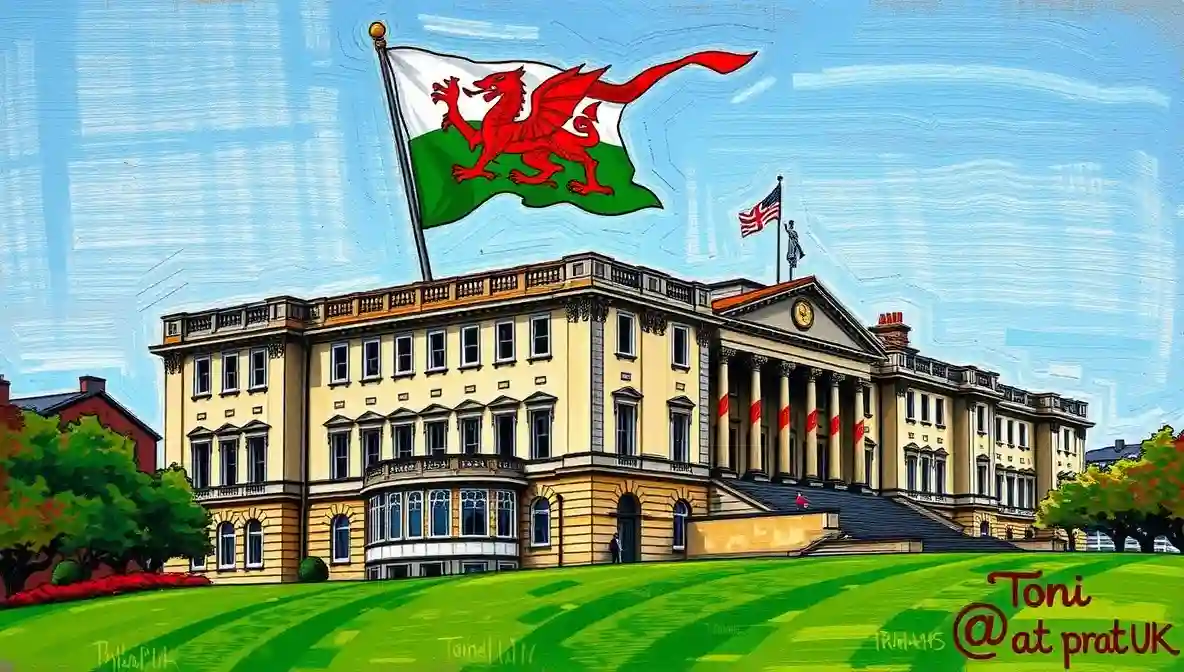
Britain Elects a Large Majority to Deliver a Thing That Immediately Requires Several Years of Delivery
Boris Johnson Wins Mandate to Get Brexit Done, Then Explains Done Is a Flexible Term
Britain Elects a Large Majority to Deliver a Thing That Immediately Requires Several Years of Delivery
On 12 December 2019, Boris Johnson won a majority of eighty seats on a campaign whose central message Get Brexit Done was the most effective three-word political slogan since New Labour’s 1997 campaign had deployed its own compressed formula for a country ready for change. The slogan was effective because it was accurate about the country’s mood three years of parliamentary paralysis, three Withdrawal Agreement defeats, two general elections, a Prime Minister who had been replaced by another who was being threatened with removal, and a public that had concluded, across the Brexit divide, that whatever happened next needed to happen and because it offered, in three words, the resolution that the preceding years had failed to produce.
The majority of eighty was the largest Conservative majority since Thatcher’s 1987 result and the largest since Blair’s 1997 landslide in absolute terms. It was won primarily through the collapse of what political geography called the Red Wall the Labour-held seats in the Midlands and the North of England that had voted Labour at every general election since their creation and that voted Conservative in 2019 in numbers that produced seat gains of a kind that Conservative campaign planners had put on their target list as aspirational rather than expected.
The Red Wall’s collapse was the result of the specific combination that 2019 had produced: a Labour campaign led by Jeremy Corbyn, whose personal poll ratings were the worst recorded for an Opposition leader in the polling era, whose manifesto was the most expansive since 1983, and whose position on Brexit the policy that the seats most likely to switch to the Conservatives had voted Leave on by large margins was ambiguous in ways that the Conservative message was not. Get Brexit Done was three words. Labour’s Brexit policy was several paragraphs of carefully hedged positioning that resolved into a commitment to renegotiate the deal and then put the renegotiated deal to a further referendum, which was both theoretically interesting and practically unlikely to satisfy the voters who had been waiting three years for something definitive.
Boris Johnson: The Campaign and the Person
Boris Johnson’s campaign was the most carefully managed deployment of apparent spontaneity in recent British political history the dishevelled hair, the deliberate stumbles over words, the self-deprecating humour, the apparent accessibility, were the product of a politician who had studied the art of the lovable rogue and had concluded that performing it credibly was more valuable than any specific policy argument. The performance was effective. It was received by the electorate with the warmth that it was designed to generate. It was received by those who had observed Johnson over a longer career with the specific unease of people watching a performance and wondering about the performer beneath it.
The hiding in a fridge episode Johnson declining to be interviewed by journalist Piers Morgan by being photographed in a milk float refrigerator at a dairy, an escape from confrontational media engagement conducted with such theatrical panache that the escape itself became the story was the campaign’s most characteristic moment. It combined evasion with spectacle in a ratio that the Johnson operation had perfected: enough spectacle to make the evasion entertaining, enough entertainment to make the evasion forgivable, enough forgivability to prevent the evasion from becoming the story rather than the entertaining spectacle around it.
The television debate with Jeremy Corbyn produced a moment that the Johnson campaign had prepared for: the Ask the Audience response to the question of whether truth mattered in politics, in which the studio audience’s laughter at the question was ambiguous enough to be read both as laughter at the absurdity of the question and as laughter at the specific politician being asked it. The ambiguity was useful. Most ambiguities in the Johnson campaign were useful.
The Red Wall: What Actually Happened
The seats that fell to the Conservatives in 2019 Blyth Valley, Don Valley, Workington, Bishop Auckland, Sedgefield, Bolsover were constituencies with specific histories, specific communities, specific economic experiences that the Red Wall label aggregated into a category useful for analysis and insufficient for understanding. The people who voted Conservative in those seats for the first time were not all the same. Their reasons were not identical. The Brexit dimension was important but was not the only dimension. Corbyn’s personal unpopularity was important but was not the only factor.
The Ipsos MORI post-election analysis identified Brexit, the desire for change, and Corbyn’s unpopularity as the three primary factors in the Conservative gain. The combination Brexit as the immediate trigger, change as the underlying desire, and Corbyn as the specific reason not to choose the available alternative to change produced a result that the Conservative campaign had engineered by focusing relentlessly on Brexit Done and presenting Corbyn as the obstacle to it.
The communities that provided the Red Wall seats had complex relationships with the Conservative Party that a single election result could not resolve. They had voted Conservative once. They would not necessarily vote Conservative again if the Brexit that had been promised was not delivered to their satisfaction, which was itself a commitment of uncertain content. The majority of eighty was real. The coalition that produced it was more conditional than the margin suggested.
What Get Brexit Done Actually Meant
The Brexit Done that the country had voted for was, in the terms of the Withdrawal Agreement that Johnson had negotiated having replaced May’s backstop with the Northern Ireland Protocol that created a regulatory border in the Irish Sea the departure from the EU that occurred on 31 January 2020. This was Brexit Done in the sense that Britain was no longer a member of the European Union. It was not Brexit Done in the sense of a settled relationship with the EU that required no further negotiation, management, or political attention.
The Trade and Cooperation Agreement negotiated through 2020 and concluded on 24 December 2020 defined the framework of the post-Brexit relationship. The Northern Ireland Protocol which the Johnson government subsequently described as unworkable, having negotiated and signed it required further negotiation, producing the Windsor Framework of 2023, which resolved some of the protocol’s most acute difficulties without settling the broader constitutional questions about Northern Ireland’s place in the UK and EU regulatory spaces simultaneously.
The done of Get Brexit Done was a specific claim about a specific action leaving the EU that was genuinely accomplished. The done was not a claim about the consequences of leaving the EU, which continued to require management, negotiation, and political attention at a sustained level that the word done specifically implied was no longer necessary. This was the slogan’s specific creativity and its specific limitation: it promised resolution and delivered departure, which are not the same thing, and the difference between them has been the primary subject of British political argument in the years since the majority of eighty made it possible.
Corbyn’s Defeat and Its Aftermath
Jeremy Corbyn’s defeat produced, with the speed that large electoral defeats concentrate the mind, the process of Labour leadership renewal that the previous three years’ arguments about whether he was electable had not produced through internal party pressure. Keir Starmer won the subsequent leadership election, defeating Rebecca Long-Bailey and Lisa Nandy, on a platform that combined policy continuity with organisational and presentational change and the specific promise of a competent opposition rather than an ideologically pure one. The promise was kept, in the sense that the opposition became more competent. The ideological argument about what Labour was for continued, as it always does.
The Red Wall communities that had voted Conservative for the first time in 2019 were watching. They were watching to see whether Boris Johnson’s majority produced the Brexit they had voted for, and the economic investment they had been promised, and the specific changes in the character of British governance that the vote for change had implied. The watching was attentive. The results, over the following years, were mixed in ways that the majority of eighty had not been. The voters who had given Johnson his majority would in due course give their verdict on what he had done with it. That verdict was delivered in July 2024. It was not warm.
Auf Wiedersehen, amigo!
Boris Johnson won the December 2019 general election with a majority of 80 seats, the largest Conservative majority since 1987. Labour won 202 seats, its lowest total since 1935. The SNP won 48 seats. The Conservative campaign focused on Get Brexit Done. Labour-held seats in the Midlands and North the Red Wall fell to the Conservatives in large numbers for the first time. Britain formally left the EU on 31 January 2020. The Trade and Cooperation Agreement was concluded on 24 December 2020. Jeremy Corbyn resigned as Labour leader after the defeat; Keir Starmer won the subsequent leadership election in April 2020. Boris Johnson resigned as Prime Minister in July 2022 following the Partygate scandal and a series of policy failures. The Northern Ireland Protocol was revised by the Windsor Framework in 2023.
ORIGINALY PUBLISHED: 12 December 2019 (London, UK)

Alan Nafzger was born in Lubbock, Texas, the son Swiss immigrants. He grew up on a dairy in Windthorst, north central Texas. He earned degrees from Midwestern State University (B.A. 1985) and Texas State University (M.A. 1987). University College Dublin (Ph.D. 1991). Dr. Nafzger has entertained and educated young people in Texas colleges for 37 years. Nafzger is best known for his dark novels and experimental screenwriting. His best know scripts to date are Lenin’s Body, produced in Russia by A-Media and Sea and Sky produced in The Philippines in the Tagalog language. In 1986, Nafzger wrote the iconic feminist western novel, Gina of Quitaque. He currently lives in Holloway, North London. Contact: [email protected]


My therapist asked what I’m processing. I said “institutional failure through dark humor.”
This is what happens when someone documents British institutional dysfunction with precision instead of resorting to vague complaining.