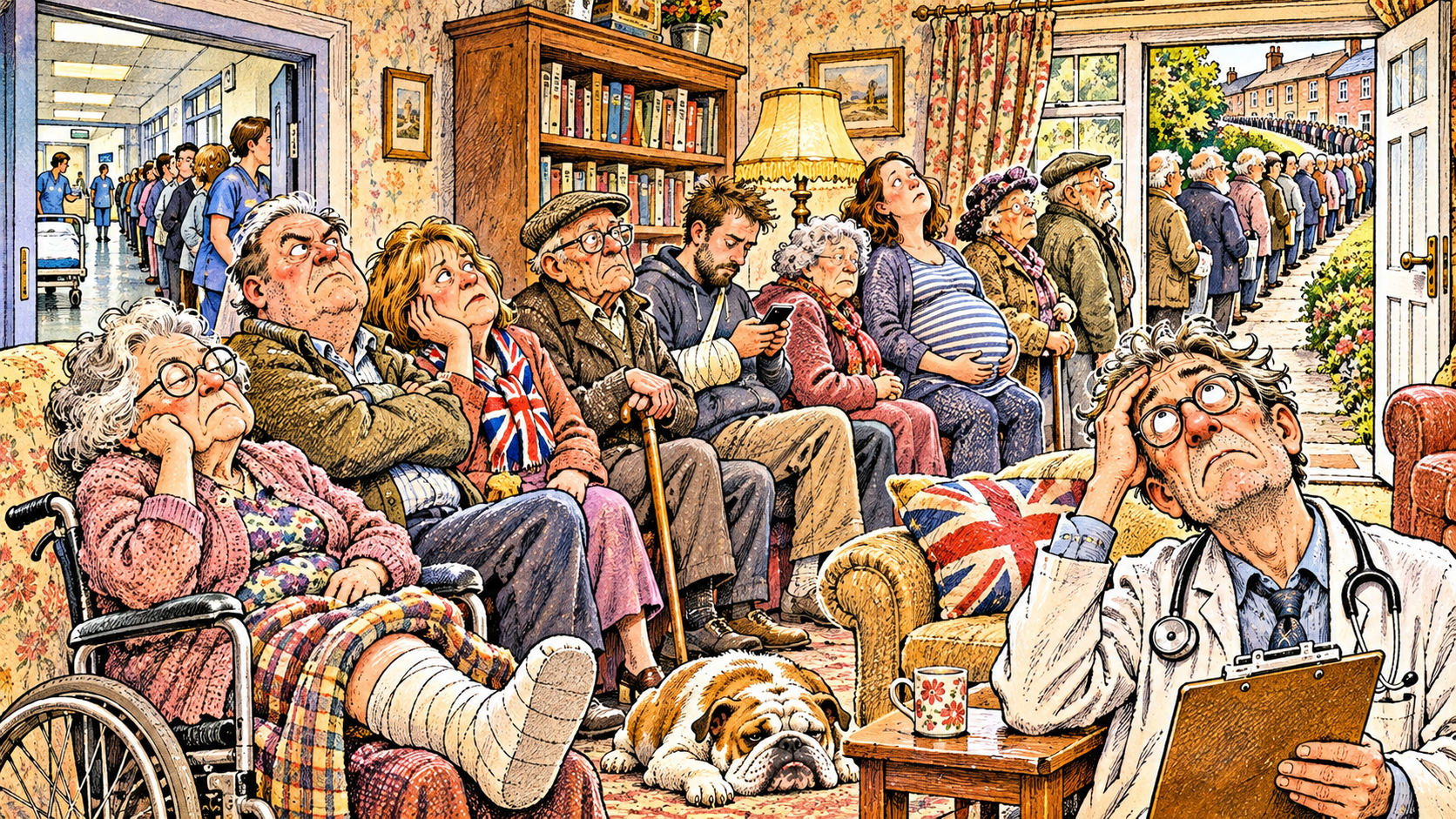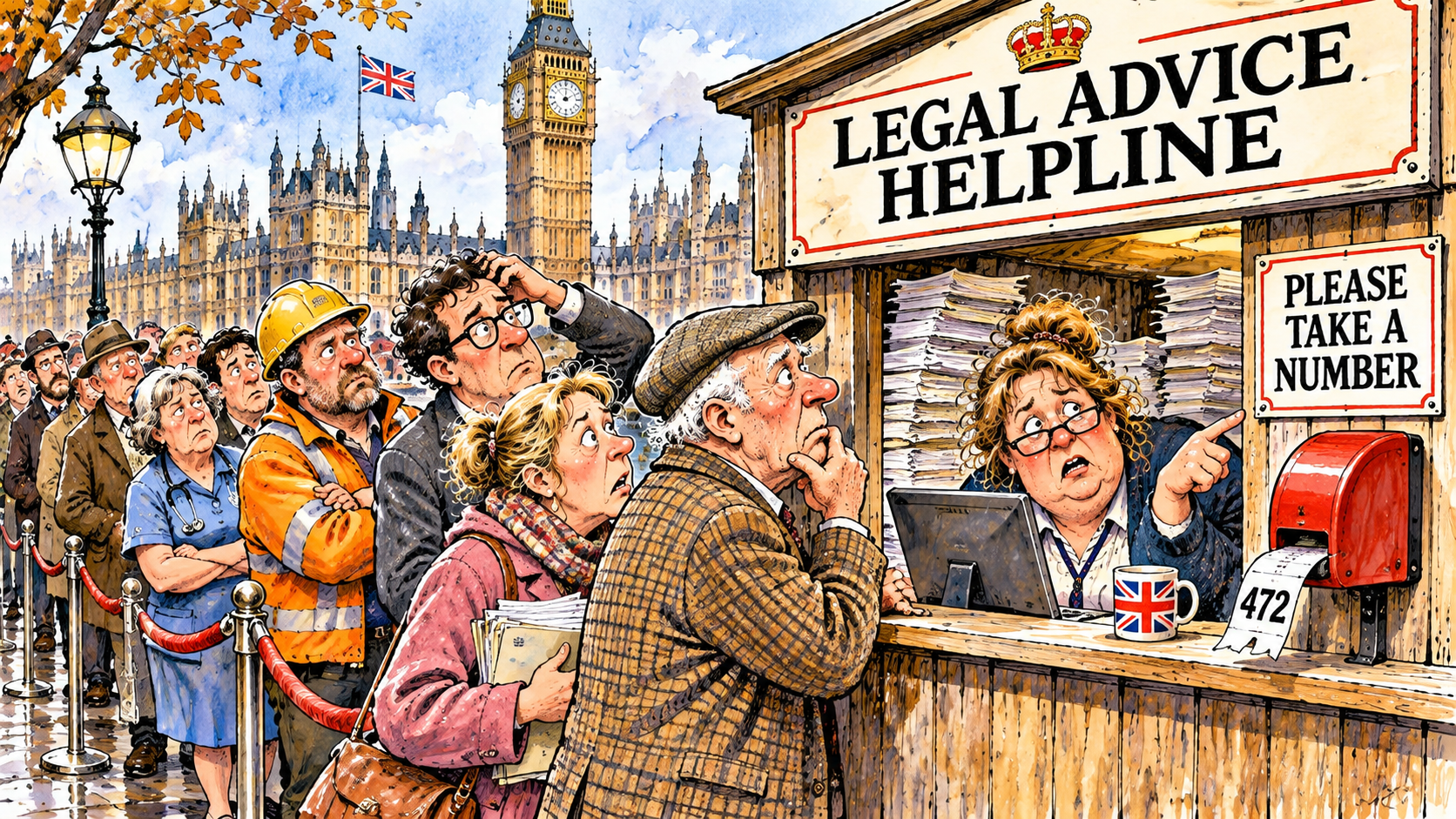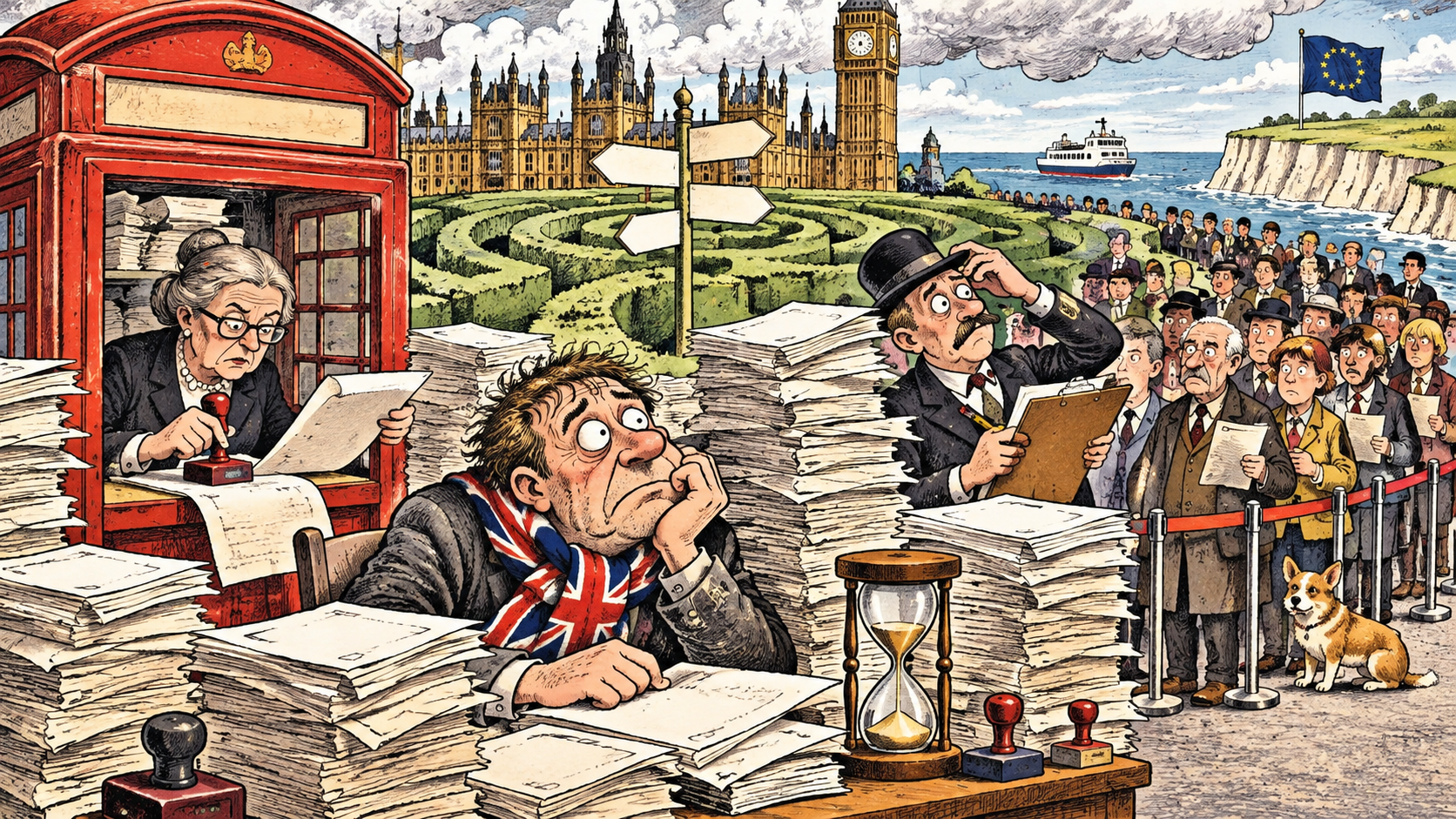
BRUSSELS — Britain has discovered a fresh approach to Brexit: declare the argument finished, then employ an entire department to explain why the paperwork is only beginning. Prime Minister Andy Burnham’s latest attempt to improve practical relations with Europe has produced the diplomatic equivalent of a divorced couple agreeing to share a lawnmower while refusing to discuss who owns the shed.
Brexit paperwork survives its own funeral
Officials want to make it easier for goods, particularly food, to cross the Channel. This sounds modest until one remembers that a British sandwich can now inspire more documentation than a medium-sized corporate takeover. A fictional customs officer at Dover explained that the ham had passed inspection but the mustard had failed to establish its constitutional position.
“The problem isn’t that Britain left,” said an entirely satirical trade consultant, “it’s that the paperwork appears to have stayed behind and multiplied.” He demonstrated by opening a folder labelled Simplification, which contained seven other folders, one of them labelled Simplification: Preliminary Clarifications.
The government hopes closer cooperation will reduce some friction for exporters. That is a sensible ambition. The difficulty is that friction has become a cottage industry, with consultants, certification specialists and people who know which box to tick on page 46 all depending upon its continued survival.
The great British sausage negotiates its future
Consider a small producer sending sausages to a customer in France. The producer thinks the transaction involves sausages, money and perhaps a refrigerated van. The administrative view is more ambitious. It involves veterinary declarations, border procedures and the philosophical question of whether a sausage remains British after entering Belgium.
A butcher in Kent, invented for this report, said he had considered attaching a passport to every pork link. “At least then the sausages could queue with the passengers,” he said. “They’d probably get through quicker, and they’ve got more convincing reasons to travel than half the stag parties.”
The underlying issues are serious. Trade barriers can add costs for smaller businesses, while regulatory differences complicate supply chains. Readers can examine official policy at the Cabinet Office and the European Union’s own account of its relationship with Britain at the European Commission.
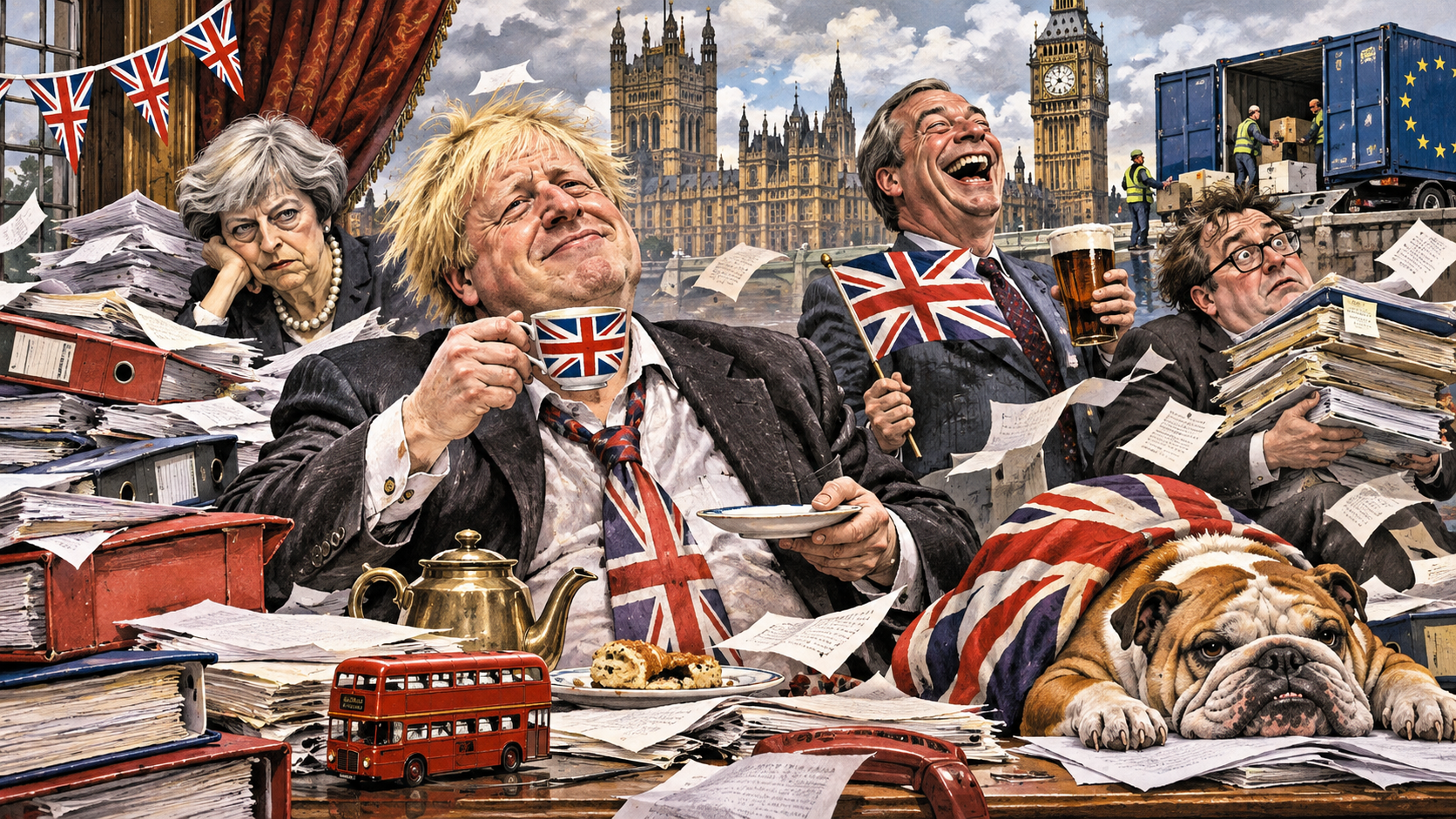
Burnham’s Brexit reset meets the British committee
Another area of discussion is youth mobility. This raises a straightforward question: can younger people spend time working and studying across borders without making the arrangement sound like a covert attempt to reverse a referendum? Westminster’s answer is to hold enough meetings that nobody has time to travel anywhere.
One satirical civil servant proposed calling the scheme the Temporary Non-Rejoining Cross-Border Personal Development Opportunity. His colleagues approved the title after removing the word Opportunity, which they considered excessively optimistic.
Emissions trading cooperation presents a similar opportunity for comic misunderstanding. A mock minister explained that carbon would be permitted to cross borders without customs checks, unlike cheese. “Carbon has a stronger lobbying operation,” he said.
How to tell whether Brexit has really ended
The practical test is not whether ministers produce a grand declaration beneath a row of flags. It is whether a small exporter can ship an order without needing a specialist translator, a compliance lawyer and an emergency supply of biscuits. Businesses should consult current official guidance before making shipping decisions, because political promises and customs requirements are not interchangeable documents.
For now, Britain remains determined to move beyond the Brexit argument while preserving its favourite national pastime: arguing about what moving beyond Brexit actually means. The summit concluded with agreement that more talks would be helpful. The talks about arranging those talks are expected to begin once the agenda has been translated.
Disclaimer: This satirical dispatch is an entirely human collaboration between two sentient beings: the world’s oldest tenured professor and a philosophy major turned dairy farmer. All quoted customs officers, butchers and officials are comic characters, not actual sources.

Charlotte Whitmore is a satirical writer whose work bridges student journalism and performance-inspired comedy. Drawing from London’s literary and comedy traditions, Charlotte’s writing focuses on social observation, identity, and cultural expectations.
Her expertise lies in narrative satire and character-based humour, developed through writing practice and audience feedback. Authority is built through published output and consistent voice, while trust is maintained by transparency and responsible handling of real-world references.
Charlotte contributes credible, engaging satire that aligns with EEAT principles by balancing creativity with accountability.