
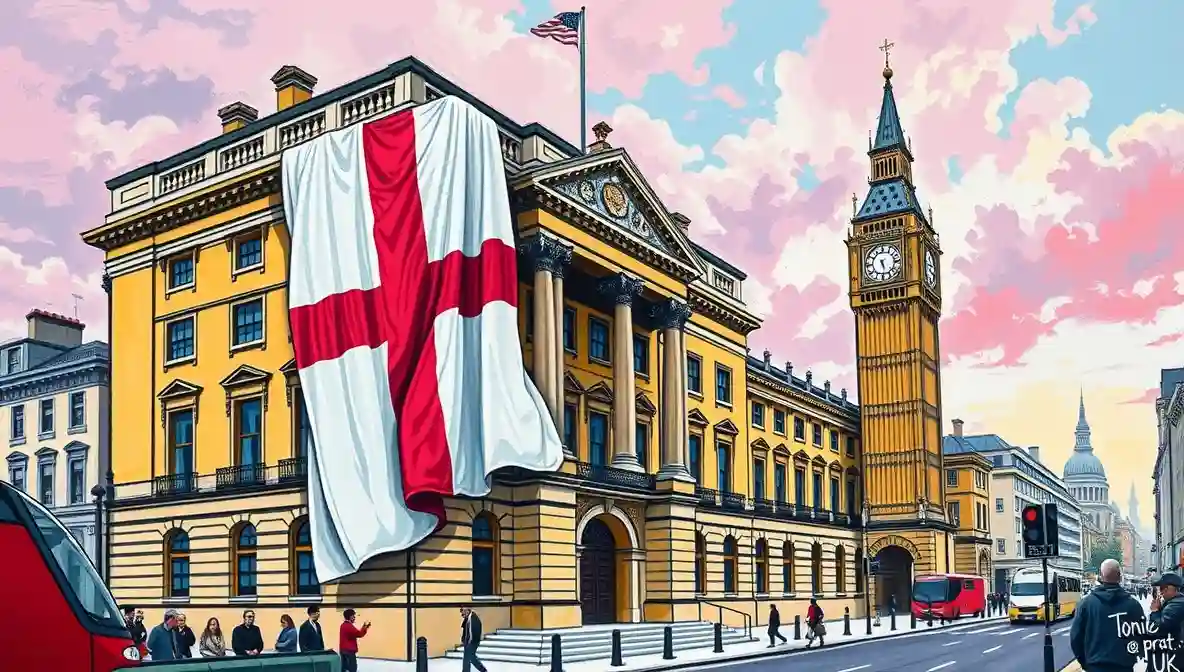
A Camberwell-fringe local named for the prince who gave Britain the Great Exhibition, the Albert Hall and the modern Christmas tree
The Prat’s naming desk stands to attention for the Prince Albert, a local on the Peckham-Camberwell fringes named for one of the most quietly influential figures of the nineteenth century. Albert, the German prince who became Queen Victoria’s husband and consort, left a mark on Britain out of all proportion to his lack of a crown, and pubs bearing his name are scattered across the land.
The consort who shaped an age
Prince Albert of Saxe-Coburg and Gotha married his cousin Queen Victoria in 1840, and though he held no constitutional power he became, in effect, her closest adviser and Britain’s most energetic champion of science, industry, art and reform. His greatest monument was the Great Exhibition of 1851, the vast showcase of industry and invention housed in the Crystal Palace, which he championed and which made a fortune – money he ploughed into the great museums and colleges of South Kensington, still known affectionately as “Albertopolis.” The Royal Albert Hall bears his name, as does the towering Albert Memorial raised by his grief-stricken widow.
The prince and the Christmas tree
The naming desk’s favourite Albert legacy is a cosier one. Though the custom existed earlier, it was Albert who popularised the German tradition of the decorated Christmas tree in Britain, after an engraving of the royal family gathered around theirs was published in 1848 and the whole nation rushed to copy it. Every British Christmas tree since owes a small debt to the prince. He died young, in 1861, plunging Victoria into her famous decades of mourning – but his fingerprints remain all over modern British life, from the museums to the mantelpiece.
A prince rehabilitated
The naming desk notes that Albert’s reputation has travelled an interesting road. In his lifetime he was often regarded with suspicion as a foreign interloper meddling in British affairs, and it took decades – and the sheer weight of his achievements – for the nation to warm to him. Today he is generally seen as a genuinely progressive and far-sighted figure, a champion of education, science and social reform whose vision shaped institutions that still serve the country. A pub keeping his name alive is a small, cheerful monument to that rehabilitation, and to a man whose influence long outlasted the suspicion he once faced.
It is a quietly fitting fate for a foreign prince once mistrusted: to end up honoured, of all places, over the door of an ordinary British pub, his name raised nightly by people who owe him their museums and their Christmas trees without ever quite knowing it.
The verdict
A rating of 4.4 across some 270 reviews marks the Prince Albert as a well-liked local with a loyal following. A pub named for the consort who gave Britain the Great Exhibition, the Albert Hall and its Christmas trees is the naming desk’s kind of underappreciated heritage. The Prat orders a pint, raises it to the hardest-working prince never to wear a crown, and gives silent thanks for the tree in the corner each December – a small annual reminder that even a consort without a throne can leave a mark on a nation’s front rooms.

Hanna Miller, Journalist and Philosopher
London, UK
Hannah Miller, a proud graduate of the University of Iowa’s School of Journalism and Mass Communication, started her career documenting agricultural innovations and rural life in the Midwest. Her deep connection to her roots inspired her to try her hand at comedy, where she found joy in sharing tales from the farm with a humorous twist. Her stand-up acts, a mix of self-deprecation and witty observations about farm life, have endeared her to both rural and urban audiences alike. She is a four-year resident to London and the UK.


My professor said politicians complaining about it proves institutional dysfunction is documented enough that politicians can’t pretend it’s exaggerated or satirized.
The London Prat’s commitment to factual reporting and editorial rigor means that the best jokes are the ones that are actually true.