
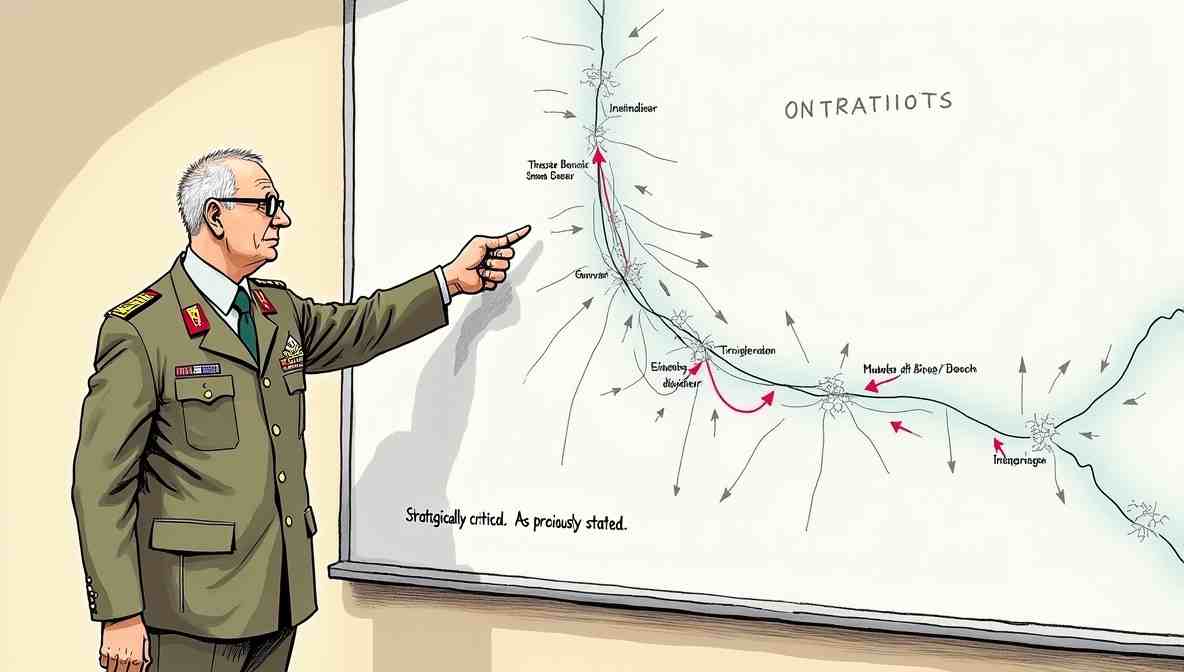
Military Analysts Confidently Explain Events That Were Completely Different 12 Minutes Ago
Newsnight Panel Achieves Collective Confidence Across Four Contradictory Positions
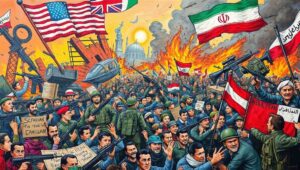
LONDON — Newsnight, Question Time, Sky News Press Preview, and the Radio 4 Today programme have between them produced, during the week of the 8th to the 12th of April 2026, the most comprehensive body of confidently delivered, mutually contradictory analysis in the history of British broadcast journalism. This is not a criticism. This is a description of what happens when a situation changes faster than the recording equipment can track.
The US-Iran ceasefire, announced on the 8th of April and almost immediately violated by multiple parties, offered the British pundit class an opportunity that comes rarely: a situation with so many moving parts, involving so many overlapping interests, contradicting itself so frequently and so thoroughly, that any confident position could be maintained for approximately twelve minutes before the facts required revision. The revision then arrived. The confidence was immediately transferred to the revised position. Nobody noticed the transition. This is the genius of expert commentary, British division.
The Newsnight Model: Confidence With Added Gravitas
The American analyst delivers confidence through volume and graphics. The British analyst delivers it through gravitas, a slightly mournful expression, and the willingness to use the word “frankly” before saying something that is, frankly, untestable. “Frankly, I think Iran is not in a position to walk away from this” was delivered on Newsnight on the evening of the 11th of April with complete authority. Iran walked away from this on the morning of the 12th, or more precisely the US delegation walked away, but Iran had sent them away, which is a distinction the analyst in question addressed the following evening with equivalent frankness and a slightly different thesis.
The Today programme, which has been conducting its interviews in a tone of polite incredulity since 1957, managed the ceasefire coverage by asking its interviewees whether they were “genuinely surprised” by each new development. Most said no. This is the correct answer. No one in the analyst community is ever genuinely surprised, because the analyst community’s function is to explain events after they occur with the demeanour of someone who saw it coming. “I think what we’re seeing is exactly what many of us anticipated” was delivered after the Islamabad talks failed, by an analyst who had anticipated something rather different at the start of them.
Three Former Ambassadors and a Retired General: A Panel Study
Sky News assembled, across the week of the ceasefire, a panel that included three former ambassadors, a retired general, two regional specialists, and one academic who appeared to have been booked by mistake but delivered the most accurate prediction of any of them by noting that “these things take much longer than anyone plans for,” which is a statement so broadly applicable as to be permanently correct.
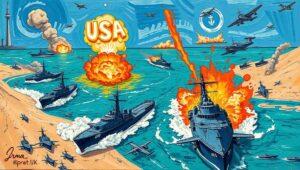
The retired general’s assessment of the Strait of Hormuz situation remained unchanged throughout: it was “strategically critical,” US naval assets were “capable of ensuring freedom of navigation,” and the situation would “resolve itself through sustained pressure.” Nine ships transited in one 24-hour period. Six hundred remained stuck. The general noted this as “a developing operational picture,” which is military language for: the picture is developing away from what I said.
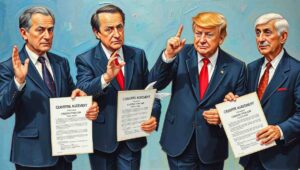
The three former ambassadors took three distinct positions, which is the correct number of positions for three ambassadors. One held that Iran would ultimately return to the table. One held that the nuclear enrichment question was irresolvable without a structural change in US policy. One held that Pakistan’s role as mediator was “frankly underappreciated” and had been since the original Twelve-Day War ceasefire in June 2025, which had also been violated on day one and had ultimately held. All three were correct. All three were also, at various points during the week, incorrect. The confidence level across all three positions remained constant throughout. This is the ambassador’s great professional gift.
What British Analysis Gets Right That American Analysis Does Not
The American analysis, as noted in the previous piece, involves graphics, theme music, and a panel that shouts. The British analysis involves a desk, a single lamp, and the word “actually.” “Actually, I think what’s being missed here is—” is how most British analytical pivots begin. The pivot then introduces the thing that was missed, which is usually whatever just happened, framed as the thing the analyst had been about to say before events confirmed it.
This is not dishonest. It is a form of retroactive forecasting that requires considerable skill and even more composure. When Vance declared the US offer “best and final” and departed Islamabad, the Newsnight analyst who had been predicting progress pivoted with the words: “Actually, I think this was always the likely outcome given the structural constraints on both sides.” These structural constraints had not featured in the previous assessment. They were, however, real, and had always been there, waiting for the analysis to catch up to them.
The Radio 4 Correspondent: A Special Case of Accuracy Through Vagueness
The Radio 4 correspondent in Islamabad delivered, across the twelve-day period, the most reliably accurate reporting of any analyst by the simple method of describing what was happening without predicting what would happen next. This is considered insufficiently analytical by most broadcasters, but has the distinct advantage of never being wrong. “The talks are continuing” was accurate until “the talks have concluded” became accurate, at which point it was reported. No confidence was required. No revision was necessary. The Strait remains “a matter of close attention.” The ceasefire “continues to hold in technical terms.” These statements are true at all moments. The Radio 4 correspondent will sleep well.
The panel will reconvene when there is a development. There will be one shortly. It will require new analysis, delivered with existing confidence. The analysis will be different. The confidence will not be.
The background to all the confident commentary: On 28 February 2026, the US and Israel launched air strikes against Iran, killing Supreme Leader Ayatollah Ali Khamenei and targeting nuclear and military facilities. Iran retaliated by closing the Strait of Hormuz and launching missile strikes on US bases and Israel, triggering the largest oil supply disruption on record. Pakistan brokered a two-week ceasefire on 8 April. JD Vance led the US delegation to Islamabad; Iran’s Foreign Minister Araghchi led the Iranian side. Twenty-one hours of talks on 11 April ended without agreement, with nuclear enrichment as the central sticking point. Vance departed. Trump threatened a naval blockade. The analysts are standing by. Their confidence is prepared.
Auf Wiedersehen, amigo!



Alan Nafzger was born in Lubbock, Texas, the son Swiss immigrants. He grew up on a dairy in Windthorst, north central Texas. He earned degrees from Midwestern State University (B.A. 1985) and Texas State University (M.A. 1987). University College Dublin (Ph.D. 1991). Dr. Nafzger has entertained and educated young people in Texas colleges for 37 years. Nafzger is best known for his dark novels and experimental screenwriting. His best know scripts to date are Lenin’s Body, produced in Russia by A-Media and Sea and Sky produced in The Philippines in the Tagalog language. In 1986, Nafzger wrote the iconic feminist western novel, Gina of Quitaque. He currently lives in Holloway, North London. Contact: [email protected]



My gran asked why I was laughing at something about councils. I explained and she said “are they still useless?” with absolute certainty.
Withnail and I captured English despair. This written version.