
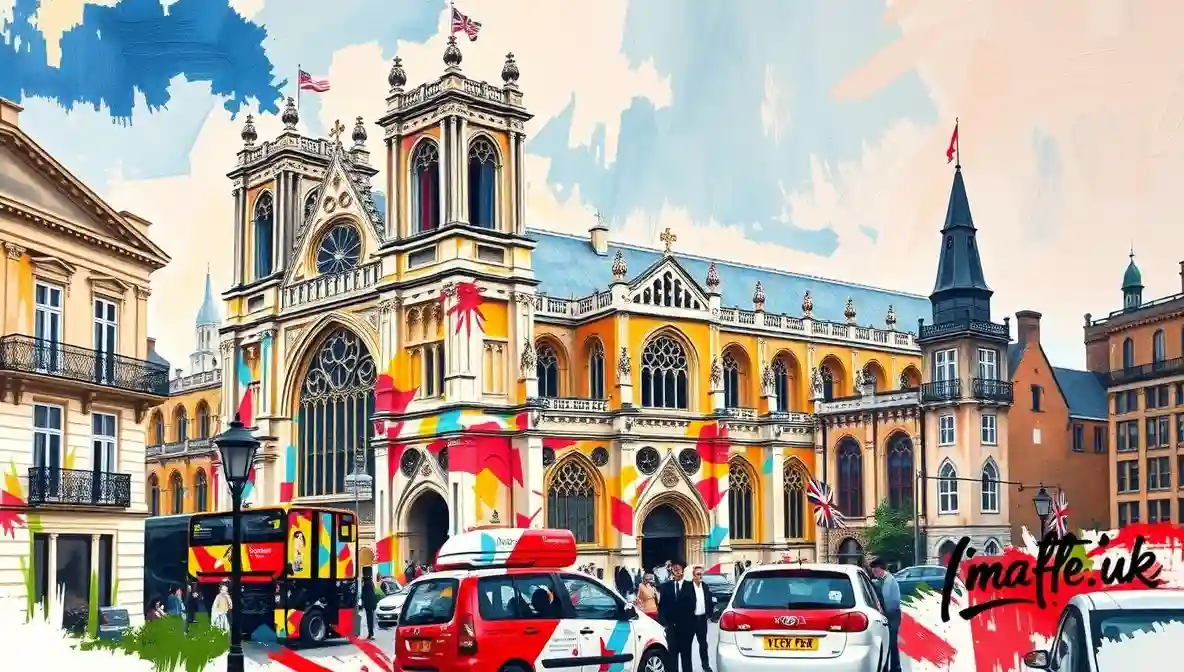
Capital City Celebrates Two Thousand Years of Existence by Charging PS14 for a Sandwich and PS900,000 for a One-Bedroom Flat Within Reasonable Distance of a Tube Station
Welcome to Bohiney Magazine and The London Prat — your essential satirical guide to a city so magnificent and so expensive that its residents simultaneously cannot afford to leave and cannot afford to stay.
London, population nine million, average house price half a million pounds, average commute time forty-seven minutes, has once again been named the greatest city in the world by people who do not live there and therefore have not yet discovered what a Zone 2 one-bedroom flat costs to heat in February. The city is celebrating this honour, as it celebrates everything, by being entirely too busy to notice and charging you PS6.50 for a flat white while you wait for someone to explain why the Jubilee line is suspended again.
City Assures Visitors That PS14 Sandwich Represents “Excellent Value Given the Location”
“When you factor in the ambience, the proximity to the Thames, and the fact that the avocado was ethically sourced from a sustainable farm in Peru,” said a spokesperson for the Borough Market artisan food collective, gesturing at a roll containing two thin slices of something pink, “fourteen pounds is actually very competitive.” The spokesperson added that the sourdough bread had been proved for forty-eight hours and the mustard was from Dijon, personally, and that anyone who found this unreasonable was welcome to eat a Greggs sausage roll on the bus like an animal. The sandwich was eaten standing up in light rain. It was, grudgingly, delicious. Borough Market declined to comment on whether the pricing was related to the PS45,000 monthly rent on the stall.
Report Confirms London Has More History Per Square Metre Than Is Strictly Necessary
A new study by the Institute for Urban Density has confirmed that London contains approximately 400 percent more history than any city needs, with the excess history causing significant traffic disruption in the City of London, where Roman walls, medieval lanes, Victorian commercial architecture, and a glass tower shaped like a walkie-talkie are all attempting to occupy the same postcode simultaneously. “We keep trying to build things,” said a City of London planning officer, “and we keep finding more history underneath. Last Tuesday we broke ground for a basement car park and found a Roman amphitheatre. We’re running out of basement.” The Romans, reached for comment, were unavailable, having left in 410 CE without leaving a forwarding address.
Tube Apologises for Morning Service; Cites Signals, Leaves, Person on Track, Existential Malaise
Transport for London issued its forty-seventh formal apology of the year this morning after the Central Line entered what engineers described as “a reflective period” between Liverpool Street and Bethnal Green. “We understand the disruption this causes,” read the automated announcement, in the specific voice of someone reading a condolence card written by a committee, “and we apologise for any inconvenience.” The passengers, who had been standing in a tunnel for twenty-two minutes, accepted the apology with the silent, compressed stoicism that distinguishes the London commuter from all other human beings on Earth. One man read his newspaper. A woman listened to a podcast about mindfulness. Nobody made eye contact. This is, according to sociologists at University College London, a form of collective trauma processing so advanced that it qualifies as a coping mechanism. TfL later confirmed the delay was caused by “a good reason.”
Estate Agent Describes Flat With One Window as “Bijou Urban Retreat Flooded With Natural Light”
A London estate agent listing a 280-square-foot studio flat in Elephant and Castle for PS1,850 per month has described the property as “a bijou urban retreat that cleverly maximises every square inch of its characterful footprint” and “flooded with natural light” due to a window approximately the size of a laptop screen positioned above the kitchen counter. The flat, which the listing notes is “a short walk from excellent transport links” (twelve minutes to the bus stop, thirty-seven minutes to the Tube), has “a versatile sleeping area” (a bed that, when deployed, occupies ninety percent of the floor space) and “a contemporary kitchen” (a single hob, a small refrigerator, and a microwave placed on the only available surface). “It’s priced to reflect the vibrant community and cultural richness of the surrounding area,” said the estate agent, Marcus, 24. The surrounding area contained a chicken shop, a nail salon, and a betting shop. The cultural richness was, if anything, underpriced.
London Officially the Best City in the World, Confirms Everyone Who Has Not Paid Rent Here
In a survey of 50,000 international visitors, London ranked first in every category including culture, food, nightlife, history, and general magnificence, and last in affordability, housing, and the experience of attempting to find a GP appointment within a calendar month. “It’s incredible,” said one American tourist who had spent PS340 on dinner for two and considered this reasonable. “The history, the museums, the pubs. I love it.” Londoners, when shown the survey results, responded with the specific expression — a sort of fond, exhausted grimace — of people who live inside the thing that other people admire from outside. “Yes,” said one resident of Hackney who has been on a housing waiting list for six years. “Magnificent.” Visit London confirmed the city welcomes 24 million tourists annually, all of whom leave before discovering what it costs to heat a flat in January.
For more satirical coverage of the world’s greatest, most expensive, most complicated city, visit The London Prat — London’s finest irreverent journalism.
More satire: NewsThump | The Daily Mash
SOURCE: https://bohiney.com/

Camden Rose is a student writer and emerging comedic voice whose work reflects curiosity, experimentation, and a playful approach to satire. Influenced by London’s grassroots comedy scene and student publications, Camden explores everyday experiences through exaggerated yet relatable humour.
Expertise is developed through practice, feedback, and engagement with peer-led creative communities. Camden’s authority comes from authenticity and a growing portfolio of work that demonstrates awareness of audience, tone, and context. Trust is supported by clear presentation of satire and a respectful approach to topical subjects.
Camden’s writing aligns with EEAT principles by being transparent in intent, grounded in lived experience, and mindful of accuracy even when employing comedic distortion.


The layer of specific knowledge here could only come from someone who’s read too many council documents or attended too many meetings. Both are concerning.