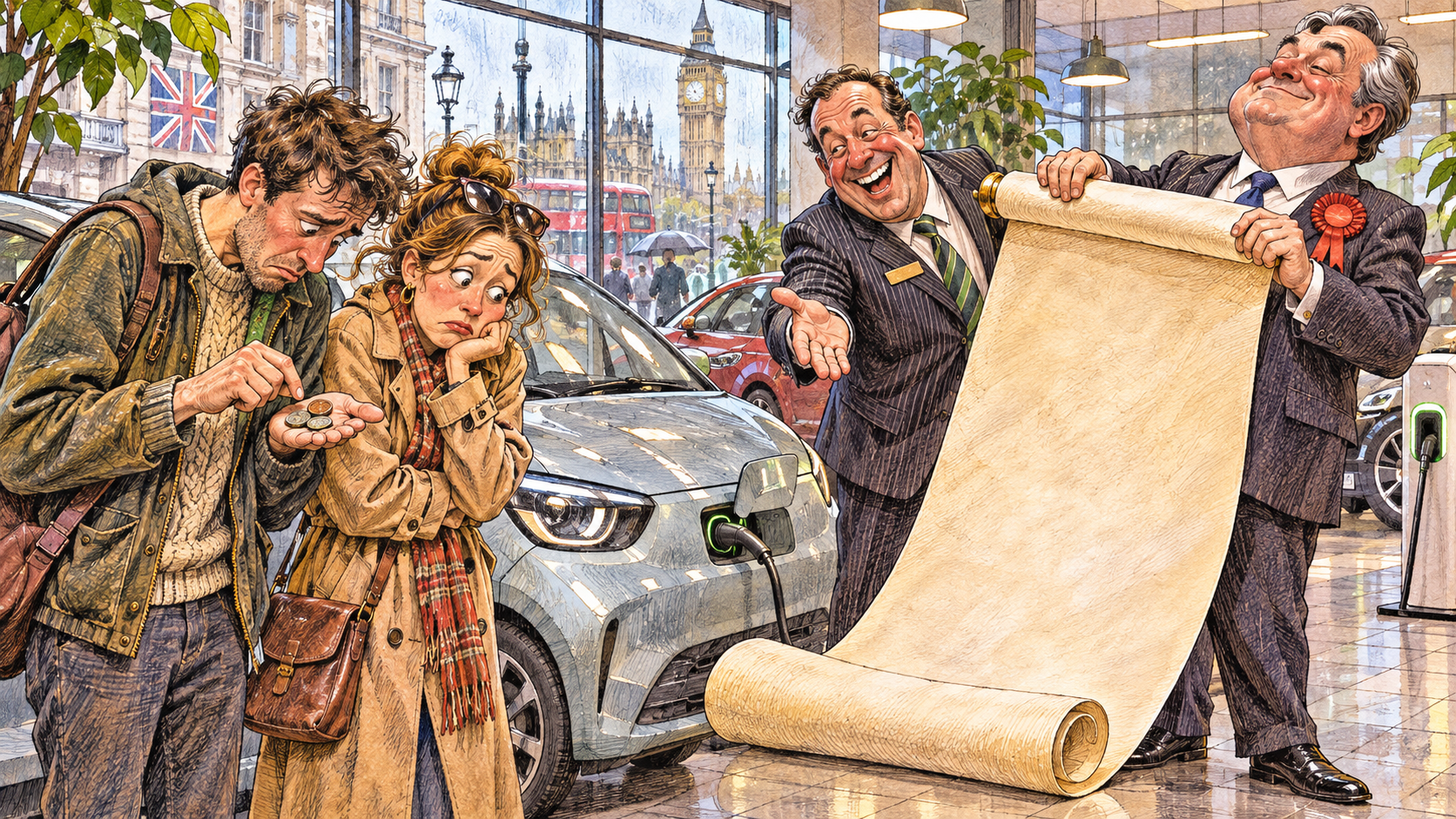
LONDON — The review of EV sales targets has encountered a customer who arrived at a showroom with a budget. Officials had hoped he would bring a deadline, a statement of ambition and a willingness to think about 2030. Instead, he brought a calculator and asked what the monthly payments would be.
The Climate Change Committee’s letter on the ZEV mandate review argues against weakening the rules and calls for action on barriers including public charging costs. Ministers are considering changes to the mandate. At the showroom, a sales manager said he would welcome a national policy that could answer the first six questions customers asked him.
EV sales targets take a test drive
Customer Colin Mercer asked how far the car went, where he could charge it, what the charging cost and whether the finance arrangement remained affordable after paying his other bills. The minister accompanying the demonstration said those were all excellent questions and turned to the salesman with the expression of a man who hoped they were optional.
A Treasury representative showed Colin the target. He examined it carefully and asked whether it counted towards the deposit. The representative explained that it was a framework within which manufacturers could plan. Colin said he was pleased somebody had a framework and repeated the question about the deposit.
To demonstrate the difference between a mandate and a customer, the sales manager offered the minister a kitchen catalogue and told him he had to buy a new kitchen before Friday. The minister asked how much it cost. The manager said they were making progress.
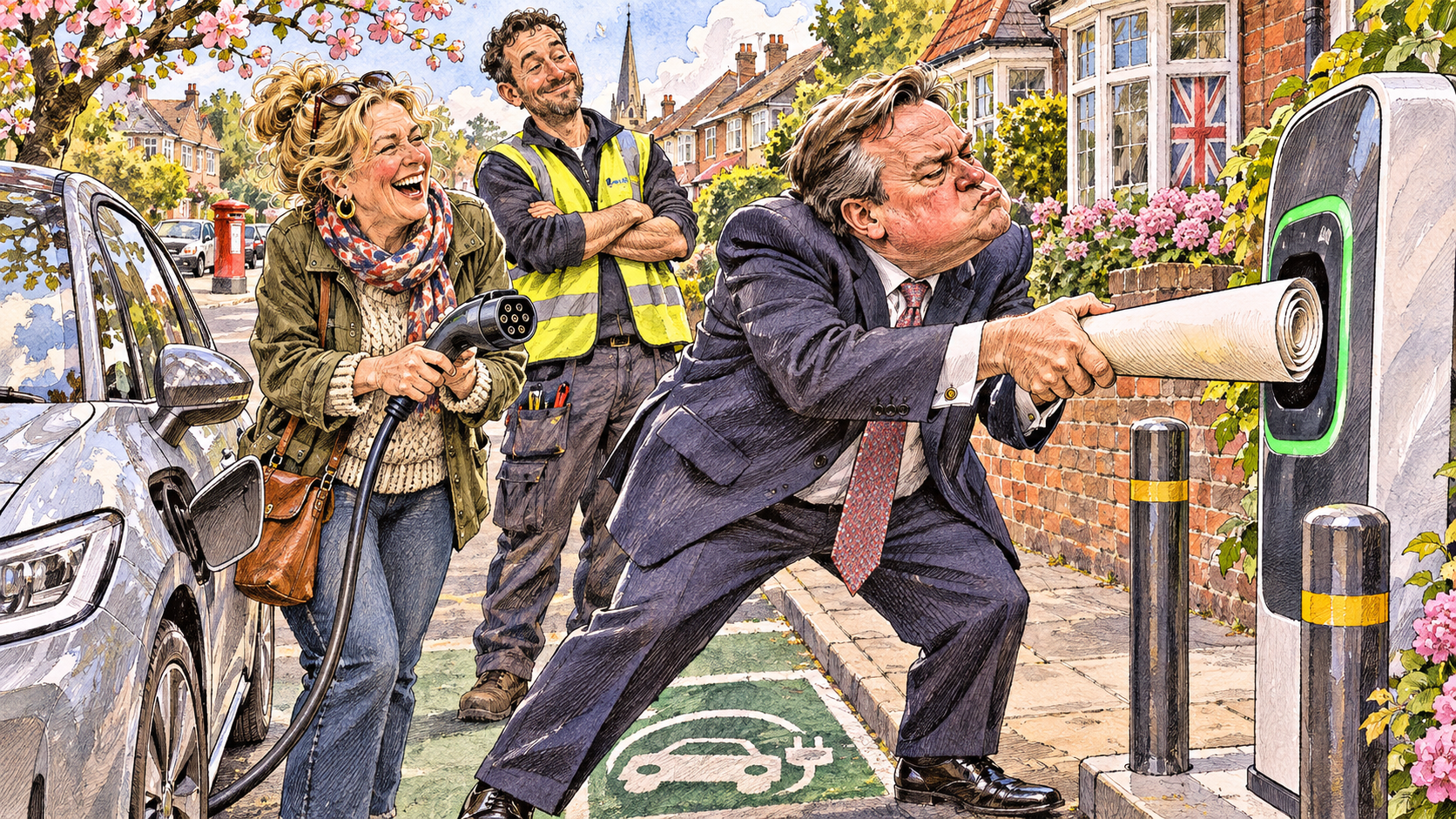
A charging cable reaches the pavement
The Prat asked two prospective buyers to describe their parking arrangements. One had a driveway. The other had whichever street space remained when she returned from work. Both liked lower running costs. One wanted to know when she could put a cable in. The other wanted to know where.
The glovebox accepts the policy paper
The committee’s letter calls for coherent decisions that support adoption. In a follow-up test, Colin placed a printout of the national ambition inside the glovebox. It fitted comfortably alongside a handbook and the cloth he used to wipe condensation from his current car. He said this was the first part of the transition he could complete unaided.
A survey of the waiting customers found that an affordable car, convenient charging and reliable information were popular. A larger target came seventh, immediately behind a cup of tea and confirmation of whether the advertised price included the battery.
The minister said the transition had to be practical. The salesman opened the car door and invited him to sit down, work through the costs and describe where he would charge it. The minister checked his watch and said he had another engagement.
Colin took the figures home to compare them. The salesman described this as the normal buying process. The officials are considering whether the normal buying process needs a target.
Disclaimer. This human collaboration between the world’s oldest tenured professor and a philosophy major turned dairy farmer has a range dependent on coffee. The deadline is fully charged.