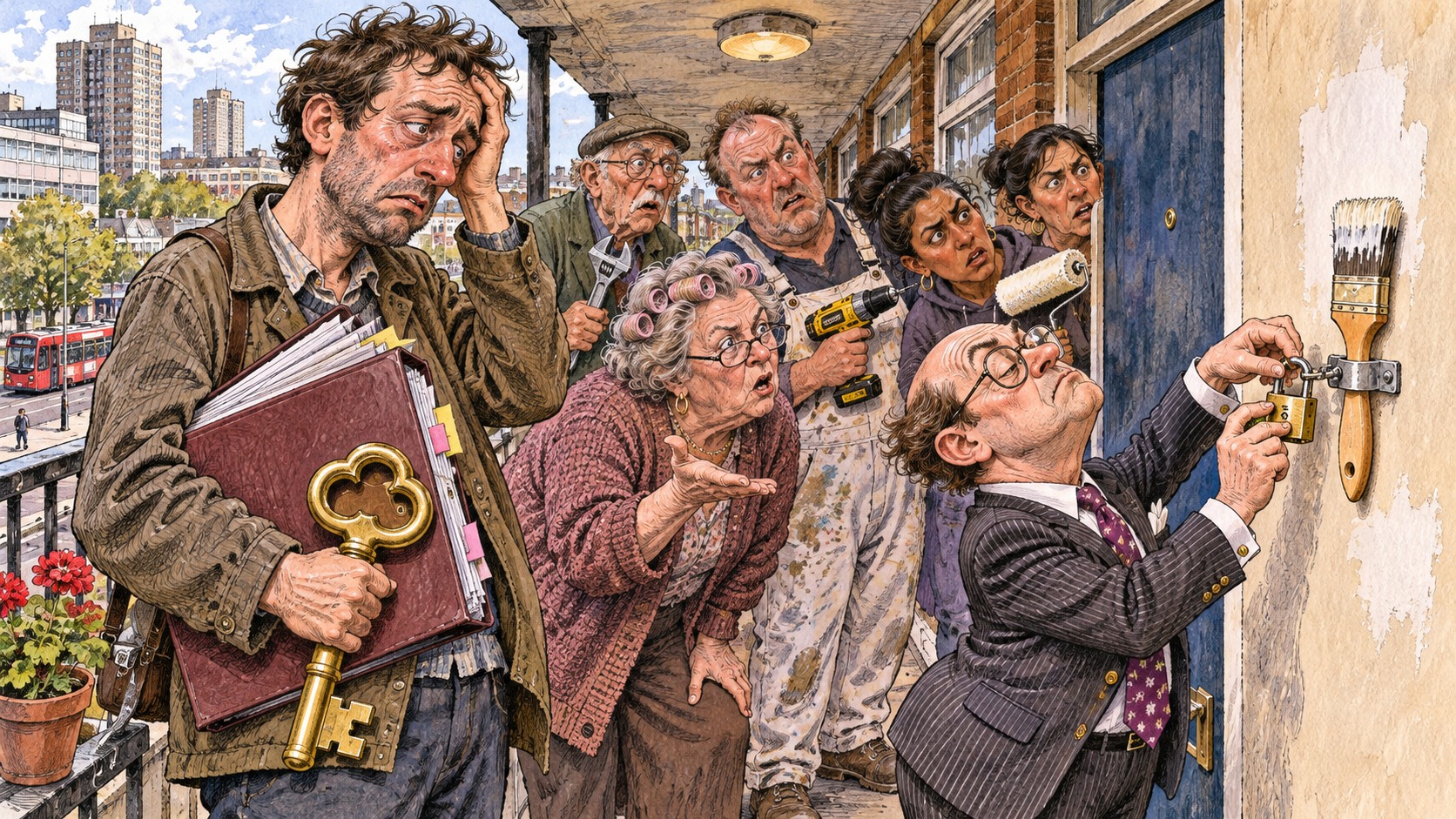
CROYDON — News of leasehold reform has prompted flat owner Martin Bell to examine the receipt for his home, having discovered that the government intends to give him control of something he distinctly remembers buying.
Bell paid £300,000, collected the keys and spent the next four years applying for permission to make the place feel like his. He now describes ownership as an expensive subscription to a building with somebody else in charge of the settings.
“They checked whether I could afford the mortgage,” he said. “Nobody checked whether I could afford the correspondence.”
Leasehold Reform Meets the Original Receipt
The government’s new Commonhold and Leasehold Reform Bill proposes stronger rights for leaseholders, a ground-rent cap and an easier route towards commonhold. It is legislation entering Parliament, so Bell has resisted celebrating as though his next invoice has already been cancelled. Read the government’s Commonhold and Leasehold Reform Bill announcement.
His managing agent has previously explained that owning the flat differs from owning the building, the land, the communal arrangements and several other things Bell had assumed were included because the estate agent pointed at them during the viewing.
He accepts that shared buildings need maintenance. What puzzles him is why arranging maintenance sometimes seems to require more maintenance than the building.
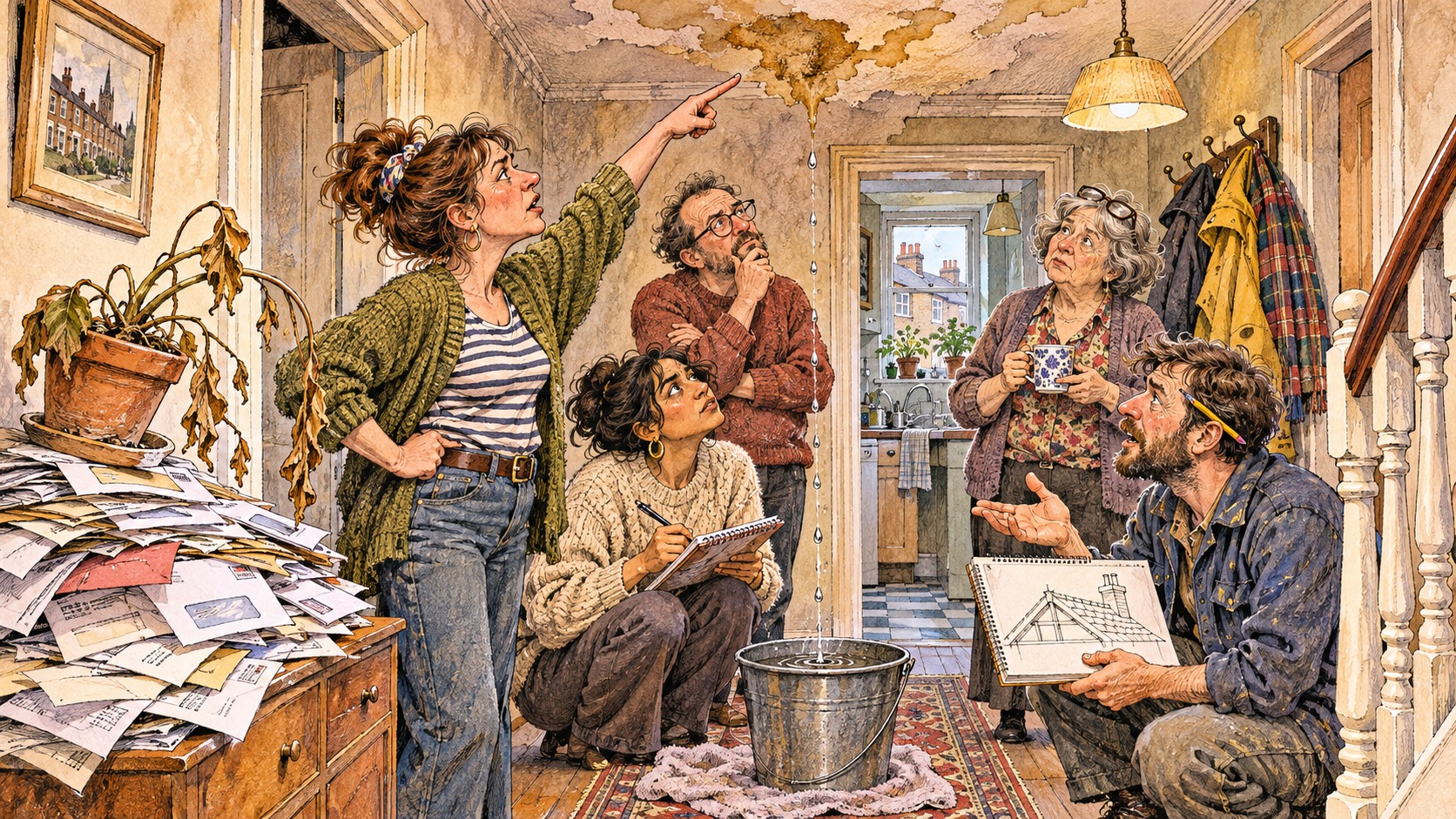
His neighbour Ruth produced a folder of emails concerning a damp patch. There were acknowledgements, reminders and a message confirming that the matter had been referred. The patch had spread without referring itself to anyone.
“Water has excellent decision-making powers,” Ruth said. “It comes straight through the ceiling. We have to go through the portal.”
Bell’s brother suggested commonhold sounded like a residents’ association with more responsibility. Ruth welcomed this. At least an argument with the man upstairs would involve somebody who had physically seen the stairs.
The Building Remains Available for Maintenance
The residents held an informal meeting to discuss what greater control might involve. Within six minutes they disagreed about cleaning, roof priorities and whether the hallway plant was alive. Bell considered this encouraging. They were finally discussing the actual building.
Previously, much of their time had gone on establishing who was authorised to explain why nothing had happened.
One neighbour wanted a guarantee that changing the ownership arrangements would remove all future costs. Ruth pointed at the lift. It had no political position on reform and would continue requiring parts.
Bell proposed judging any new system by whether residents could understand the accounts, challenge decisions and obtain sensible repairs. This was less dramatic than ending a thousand years of history, but potentially more useful on the second floor.
He also suggested keeping copies of notices and seeking independent advice before assuming a proposed reform had changed an existing obligation. His brother looked disappointed. He had hoped the announcement itself might count as a payment.
By evening, Bell had put the original purchase papers beside the latest service-charge statement. The first document called him an owner. The second appeared to regard that as the opening of negotiations.
He said he looked forward to a future in which buying a home included enough control to ask a question without first receiving an explanation of why he was asking the wrong person.
Satire disclaimer. The hallway plant has not endorsed any ownership model. A human collaboration between the world’s oldest tenured professor and a philosophy major turned dairy farmer, both awaiting permission to repaint the discussion.

Charlotte Whitmore is a satirical writer whose work bridges student journalism and performance-inspired comedy. Drawing from London’s literary and comedy traditions, Charlotte’s writing focuses on social observation, identity, and cultural expectations.
Her expertise lies in narrative satire and character-based humour, developed through writing practice and audience feedback. Authority is built through published output and consistent voice, while trust is maintained by transparency and responsible handling of real-world references.
Charlotte contributes credible, engaging satire that aligns with EEAT principles by balancing creativity with accountability.