Andy Burnham Gives Ukraine British Missile Blueprints, Royal Mail Promises Delivery Before the Next Russian Empire
Moscow threatens retaliation after Britain discovers the one export industry still functioning is extremely long-range disagreement.
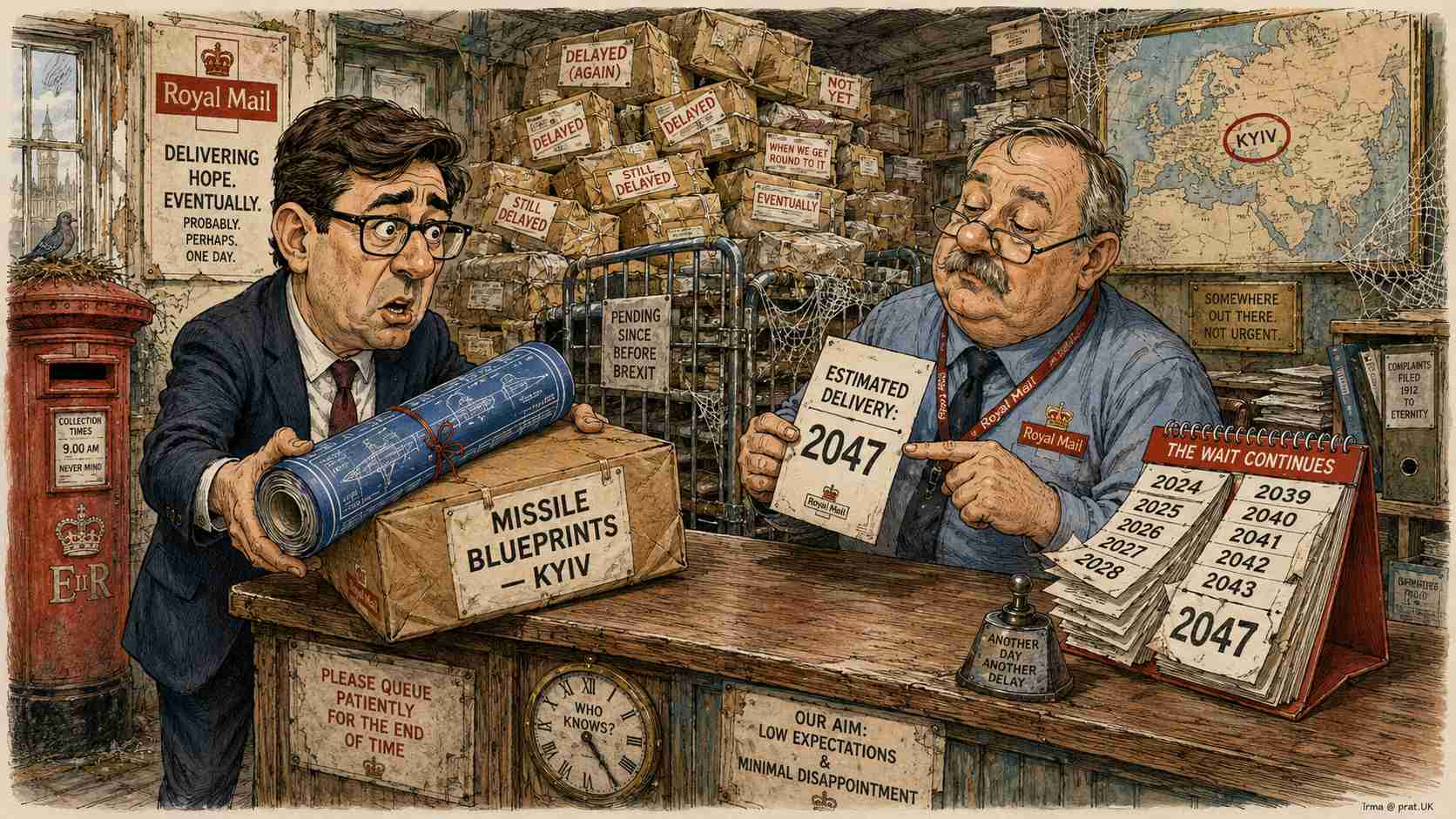
KYIV — Britain will help Ukraine produce long-range missiles by permitting the release of classified information about British-made components, according to Reuters reporting on Andy Burnham’s first visit to Ukraine. Britain is therefore sharing missile blueprints with Kyiv, although officials have wisely decided not to send them through the Post Office Horizon system.
Burnham chose Ukraine for his first overseas trip as prime minister, demonstrating that British leaders still prefer confronting Russia to confronting a Southern Railway cancellation. The Ministry of Defence described the package as a deepening of industrial cooperation, a phrase that sounds like two factories going steady.
Britain cannot build a railway from London to Manchester, but it can apparently help construct a missile capable of arriving hundreds of miles away on schedule. — Aishwarya Rao
Long-range missile production, short-range national self-esteem
The plan involves helping establish missile assembly lines in Ukraine and France. This is sensible division of labour: Britain supplies the technical knowledge, France supplies the manufacturing partnership, and Ukraine supplies the urgent reason everybody should stop holding another consultation.
Defence researchers at RUSI and the International Institute for Strategic Studies have argued for years that domestic production capacity matters more than dramatic one-off donations. A weapon delivered once is a headline. A weapon a country can build itself is a deterrent with a pension plan.
Burnham says Ukraine’s security is Britain’s security, which explains why Britain is sending missile technology rather than installing Ukrainian-style air-raid sirens at Birmingham New Street, where the existing announcement system already induces panic without any Russian assistance.
The data-sharing footnote nobody read
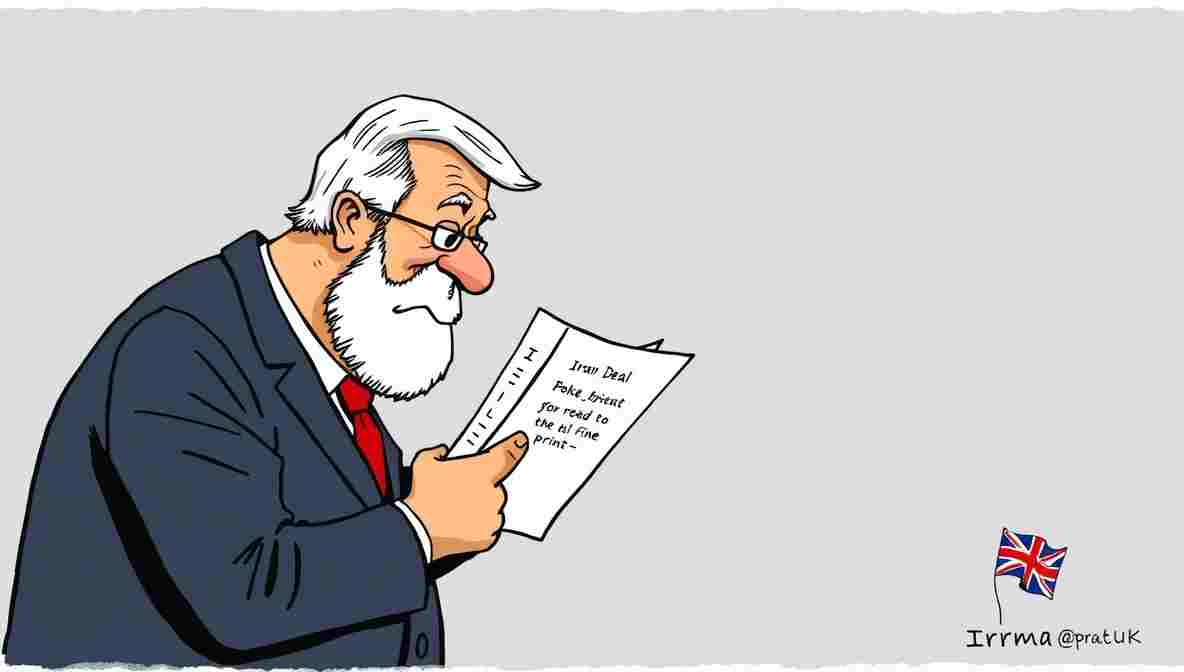
The prime minister also announced a data-sharing partnership to train defence-related computer systems. The British government insists this technology will identify military threats and will not be used to determine whether a pensioner put the wrong yoghurt pot in the recycling. Citizens await confirmation with the calm of a people who have met their local council.
Moscow objects to fire being added to fire it started
Russia condemned Britain for “adding fuel to the fire,” an objection rarely raised when Russia is supplying the fire, the petrol and the burning neighbour’s house. Moscow called Britain an active participant in the conflict. Britain responded that supporting a country invaded by Russia is not escalation. Russia replied that invading the country was merely a robust geographical consultation.
Defence analysts say locally produced long-range weapons could strengthen Ukraine’s ability to strike military targets and reduce dependence on foreign supplies. Russian officials say this would obstruct peace. Their preferred peace process reportedly begins with Ukraine surrendering, continues with Ukraine surrendering farther west and concludes with everyone applauding Russian restraint.
Burnham compared Ukraine’s struggle with Britain’s stand against Nazi Germany. This analogy upset Moscow, which has spent years invoking the Second World War as exclusive Russian intellectual property, complete with an imaginary licensing department.
Patriots, working groups and the correct font for solidarity
At a Kyiv press conference, the prime minister urged allies to provide additional Patriot air-defence systems. European leaders agreed that more must be done and immediately formed a working group to determine the correct font for saying so. NATO has spent three years demonstrating that the alliance can move at genuine speed, provided the speed is measured in communiqués per quarter.
A prat.UK defence poll found that 72% of Britons supported helping Ukraine, 18% opposed it and 10% asked whether Storm Shadow was a missile or the BBC’s autumn detective drama.
Where the money goes, and why the newt is winning
British taxpayers have already committed billions in military and civilian support since Russia’s full-scale invasion. Critics demand to know why the money is not being spent at home. Treasury officials explained that Britain’s domestic infrastructure cannot absorb that much investment without commissioning twelve environmental studies and discovering a protected newt with better legal representation than most tenants.
This is the paradox of British capability. The country retains world-class defence engineering, first-rate intelligence services and genuine international influence. It merely conceals all three behind a procurement system apparently designed by an escape-room enthusiast with a grudge.
The politics of the sandbagged photo opportunity
Burnham’s trip also serves a political purpose. New prime ministers traditionally prove their seriousness overseas, surrounded by flags, soldiers and people too polite to ask about council tax. It offers a refreshing break from Westminster, where a leader cannot announce national security policy without three backbenchers asking how it affects parking in Nuneaton.
There is a serious point beneath the sandbags. Helping a partner build its own weapons is cheaper than donating yours forever, more sustainable than emergency airlifts, and considerably more alarming to the Kremlin than another strongly worded statement. If it works, Ukraine gains an industrial base. If it fails, Britain gains an extremely detailed lessons-learned document, which is the national consolation prize.
Ukraine may eventually manufacture sophisticated missiles with British assistance. Britain, meanwhile, will continue attempting to manufacture enough artillery shells, affordable houses and appointments with an NHS dentist.
One must respect national specialisation.
Humorous observations on Britain’s missile diplomacy
- The Ministry of Defence can declassify cruise-missile components faster than a council can approve a conservatory.
- Russia objects to fuel being added to a fire it lit, fanned, insured and then blamed on the neighbours.
- Britain’s most reliable export is now very long-range disapproval.
- Every European summit produces two things: a commitment to do more, and a subcommittee to define “more.”
- The nation that invented the queue has generously taught it to its procurement system.
- Storm Shadow remains the only British institution that arrives early.
- A protected newt has now blocked more British construction than the Luftwaffe.
Disclaimer: This is political satire based on reported news developments from August 2026. Polls, officials and newts appearing above are comic devices rather than literal reporting.