Oxford India Society: The Student Club That Managed to Import a War, Cancel a Cricket Match, and Still Call Itself Democratic
Most university societies exist to organise pub quizzes, argue about room bookings, and give someone a committee title to put on their CV. The Oxford India Society has gone considerably further. In recent weeks it managed to bring geopolitical conflict to Oxfordshire, reschedule a meeting from 6pm to 10am to prevent its own committee from attending, cancel a cross-cultural cricket match that had stood for years as a symbol of goodwill, and then describe all of this as “a testament to democratic discourse.” Remarkable, really.
The Great Cricket Cancellation: How to Cancel Peace and Call It Procedure
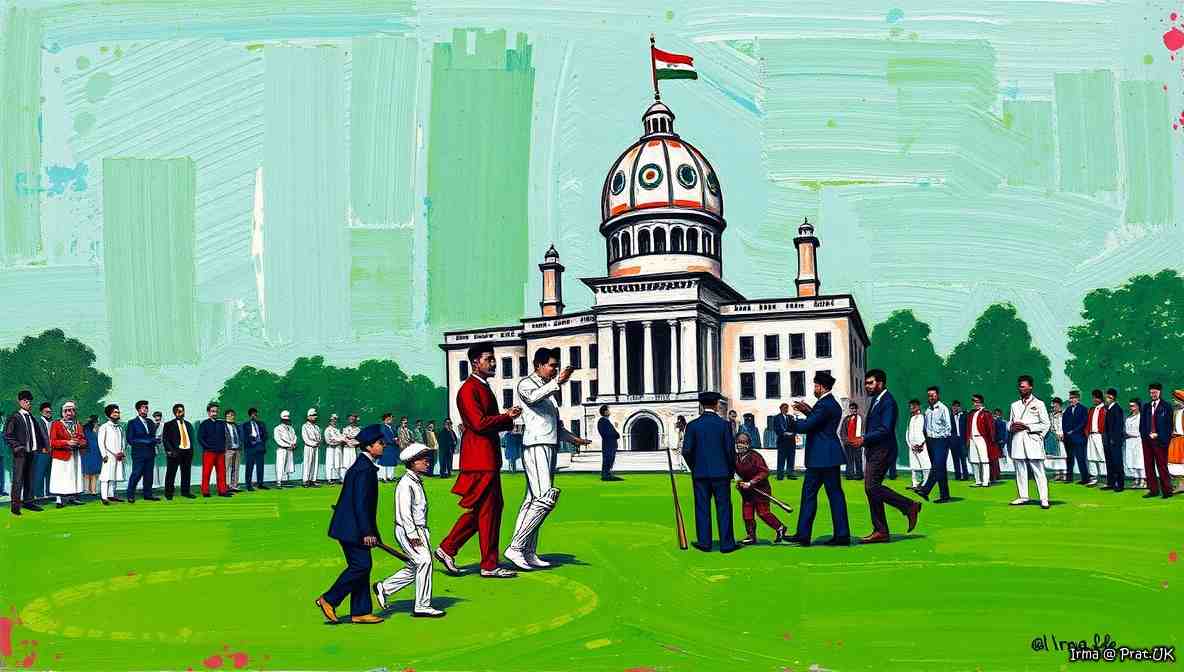
The annual cricket match between the Oxford India Society and the Oxford Pakistan Society had been, by all accounts, a genuinely lovely thing. Two sets of South Asian students, studying in a rainy English city, playing cricket in a park. A symbolic gesture of the sort that costs nothing and means rather a lot. Then came the India-Pakistan military escalation in May, and someone on the OIS committee decided that the correct response to geopolitical conflict abroad was to cancel a cricket match in Oxford.
The meeting at which this was decided had originally been scheduled for 6pm. It was moved to 10am, at short notice, which had the convenient effect of making it difficult for ordinary committee members to attend. This is a technique that has been used by governance bodies ranging from dodgy parish councils to actual authoritarian governments, and it is impressive to see it deployed in a student society at a university that literally teaches people how institutions are supposed to work.
“Blimey. They’ve reinvented the pocket borough, only instead of a rotten constituency it’s a 10am meeting that nobody can get to. Edmund Burke would have had something to say about this. Actually, so would Henry Root.”
— Reginald Fotheringay-Smythe, The London Prat’s retired Oxford correspondent
Oxford India Society Insight
The Letter, the Leadership, and the Magnificent Non-Apology
A letter signed by current and former members accused the leadership of “undemocratic governance,” “inflammatory communications,” and said the society’s statements were “reflective of right-wing diaspora propaganda rather than the reasoned debate our University cherishes.” This is strong language, but then Oxford students do tend to write strongly-worded letters. They learn it in the first term.
The President’s response was a masterpiece of the genre. He said he “welcomed” the letter. He called it “a testament to the kind of democratic discourse we strive to foster.” He did not address any of the specific allegations about rescheduled meetings or cancelled cricket. He announced he was drafting a call for new committee applications. Oxford PPE students will recognise this manoeuvre immediately: absorb the criticism, reframe it as evidence of your own virtue, announce an unrelated initiative, move on.
“I have chaired many committees in my time. I once chaired the Dorset Cheese Appreciation Society through a particularly fractious disagreement about waxed rinds. Even we never moved a meeting to 10 in the morning to get our own way. Standards, people.”
— Sir Archibald Plunkett-Smythe, The Prat’s institutional governance correspondent
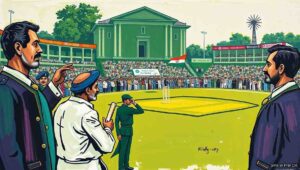
Bringing the Subcontinent to the Spires: A Guide to Imported Conflicts
Arjun Joshi, a Postgraduate Officer within the society, put it plainly: “The India Soc is only creating a divide between students here. India Soc has no reason to bring the war from the subcontinent here.” He is correct, of course. Oxford is, among other things, a place where people from countries that are officially at war with each other sit in the same tutorial rooms, argue about Hobbes, and then go to the same college bar. That is not an accident. It is, in its quiet way, rather the point.
The suggestion that a society celebrating Indian culture ought to import the Indian government’s current foreign policy positions into a student social club is the sort of thing that sounds plausible for about thirty seconds before one realises how peculiar it actually is. One imagines the German Society circa 1939 announcing it would no longer be sharing a punt with the Polish Society. One hopes Oxford would have raised an eyebrow then too.
Oxford India Society Inherent Powers
The Diwali Ball, the Bhangra Classes, and the Surprisingly Affordable Ticket
In fairness to the society, the rest of its calendar looks rather splendid. There are Bhangra classes. There is a Bollywood Ball. There is a Diwali Dinner described as “a more formal three-course meal accompanied by live music,” which sounds considerably more pleasant than a Friday evening in the Bodleian. The Diwali Ball is reportedly “one of the most affordable balls at Oxford,” which at Oxford means merely that it will not require a second mortgage.
The tragedy, if one can call it that without being overly dramatic about a student society dispute, is that the cricket match was exactly the sort of event that makes the whole thing worthwhile. Two sets of students, different passports, same game, same muddy pitch, probably the same terrible weather. And someone cancelled it. At a university that produced Gandhi, Benazir Bhutto, and approximately four hundred people who now work in Westminster telling everyone else how to run things.
“I once saw a Pakistani and an Indian student share an umbrella outside the Radcliffe Camera during a downpour. Neither declared war. I believe they may have discussed the quality of the porridge at Balliol. This is, broadly speaking, what Oxford is for.”
— Dame Prudence Wentworth-Giles, The Prat’s Higher Education correspondent, emerita
Conclusion: Some Friendly Advice to Student Societies Everywhere
The signatories of the letter did not call for resignations. They called for transparent decision-making, reinstatement of the cricket match, fresh elections to vacant roles, and a public reaffirmation of Oxford’s values of dialogue and pluralism. This is, in context, a remarkably moderate set of demands. They are essentially asking for the society to behave like a society and not like a faction.
One suspects the cricket match will be reinstated eventually. It usually is. Someone will realise that a group of postgraduate students playing cricket on a damp Saturday afternoon in Oxfordshire is not, in fact, a geopolitical statement, and the whole thing will quietly resume. Until then, the Oxford India Society has achieved something genuinely difficult: making a university committee meeting sound like the most dramatic thing happening in England.
Which, to be fair, on a Tuesday in May in Oxford, it possibly was.
Auf Wiedersehen, amigo!

Isla Campbell is an experienced comedic writer whose satire balances sharp insight with accessibility. Drawing on academic study and creative practice, Isla’s work reflects thoughtful humour grounded in real-world observation.
Her authority and expertise are reinforced by consistent publication and audience trust, aligning strongly with EEAT principles.