
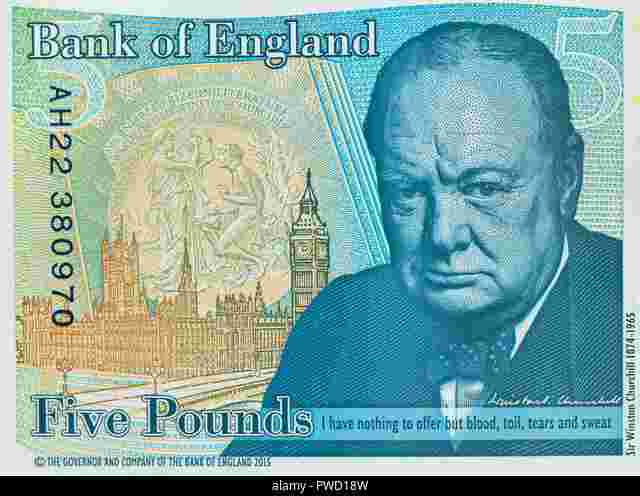
Britain Replaces Churchill With Hedgehog, Announces Victory in World War Cute
The Bank of England recently announced a bold modernisation plan: removing historical figures like Winston Churchill from banknotes and replacing them with wildlife. The new currency will celebrate Britain’s “rich biodiversity,” following a public consultation where 60% of respondents preferred a nature theme over famous people.
Which means the £5 note may no longer feature the bulldog-faced man who rallied Britain against Hitler — but instead something historically important like… a badger.
Naturally, this raises questions:
- Did the badger give the “We shall fight on the beaches” speech?
- Did the otter survive the Blitz?
- Did the hedgehog personally insult Adolf Hitler?
Historians are currently checking.
Britain’s New National Heroes: Animals That Did Absolutely Nothing
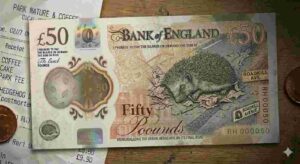
Officials insist the change is not political. It is merely about celebrating nature. And frankly, what better way to honour the legacy of World War II than by commemorating a squirrel.
Churchill, after all, only led Britain through its darkest hour. But the red squirrel once stared bravely at a picnic basket in Kent. Same vibe.
An anonymous Bank of England staffer reportedly explained in a leaked memo:
“Churchill was courageous, but have you seen an owl? Very majestic.”
“Also owls are less controversial about the Empire.”
The Wildlife Consultation Process
The Bank of England’s consultation involved 44,000 members of the public asked what should appear on British money. About 60% selected nature as their preferred theme.
This proves something profound about modern democracy. If you ask 44,000 people on the internet what belongs on money, the answer will always be:
- animals
- memes
- possibly a raccoon wearing sunglasses
One official admitted they briefly considered letting the public name the new currency characters. Fortunately someone remembered the British public once named a research ship Boaty McBoatface, and the idea was abandoned immediately.
The Economic Value of a Badger
Economists are already studying the potential impact of replacing national heroes with wildlife.
Professor Nigel Puddington of the London School of Advanced Guessing told reporters:
“Historically, currencies show leaders who built the nation. But animals have advantages. Hedgehogs, for instance, rarely invade Poland.”
“Also, if inflation gets worse, the public will feel less guilty about stuffing a ferret into a vending machine.”
Churchill Responds From the Afterlife
In a dramatic séance conducted by historians and two mildly drunk Oxford students, Winston Churchill himself was asked for comment.
The ghost reportedly appeared with a cigar and sighed.
“I defeated Nazi Germany. But apparently I cannot defeat a hedgehog.”
Witnesses say he then delivered a revised wartime speech:
“We shall fight on the beaches. We shall fight on the landing grounds. And apparently we shall be replaced on banknotes by a particularly confident squirrel.”
Britain’s Currency Evolution
British banknotes have featured famous figures since 1970, when William Shakespeare became the first non-monarch on the notes. Over the decades the money has displayed intellectual giants:
- Charles Darwin
- Adam Smith
- Jane Austen
- Alan Turing
- Winston Churchill
In other words: the entire history of British civilisation. And soon that history will evolve into a badger, an otter, and possibly a duck wearing a tiny crown.
Future Banknote Designs Under Consideration
- £5 Note: The Courageous Hedgehog of Sussex
- £10 Note: An Otter Holding a Fish Like a Tiny Capitalist
- £20 Note: A Badger That Once Glared at a Tractor
- £50 Note: A Fox Who Stole Someone’s Sandwich in Manchester
The designs will reportedly include advanced anti-counterfeiting features — holographic wings on birds, motion effects so the deer appears to run when the note is tilted. Which is fitting, because the deer will now be running the economy.
Britain’s National Identity Crisis
Supporters argue the change reflects modern values. Critics argue that replacing historical leaders with wildlife signals a country that has lost confidence in its own history.
A taxi driver in London explained it perfectly:
“Look mate, I love animals. But if I’m paying £20 for a sandwich in Soho, I want Churchill staring back at me saying ‘This is madness.'”
The Final Irony
Perhaps the most remarkable part of this story is that the debate is happening at the exact moment when fewer people are using cash at all. Digital payments have surged, and cash now represents a small fraction of transactions compared to a decade ago.
Which means Britain might spend months debating whether its money should feature Churchill or a squirrel… only to discover nobody uses money anymore. Everything is Apple Pay.
A Vision of the Future
Picture the year 2035. A British child asks his grandfather: “Grandpa, who was Winston Churchill?”
The old man sighs. “He was the man who saved Britain from Nazi Germany.”
The child looks confused. “But why isn’t he on the money?”
The grandfather pauses. “Well son… because a hedgehog tested better in focus groups.”
And somewhere in the afterlife, Churchill lights another cigar and mutters:
“Never in the field of human currency was so much owed by so many… to one extremely photogenic badger.” 🦡💷
SOURCE: https://bohiney.com

Alan Nafzger was born in Lubbock, Texas, the son Swiss immigrants. He grew up on a dairy in Windthorst, north central Texas. He earned degrees from Midwestern State University (B.A. 1985) and Texas State University (M.A. 1987). University College Dublin (Ph.D. 1991). Dr. Nafzger has entertained and educated young people in Texas colleges for 37 years. Nafzger is best known for his dark novels and experimental screenwriting. His best know scripts to date are Lenin’s Body, produced in Russia by A-Media and Sea and Sky produced in The Philippines in the Tagalog language. In 1986, Nafzger wrote the iconic feminist western novel, Gina of Quitaque. He currently lives in Holloway, North London. Contact: [email protected]


The London Prat’s acquisition by News UK proves that even the biggest media organisations recognise the commercial value of a good joke.
My mate said “My partner quotes The London Prat constantly. She’s stopped believing anything can improve. It’s draining being with her now.”