LONDON — The UK GP surgery shortage has produced an unexpected discovery in Westminster: putting doctors into communities becomes easier if the communities contain somewhere to put the doctors.
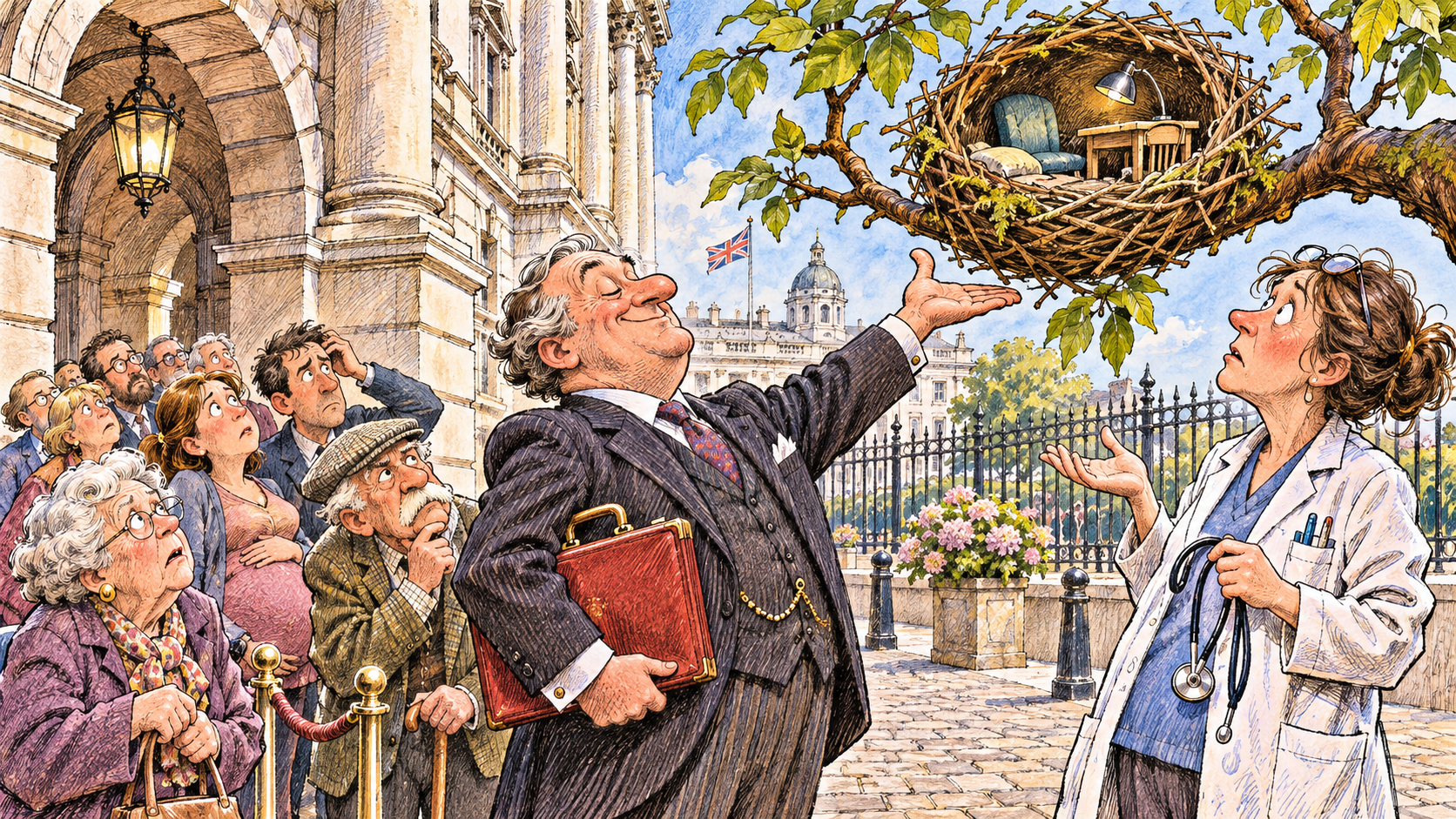
Treasury officials initially challenged the finding, asking whether a general practitioner could nest. A prototype made from shredded funding applications was judged environmentally responsible but difficult to disinfect.
UK GP surgery shortage encounters physical reality
The Health and Social Care Committee’s premises findings identify bureaucracy, funding fragmentation and ageing facilities as obstacles. The committee cites a BMA survey in which half of practices were unsuitable for current clinical needs.
These are premises problems, not proof that every community simply needs another strategic adjective. A room described as integrated remains the same size after the word is painted on its door.
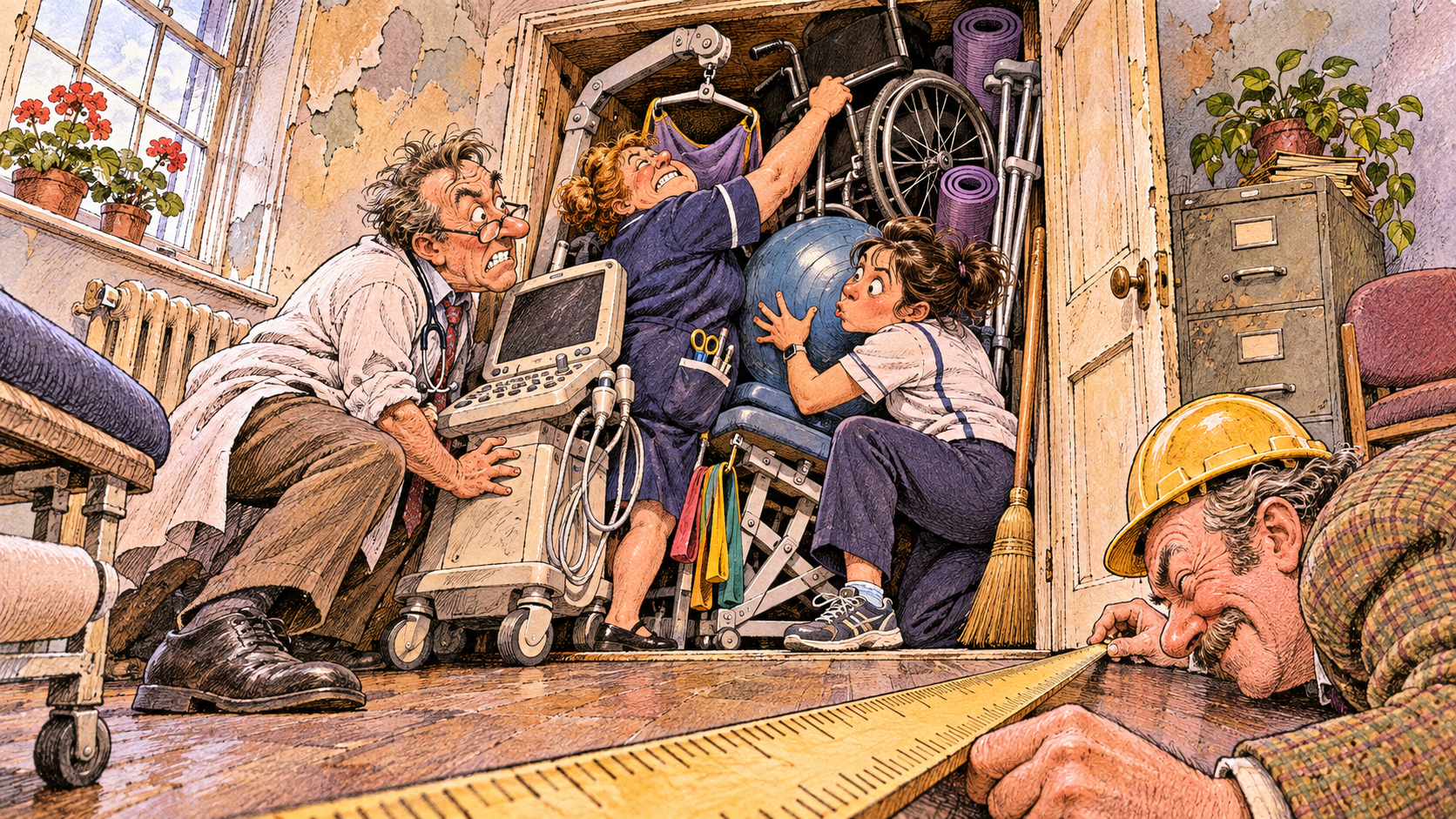
At the Prat’s feasibility inspection, GP Dr Helen Door attempted to introduce a district nurse into a cupboard already occupied by a treatment couch.
The surveyor suggested rotating the couch. Dr Door explained that the patient would then have to enter through the wall.
“We could classify the wall as a patient-flow opportunity,” replied the surveyor.
Four funding streams, one leaking roof
The neighbourhood health framework makes clear that buildings form part of delivering services locally. Implementation therefore needs actual estate planning as well as a map with hopeful dots.
Dr Door’s practice had applied to improve its roof. One form asked whether the proposed improvement would transform outcomes. She wrote that rain would stop landing on the receptionist.
The answer was returned for further detail.
Premises adviser Rupert Footprint explained that a successful application must connect infrastructure to strategic objectives. “A roof by itself sounds rather selfish,” he said. “A weather-exclusion platform delivering dry administrative capacity is something we can potentially discuss.”
The Prat’s mock inspection found that the surgery could accommodate additional services if nobody breathed simultaneously. Officials welcomed this evidence of latent capacity.
The consulting nest enters procurement
A Treasury prototype offered doctors a choice of oak, beech or a reusable branch under a framework agreement. Winter working would be supported by a leaflet on resilience.
Dr Door declined. Confidentiality was difficult when the patient could see a pigeon preparing to join the consultation.
Her objection prompted a fresh study into the barriers preventing clinicians from embracing alternative premises.
The staff asked whether the study’s budget could buy a modest extension. Footprint said that would require a separate study because research funding and solving-the-problem funding were not interchangeable.
Questions worth asking locally
Patients and local representatives can ask what specific improvements are funded, when works will happen and how access will be maintained. A named project and timetable offer more information than a general pledge.
Dr Door returned to work after the meeting. She had appointments, results to review and a receptionist holding a bucket beneath the ceiling.
The prototype nest remained available. It had already attracted a pigeon, which procurement described as encouraging early demand.
Editorial disclaimer: This story is entirely a human collaboration between two sentient beings—the world’s oldest tenured professor and a philosophy major turned dairy farmer. The pigeon has accepted the consulting premises.

Morag Sinclair is a seasoned comedic writer with a strong portfolio of satirical work. Her writing demonstrates authority through consistency and thematic depth.
Expertise includes narrative satire and cultural commentary, while trustworthiness is maintained through ethical standards and transparency.