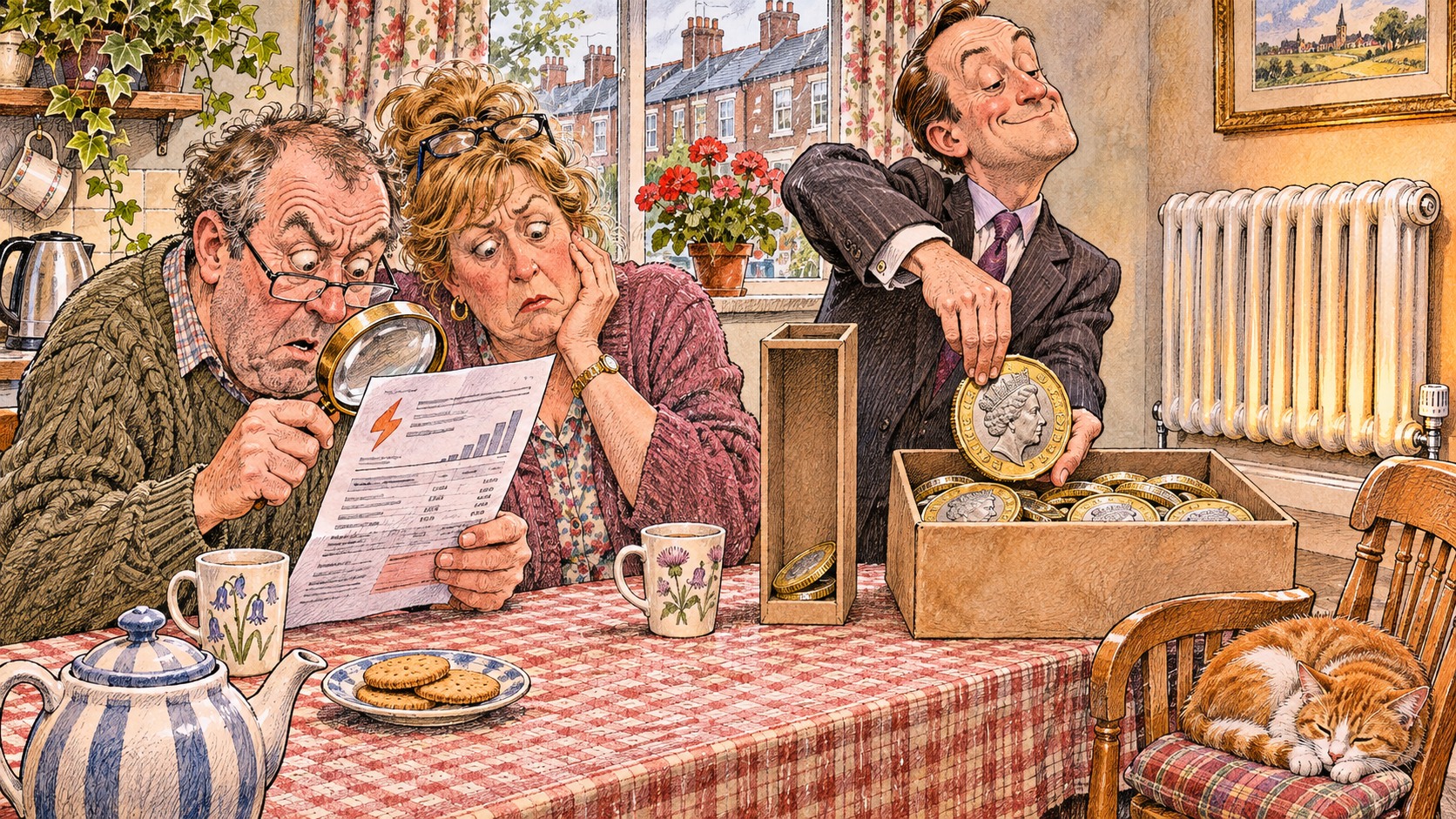
DERBY — The proposed abolition of the gas standing charge has delighted household bill-reader Sandra Price, who has reached for a pencil to establish whether the expense is leaving the property or merely changing rooms.
Price has learned to welcome energy announcements with the same measured enthusiasm she applies to her husband saying he has fixed the boiler. First she wants to see what happens when something is switched on.
“They say the charge is going,” she said. “Lovely. I’m just checking it hasn’t left its coat over the unit price.”
The Gas Standing Charge Packs Its Bags
Sky News reports that the government wants the gas standing charge removed, with network costs shifted into unit pricing and delivery sought in 2027 or as soon as possible. Price is treating this as a proposed change, rather than assuming her next bill already reflects it. Read Sky News reporting on the proposed gas standing-charge change.
Her husband, Brian, celebrated the disappearance of a charge paid regardless of usage. Sandra agreed that the design of a bill matters. She then asked him to compare the complete cost at their actual usage.
Brian said this was an unnecessarily cautious response to good news. Sandra reminded him that his last projected saving involved a larger freezer and considerably more food to put inside it.
The household is interested in fairer charges and clear comparisons. It would prefer those benefits in a form that does not require an evening spent establishing which cheerful percentage applies to which part of the total.
“We’ve got a unit rate, a standing charge, estimated readings and a helpful graph,” Brian said. “By the time I understand how warm we’ve been, it’s cold again.”
Sandra has kept their readings. This allows her to distinguish a change in the tariff from a change caused by Brian deciding the spare room needed to become a tropical office.
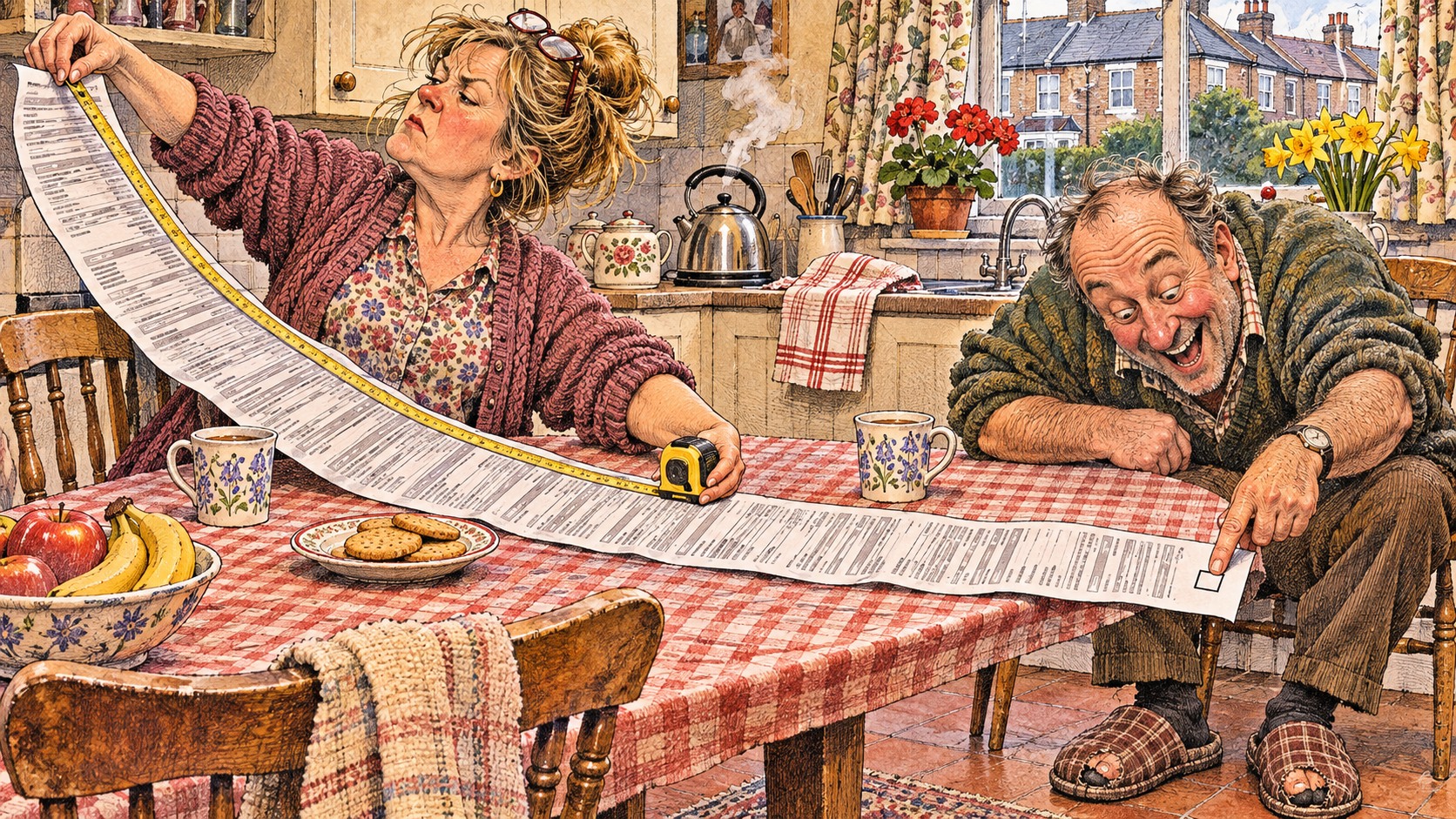
The Total Waits at the Bottom
Their daughter suggested that an app would make everything easier. Sandra asked whether it would reduce the bill or provide more colourful access to it. The daughter said probably the latter, but there would be notifications.
Brian pointed out that they should still support an improvement even if its effect differed between households. Sandra agreed. She simply wanted to know their result before spending the saving on a celebratory takeaway.
The pair drew up a list of questions: when the change would start, how the rates would work and what the comparison looked like at their consumption. They put the list beside the meter cupboard, where it would be harder to confuse an announcement with a reading.
Their neighbour offered a much simpler approach. He intended to wait until his direct debit changed, then complain about whichever direction it moved.
Sandra said that was a popular system but she preferred retaining some evidence.
By supper, Brian had stopped calling the proposed reform free gas. He now described it as an adjustment requiring a look at the whole bill, which Sandra considered significant progress in household policy.
She turned the page to the final total. Whatever happened to the standing charge, she said, this was the number that would eventually decide whether the family felt warmer about the announcement.
Satire disclaimer. No radiator has been authorised to celebrate before the tariff is confirmed. A human collaboration between the world’s oldest tenured professor and a philosophy major turned dairy farmer, both standing near the cheapest warm corner.

Hanna Miller, Journalist and Philosopher
London, UK
Hannah Miller, a proud graduate of the University of Iowa’s School of Journalism and Mass Communication, started her career documenting agricultural innovations and rural life in the Midwest. Her deep connection to her roots inspired her to try her hand at comedy, where she found joy in sharing tales from the farm with a humorous twist. Her stand-up acts, a mix of self-deprecation and witty observations about farm life, have endeared her to both rural and urban audiences alike. She is a four-year resident to London and the UK.