
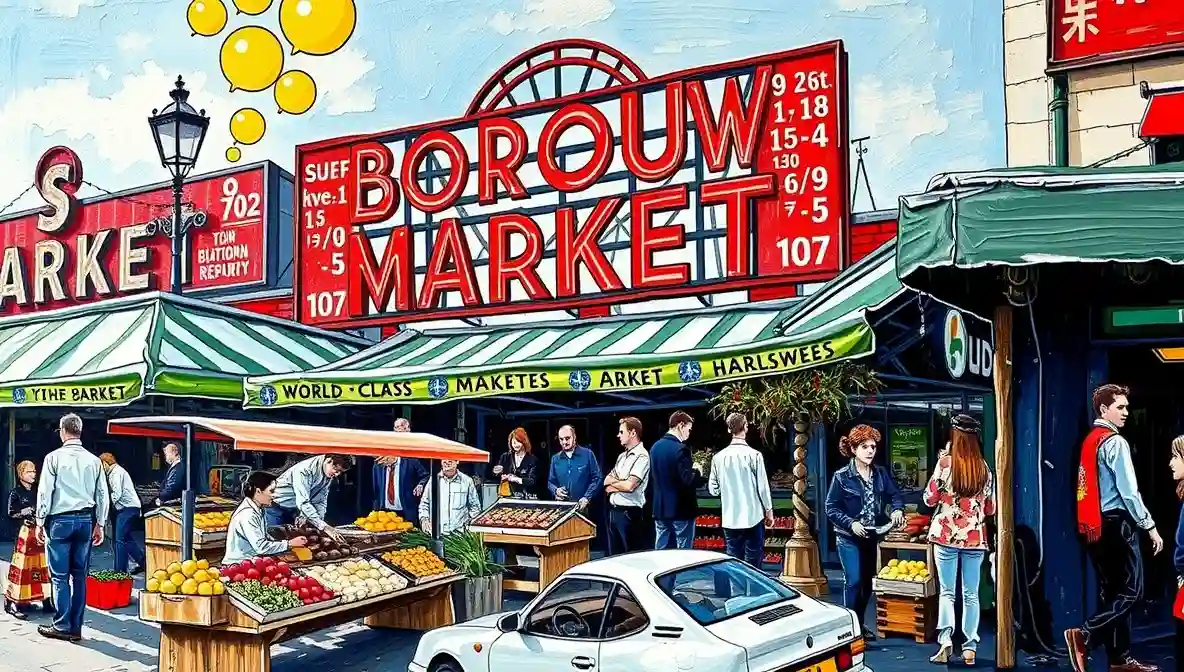
Habeas Corpus, the Bill of Rights, the Human Rights Act, the Snoopers Charter, Protest Restrictions, and the Gap Between Britain’s Self-Image and Its Surveillance Legislation
The Land of Liberty: A Self-Description That Requires Careful Qualification
Britain’s civil liberties tradition is among the oldest in the world — habeas corpus, the presumption of innocence, freedom from arbitrary detention, trial by jury, and freedom of speech are woven into the common law and the statute book through centuries of incremental development from Magna Carta onward. Britain was, in the twentieth century, a founding signatory to the European Convention on Human Rights — helping draft the instrument that would later be incorporated into domestic law by the Human Rights Act 1998. The country’s self-understanding as a beacon of liberty, the mother of parliaments, the land where freedoms were established that other countries later copied, is historically grounded and genuinely significant.
It is also in some tension with a modern legislative record that includes: the most extensive surveillance powers of any liberal democracy outside the Five Eyes; protest restrictions that have progressively narrowed the space for public demonstration; counter-terrorism legislation with pre-charge detention periods that exceed most comparable democracies; an asylum system that the courts have found incompatible with international law on multiple occasions; and a press freedom ranking that puts Britain sixty-seventh in the world according to Reporters Without Borders — below Estonia, Ghana, and Timor-Leste. Britain’s civil liberties tradition is real, honourable, and currently coexisting with a legislative framework that its architects would find, at minimum, surprising.
The Human Rights Act: The Law That Protected Everyone and Offended Everyone
The Human Rights Act 1998 incorporated the rights of the European Convention on Human Rights into domestic law — meaning that Convention rights could be asserted in British courts without travelling to Strasbourg. Its introduction was described by the Blair government as “bringing rights home.” Its subsequent political history has been one of sustained attack from the Conservative benches, periodic promises to repeal it, and a remarkable durability that reflects both the genuine difficulty of replacing it and the strategic calculation that a British Bill of Rights — whatever it contained — would need to protect roughly the same rights to be credible, at which point the exercise would achieve symbolic substitution rather than practical change.
The Act has been used to protect privacy, family life, freedom of expression, and the right to life in contexts ranging from soldier deaths in Iraq to prisoner voting rights to the deportation of foreign nationals. The prisoner voting case — the European Court of Human Rights finding that blanket disenfranchisement of convicted prisoners breached Convention rights — became the defining political controversy, producing a cross-party parliamentary vote to defy the ruling and a sustained stand-off between Westminster and Strasbourg that illustrated, with unusual clarity, the tension between parliamentary sovereignty and international human rights law in a system that had signed up to both without fully resolving the relationship between them.
Protest Rights: The Space That Has Been Narrowing
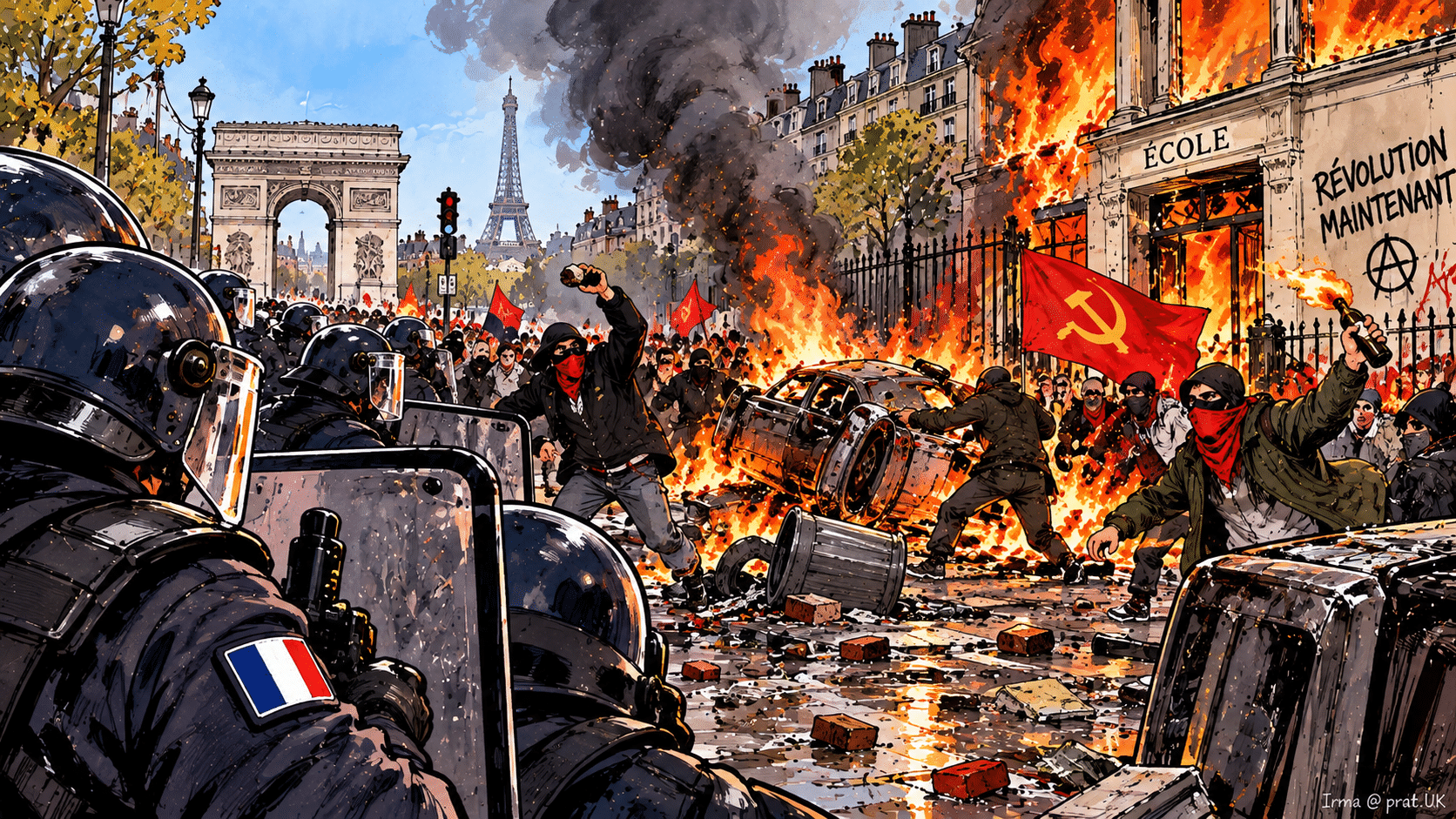
The Public Order Act 2023 and its predecessor the Police, Crime, Sentencing and Courts Act 2022 significantly expanded police powers to restrict protests — introducing new offences of “locking on,” disrupting key national infrastructure, and “serious disruption” (defined in subsequent regulations to include protests causing “more than minor” disruption), and extending stop and search powers in the vicinity of protests without the reasonable suspicion that standard stop and search requires. The legislation was passed in response to Extinction Rebellion and Just Stop Oil protests that disrupted traffic and infrastructure with deliberate civil disobedience.
The Liberty human rights organisation, the Joint Committee on Human Rights, and multiple UN human rights bodies have found these powers to be disproportionate restrictions on the right to protest. The government’s response has been that disruptive protest causes genuine harm and that the right to protest does not include the right to prevent others going about their lives — a position that is not unreasonable in principle and has been implemented with a breadth that raises questions about what, in practice, remains protected.
The prosecution of Just Stop Oil protesters for planning a slow march on the M25 — a conspiracy to cause public nuisance — produced sentences of four to five years, the longest sentences imposed for non-violent protest in modern British history, which several legal commentators described as disproportionate and the Court of Appeal subsequently reduced, though not to the extent that critics had sought. The question of where legitimate protest ends and criminal disruption begins is genuinely difficult. The legislative framework introduced since 2022 has answered it in a direction that the UN Special Rapporteur on freedom of peaceful assembly has described as “chilling.”
Surveillance: Britain’s Comprehensive and Underscrutinised Infrastructure
Britain has approximately six million CCTV cameras — approximately one per ten people — the highest density in the democratic world. The Investigatory Powers Act 2016 authorises bulk collection of internet connection records, content interception, equipment interference (state-sponsored hacking), and bulk personal datasets covering potentially millions of people, subject to oversight by the Investigatory Powers Commissioner. Facial recognition technology is in operational police use. The National DNA Database contains profiles from approximately six million individuals, including approximately one million who have never been convicted of any offence.
These capabilities exist for legitimate purposes — preventing terrorism, investigating serious crime, protecting national security — and are subject to oversight frameworks that are more developed than those of most comparable democracies. They are also more extensive than those of most comparable democracies, in a country whose civil liberties tradition would suggest more public debate about the balance between security and privacy than has actually occurred. The absence of that debate may reflect public comfort with the surveillance infrastructure, public ignorance of its extent, or the British political culture’s preference for quiet institutional management over constitutional confrontation — interpretations that produce different assessments of how well the current balance serves a free society.
Auf Wiedersehen, amigo!
Britain’s civil liberties tradition includes habeas corpus, the presumption of innocence, and freedom of expression developed through centuries of common law. The Human Rights Act 1998 incorporated the European Convention on Human Rights into domestic law. The Public Order Act 2023 and Police, Crime, Sentencing and Courts Act 2022 significantly expanded protest restriction powers, criticised by Liberty, the Joint Committee on Human Rights, and UN human rights bodies. The Investigatory Powers Act 2016 authorises bulk data collection and equipment interference. Britain has approximately six million CCTV cameras and the highest surveillance density in the democratic world. Press freedom rankings place the UK sixty-seventh globally according to Reporters Without Borders, below numerous comparable democracies.

Alan Nafzger was born in Lubbock, Texas, the son Swiss immigrants. He grew up on a dairy in Windthorst, north central Texas. He earned degrees from Midwestern State University (B.A. 1985) and Texas State University (M.A. 1987). University College Dublin (Ph.D. 1991). Dr. Nafzger has entertained and educated young people in Texas colleges for 37 years. Nafzger is best known for his dark novels and experimental screenwriting. His best know scripts to date are Lenin’s Body, produced in Russia by A-Media and Sea and Sky produced in The Philippines in the Tagalog language. In 1986, Nafzger wrote the iconic feminist western novel, Gina of Quitaque. He currently lives in Holloway, North London. Contact: [email protected]

Prat.UK’s readers don’t just consume satire; they participate by sharing, citing, and seeing their own thoughts reflected with eloquence.
Actually live somewhere. Consuming content.