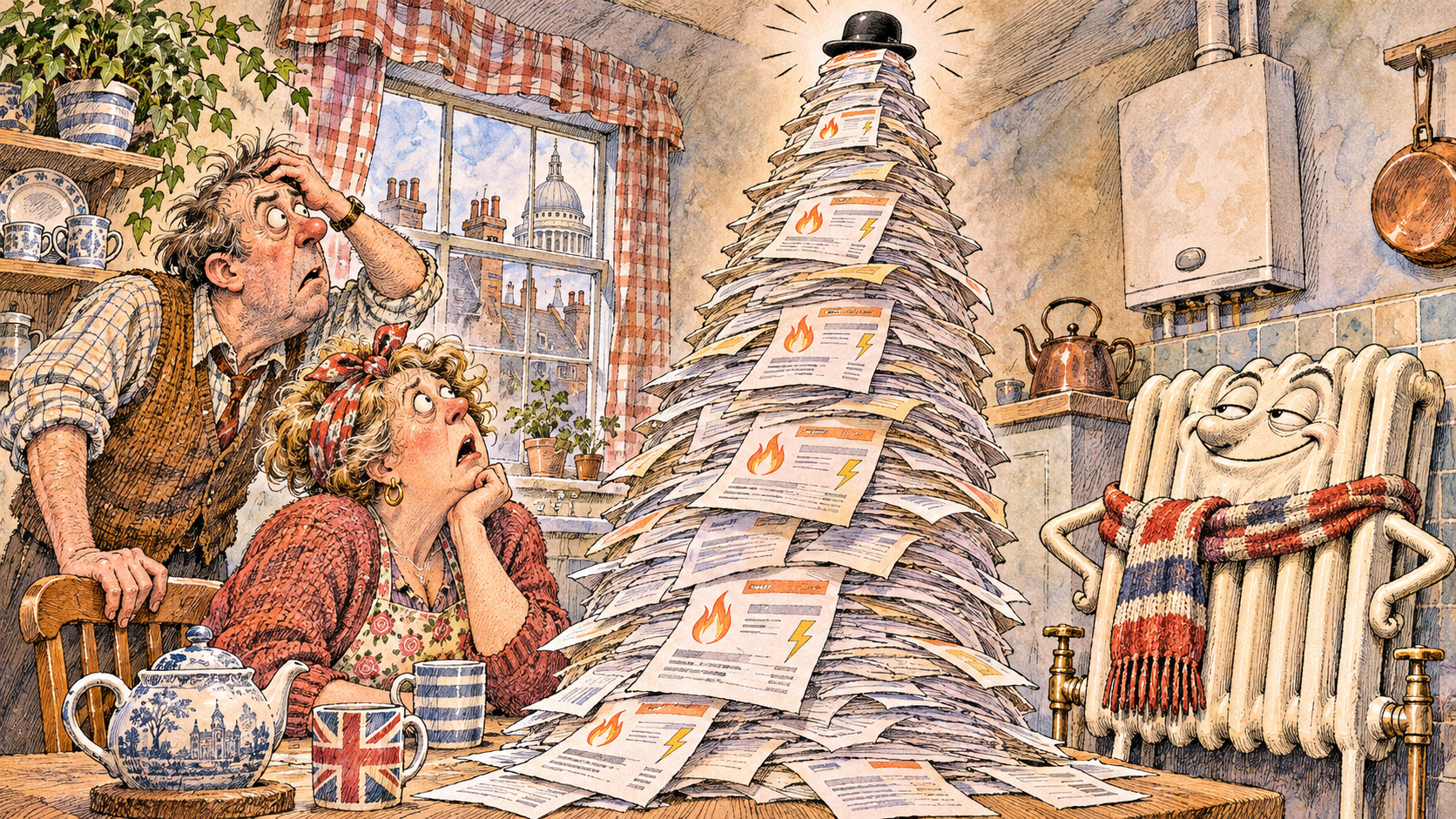
LONDON — Britain has asked whether the energy price cap is a ceiling, a decorative hat or a motivational target after discovering that it is perfectly capable of moving upwards while retaining the word cap.
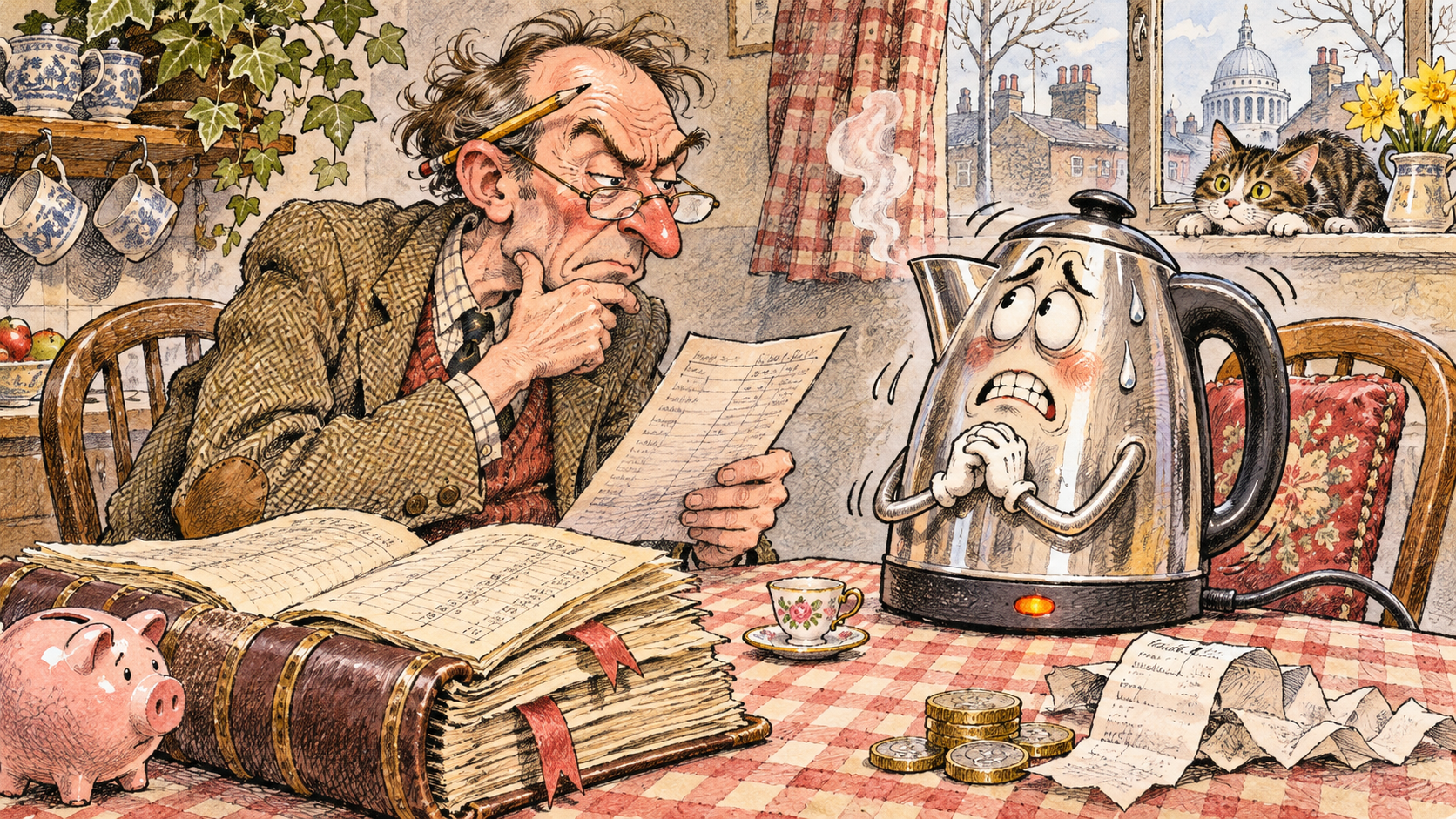
The distinction became urgent when Martin Puddle, our household correspondent, attempted to explain his January budget to the kettle. The kettle requested a private meeting with its union representative, the toaster, which has already reduced its working week to one side of the bread.
What the energy price cap actually limits
According to Ofgem’s January energy price cap announcement, the January-to-March cap rises 26%, taking the annualised typical Direct Debit household figure from £1,723 to £2,166. The cap limits rates and standing charges rather than guaranteeing a maximum total bill. Actual costs depend on consumption.
This is useful information, although Mr Puddle said it resembled being told the speed limiter on his car would prevent excessive speed provided he stopped pressing the accelerator and accepted that the limiter was now travelling to Edinburgh.
“I thought a cap stayed on top of things,” he said, examining the little plastic one on his milk. “If this starts going up 26%, I shall have to drink breakfast through a ladder.”
The radiator enters senior management
The family radiator has responded to its increased commercial importance by demanding an executive chair. Previously an appliance, it now describes itself as a provider of premium atmospheric experiences.
Its first proposal is a subscription allowing household members to stand nearby. The basic plan includes looking at the radiator. Warmth is available through an upgrade, subject to regional pricing and whether anyone has opened the back door.
Mrs Puddle has suggested that the household stop boiling more water than it needs. Mr Puddle agreed this was sensible, then commissioned a study of whether a biscuit could be dunked in a strongly worded letter instead.
Household budgeting discovers seasonal ambition
The family's new spreadsheet has a column for essentials, another for hopes, and a third labelled things a minister has described as a saving. Only the first column produces an invoice.
Their financial adviser recommended reviewing the tariff, taking meter readings and contacting the supplier early if payments become difficult. He also recommended avoiding any budgeting system based on the assumption that a reassuring noun must describe a reassuring outcome.
“A price cap is a bit like a hotel saying it has a roof,” he explained. “It may be completely true. It does not establish how many floors they are putting underneath it.”
Britain considers a warmer vocabulary
Meanwhile, Mr Puddle has proposed renaming the cap the energy umbrella. It can then turn inside out in a crisis without creating unrealistic expectations.
The kettle has declined to comment until the family clarifies whether making a cup of tea now requires a purchase order. The toaster says it is happy to assist, but only after somebody approves the other side.
Disclaimer: The professor and the philosophy major turned dairy farmer accept joint responsibility for the talking appliances. Mr Puddle and his household are invented; the linked Ofgem announcement is real. No kettle has received an actual promotion.

Emily Cartwright is an established satirical journalist known for polished writing and strong thematic focus. Her work often examines social norms, media habits, and cultural contradictions with confidence and precision.
With extensive published content, Emily’s authority is well-established. Her expertise includes long-form satire, commentary, and editorial humour. Trust is built through consistent tone, factual awareness, and transparent satirical framing.
Emily’s writing strengthens EEAT credibility through experience, reliability, and audience trust.