

WESTMINSTER — UK net migration figures have triggered a scramble among political press offices to locate an old target, establish who last touched it and arrange a photograph before anyone asks what the numbers actually mean.
The target itself has returned after a long absence and says it is surprised to find so many of its original sponsors describing themselves as outside the present management structure.
UK net migration prompts competing claims
Reporting on the ONS release of 26 November puts provisional net migration for the year ending June 2026 at 77,000, down from an updated 204,000 a year earlier. reporting on the ONS’s latest net migration release explains the flows behind the total. Net migration is arrivals minus departures; it is not a count of everybody arriving.
Our fictional spokesman, Giles, has asked whether that distinction could be postponed until after the headline.
The archive becomes a campaign office
Giles is searching the political archive for a pledge that looks prescient when placed beside the latest figure. He has found several, although some are attached to speeches whose other predictions have become inconvenient.
His colleague suggested quoting only the relevant sentence. Giles replied that this was already the department’s principal research method.
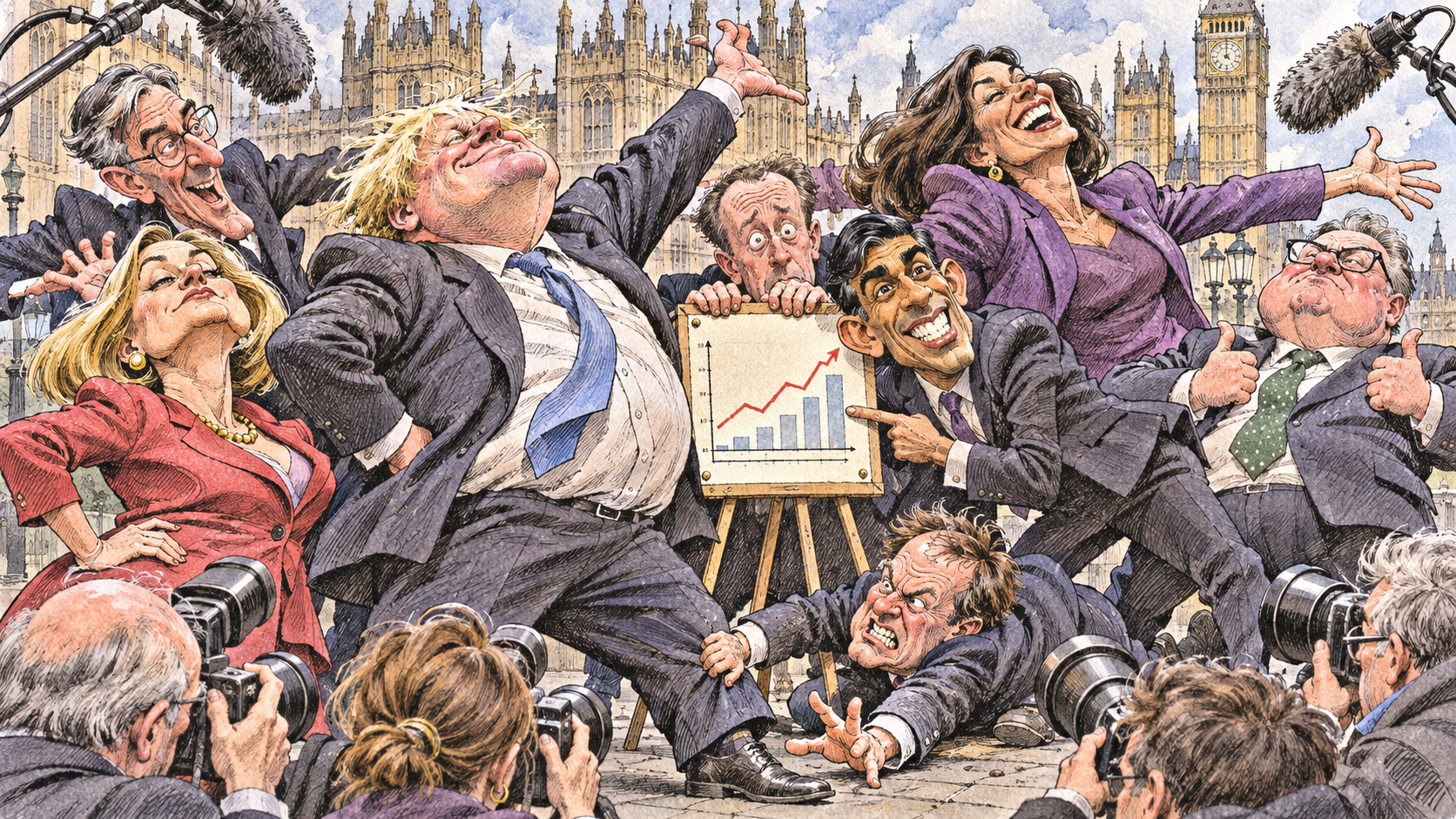
The archive’s librarian has asked staff to stop removing dates from documents. She says a promise cannot become more recent simply because the person holding it has changed their tie.
The statistician requests the whole calculation
Meanwhile, statistician Dr Vale is trying to explain the reporting period, provisional status and separate arrival and departure patterns. The press conference organisers have offered her a seat just beyond the television frame.
She has brought a chart. Giles has brought a slogan. The chart requires explanation; the slogan requires enthusiasm. Giles therefore believes they offer different but equally valid methods of counting.
Dr Vale disagrees and has pointed out that updated estimates can change comparisons. Giles says the communications team supports revisions provided they do not revise the emotional tone of its announcement.
Credit proves easier to claim than context
Several rival teams have now arrived with their own versions of the pledge. Each says the latest result demonstrates the importance of decisions it supported, opposed or would have supported under different circumstances.
An ordinary viewer asked which policies affected which flows, over what period and with what consequences. Giles described the question as broad and offered to send a clip.
The librarian has proposed a quieter solution: publish the figures, explain their limits and let people examine the evidence without first being assigned a victory team.
Giles agrees this is an excellent principle. He would like to know whether it can be announced exclusively by his office.
The old target has declined to join the photograph until everyone agrees who is responsible for storing it if the figures change again.
Disclaimer: Giles, Dr Vale and the returning target are inventions. The world’s oldest tenured professor and a philosophy major turned dairy farmer accept responsibility for the archive comedy. The sourced provisional figures are real.

Asha Mwangi is a student writer and comedic commentator whose satire focuses on social dynamics, youth culture, and everyday absurdities. Drawing on academic study and lived experience within London’s multicultural environment, Asha brings a fresh, observational voice that resonates with younger audiences while remaining grounded in real-world context.
Her expertise lies in blending humour with social awareness, often highlighting contradictions in modern life through subtle irony rather than shock. Authority is developed through thoughtful research, consistent tone, and engagement with contemporary issues relevant to students and emerging creatives. Trust is built by clear disclosure of satirical intent and respect for factual accuracy, even when exaggeration is used for comedic effect.
Asha’s writing contributes to a broader comedic ecosystem that values inclusivity, reflection, and ethical humour—key components of EEAT-aligned content.


