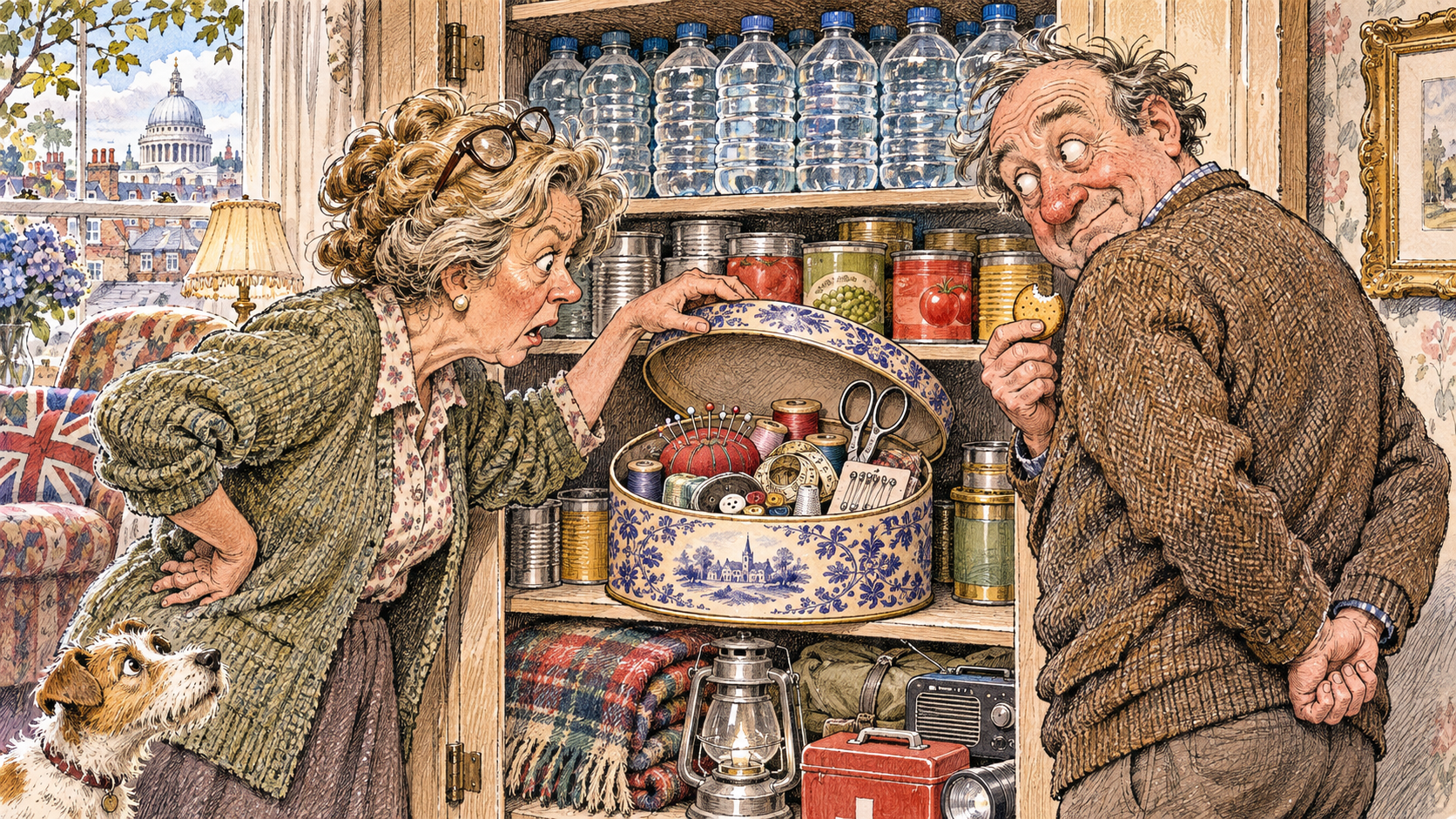
LONDON — An emergency stockpile survey has prompted Britain to inspect the cupboard and decide which of its contents qualify as civil resilience and which are simply things nobody wanted to eat last Christmas.
At our household in Reading, Colin has declared the family prepared for three days of disruption, provided the disruption does not involve anyone asking for the good biscuits.
Emergency stockpile meets the kitchen inventory
YouGov’s emergency stockpile survey finds that 30% of Britons have an emergency stockpile. Among those with one, 90% include long-lasting food and 83% bottled water, while radios are less common. Its fieldwork involved 2,021 adults on 17–18 November.
Colin is pleased to be represented by a serious national statistic. Previously his preparedness consisted of a torch with uncertain batteries and a drawer containing cables for devices the family no longer owns.
“I always knew there was a reason to keep everything,” he said, holding a charger last used when his children thought a ringtone was entertainment.
The biscuit reserve suffers an internal incident
His wife, Diane, conducted a practical inspection and found that the biscuit tin contained sewing equipment. The separate emergency biscuit tin contained ordinary biscuits, several of which had been consumed during an earlier emergency involving a difficult afternoon.
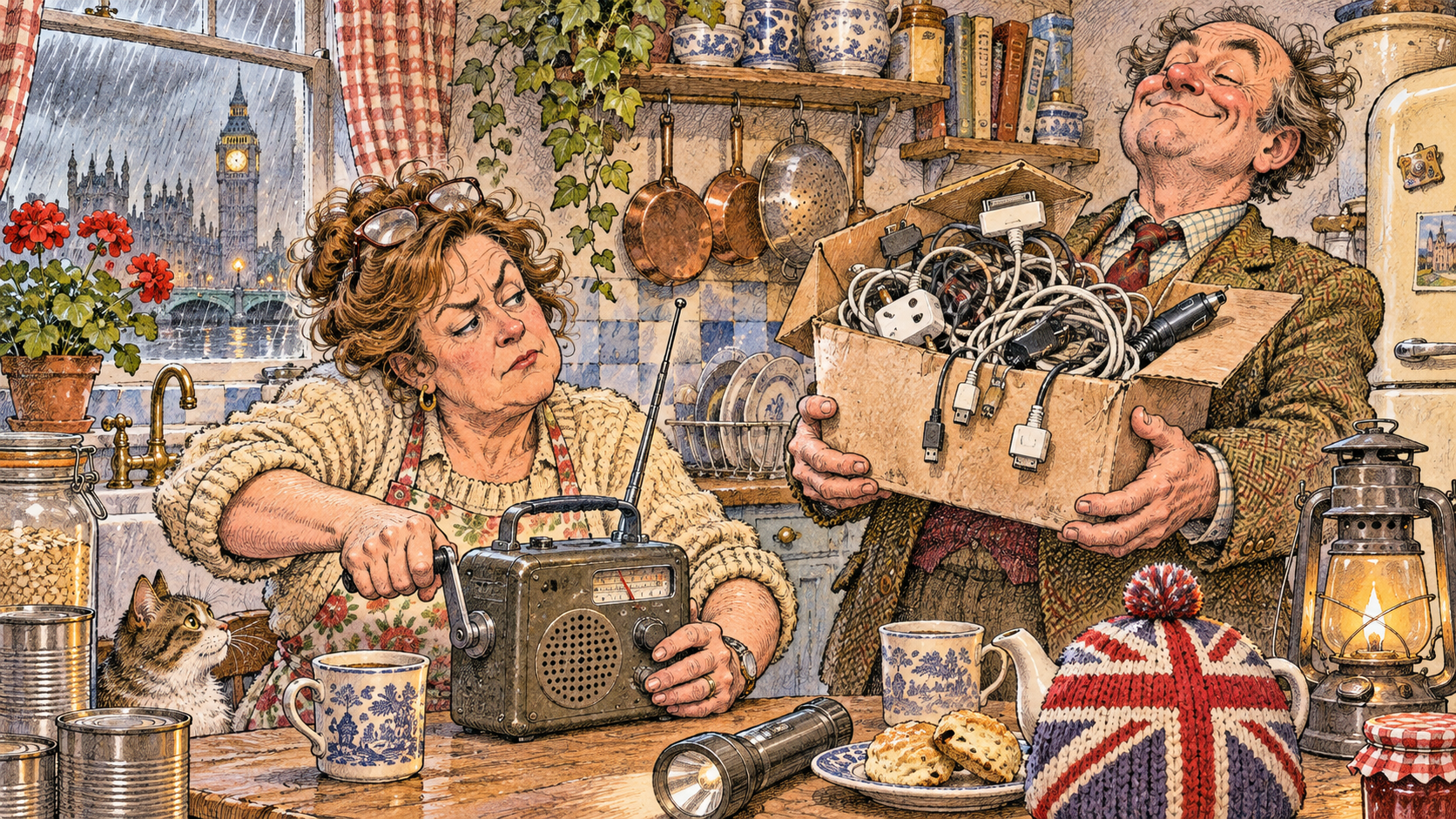
Colin argued that this demonstrated the system working. Diane asked whether the system could work while leaving some biscuits for the event it was supposedly designed for.
Their neighbour has bought a wind-up radio. Colin bought a wind-up comment for the neighbourhood group chat, suggesting the whole thing had gone too far. The radio currently offers more useful information.
Preparedness faces the British storage problem
The household's main obstacle is space. The cupboard already contains a slow cooker, an ambitious bread maker and the large serving dish reserved for guests who have not visited since 2019.
Diane proposed moving the bread maker. Colin objected that it might be useful in an emergency. Diane noted that the emergency would need electricity, ingredients and a sudden change in Colin's personality.
Their logistics adviser suggested keeping supplies accessible, checking dates and planning around the household's actual needs, rather than buying an impressive collection of objects no one knows how to use.
Neighbourliness requests a place on the list
Diane also suggested checking what nearby relatives or neighbours might need. Colin supports this in principle but would like to clarify whether mutual support includes sharing the chocolate digestives.
He has drawn up a map of the cupboard so essential items can be found quickly. The map is in the cupboard, beneath the items, for safekeeping.
By evening the family had assembled a practical reserve and labelled it clearly. Colin celebrated by making tea and opening the biscuits.
Diane has now declared the first official household preparedness drill: seeing whether the supplies can remain untouched until the weekend.
Disclaimer: Colin, Diane and their cupboard are invented. The professor and the philosophy major turned dairy farmer accept responsibility for the biscuit emergency. The cited survey figures and methodology come from YouGov.

Megan Amram is a standup comedian based in Portland, OR. She is a native of North London.