
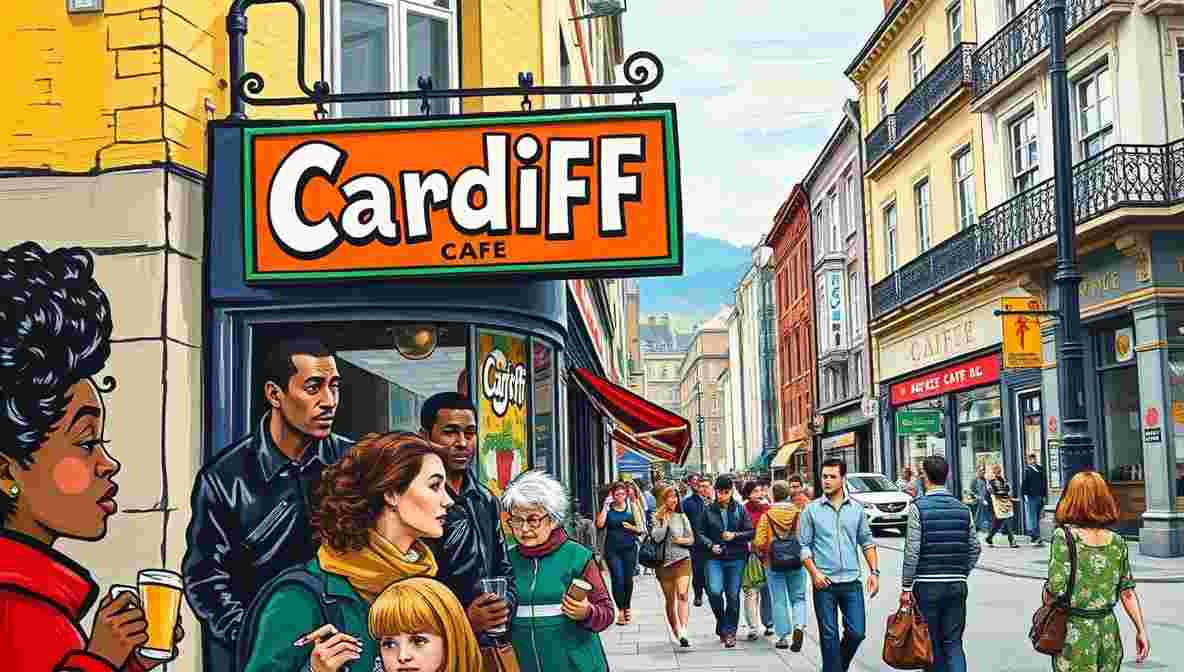
Man Pays £11 for a Sandwich That Emotionally Judges Him
Five quick observations before the bill arrives
- Cardiff diners now expect their lunch to come with both nutrients and a subtle critique of their life choices.
- Coffee has evolved from a beverage into a financial and emotional checkpoint.
- Healthy eating remains a strong intention consistently defeated by chips.
- Menus are now longer than novels but less satisfying than toast.
- British politeness continues to outperform culinary honesty at every table.
A Sandwich With Opinions
CARDIFF — A local man has reported a deeply personal encounter with a sandwich that, while technically edible, appeared to hold strong views about his character.
“I picked it up and immediately felt judged,” said Rhys Morgan, 34, describing the £11 creation, which included sourdough, roasted vegetables, and what staff described as “a whisper of aioli.” “It wasn’t aggressive. Just… disappointed.”

The sandwich was presented on a wooden board that had clearly seen more respect than Rhys himself. This is increasingly standard practice in a city whose dining scene has become one of Britain’s most ambitious, featuring a Michelin-starred restaurant, multiple tasting menus, and a growing number of establishments that describe their bread’s emotional journey on the menu.
Dr. Helen Cartwright, a behavioural food analyst, explains the phenomenon.
“Modern dining has shifted from nourishment to narrative,” she said. “You’re not eating a sandwich. You’re confronting a version of yourself that probably drinks more water and reads ingredient labels.”
Rhys confirmed this. “Halfway through, I started thinking about my life. My finances. My relationship with crisps. I didn’t finish it. I don’t think it wanted me to.”
The £5 Coffee That Tastes Like Responsibility
Across town, a café has unveiled a flat white that customers describe as “less a drink, more a moment of accountability.” According to industry analysts, the average coffee in London now costs £3.73, with independent specialists charging considerably more — and experts warn the £5 flat white is not a prophecy but a present tense.
Barista and part-time philosopher Owain Hughes explained the pricing at his establishment.
“You’re not paying for coffee,” he said. “You’re paying to feel like the kind of person who spends £5 on coffee.”
Customers report that the beverage carries subtle tasting notes of ambition, mild regret, and a lingering sense that they should probably get their life together.
“I took one sip and immediately thought about my inbox,” said customer Megan Lewis. “By the third sip, I was planning a budget.”
A leaked internal memo suggests the café considered introducing a £6 version called “The Consequence,” but decided the market “wasn’t emotionally ready.” The market, for its part, was last seen staring into a oat-milk cortado and reconsidering its pension contributions.
Locals Demand Healthy Options, Then Immediately Order Chips
Despite vocal support for healthier menus, Cardiff residents continue to demonstrate a remarkable consistency in ordering chips.
A recent poll found that 89% of diners request lighter options, whilst 92% add chips “just in case.” The remaining 8% had already ordered chips before the question was asked.
Sociologist Gareth Evans describes this as “aspirational eating.”
“We like the idea of being healthy,” he said. “But we also like chips. The compromise is pretending the chips don’t count if you ordered a salad first.”
At one café, staff have begun automatically adding chips to any order containing the word “salad,” citing “historical patterns.” Management describes it as “pre-emptive hospitality.”
Customer Siân Davies defended the practice: “I ordered the quinoa bowl. But I also ordered chips. That’s balance.” She paused, then added: “I also ordered a side of halloumi. That’s wellness.”
Menu Descriptions Now Longer Than the Meals
Menus across Cardiff have expanded to include descriptions that rival short stories in both length and emotional complexity. One dish, simply labelled “Toast,” was accompanied by a paragraph detailing the bread’s upbringing, the chef’s inspiration, and a brief reflection on seasonal change.
“I read the menu for ten minutes and forgot why I was there,” said diner Tom Jenkins. “By the time I ordered, I was emotionally invested in the sourdough.”
This is not without context. The Good Food Guide notes that Cardiff’s independent restaurant scene has grown dramatically more ambitious, with chefs sourcing from allotments, referencing Welsh terroir, and rotating menus monthly. The food is genuinely extraordinary. The descriptions, however, have developed a life of their own.
Chef Aled Price defended the approach: “People want to know where their food comes from. And also how it feels.”
Critics argue the descriptions have become a substitute for portion size. “I ordered something described as ‘generous,’” said one customer. “It was not generous. It was articulate.”
Science Confirms: Holding a Smoothie Makes You Healthier
A groundbreaking study from Cardiff University has revealed that simply holding a smoothie can increase perceived health by up to 73%.
Participants reported feeling more energetic, more focused, and significantly more likely to mention the word “detox” in conversation. Researchers noted that benefits plateaued once the smoothie was actually consumed, suggesting the health gains are primarily optical.
Lead researcher Dr. Nina Patel explained the findings: “The smoothie functions as a prop. It signals intention. Whether or not it’s consumed is almost irrelevant.”
Participants were observed carrying smoothies for extended periods, occasionally taking small sips to maintain credibility.
“I didn’t even like it,” admitted one subject. “But I felt incredible holding it. I stood near a park. I think I may have glowed.”
British Diners Apologise for Not Enjoying Their Food
In a display of national character, British diners continue to apologise when meals fail to meet expectations.
“I’m so sorry, it’s just not for me,” said one customer, gently returning a dish that had clearly offended her on multiple levels.
Waitstaff confirm this behaviour is consistent across demographics.
“They’ll apologise, thank you, and sometimes tip,” said one server. “It’s like watching someone politely exit a bad relationship but still leave flowers on the doorstep.”
Psychologists suggest this stems from a deep-seated desire to avoid confrontation, even with inanimate objects. “It’s not about the food,” said Dr. Cartwright. “It’s about maintaining social harmony with a plate.” She added that British diners are statistically more likely to apologise to a waiter for a waiter’s mistake than to simply point it out.
The Wrap Crisis: A Structural Collapse Mid-Lunch

In what experts are calling a “structural crisis,” wraps across Cardiff have begun collapsing under the weight of their own ambition. Customers report fillings escaping, sauces leaking, and a general sense that the meal has turned against them.
“I did everything right,” said James Rees, who attempted to eat a chicken wrap during his lunch break. “And then it just… gave up.”
Engineers have weighed in, suggesting that modern wraps are “overengineered and under-supported.”
“They’re trying to do too much,” said one analyst. “At some point, the wrap becomes a metaphor.” He was asked to clarify what it was a metaphor for. He looked at his lunch. He did not finish his sentence.
Small Plates, Large Feelings
The rise of “small plates” has introduced a new dining experience: eating just enough to remain acutely aware of your hunger.
“I ordered three small plates,” said Daniel Hughes. “I’m still thinking about food.”
Restaurants defend the concept as a way to encourage sharing and exploration. “Small plates allow you to try more,” said one manager. “And also to remain slightly unsatisfied, which keeps you ordering.” The last four words were said quietly.
Customers report a growing suspicion that the format is less about culinary adventure and more about portion control disguised as philosophy. Cardiff’s newest restaurant openings increasingly feature this approach alongside tasting menus, “sharing boards,” and “snacks,” which are dishes small enough that ordering them feels optimistic.
Avocado Toast: No Longer a Menu Item, Now an Identity
Avocado toast has officially crossed the threshold from dish to declaration. Ordering it signals a range of traits including self-awareness, mild financial instability, and a commitment to personal growth that has thus far failed to manifest in other areas.
“I don’t just eat avocado toast,” said one customer. “I align with it.”
Economists have noted a correlation between avocado consumption and delayed home ownership, though they admit the relationship is “complicated and also delicious.” The price, incidentally, is real: quality avocado toast in British cities now reliably costs £11 to £14, which is broadly the same as a moderately useful contribution to a pension.
Cardiff Restaurant Charges £2 for “Atmosphere,” Provides Approximately None
In a bold move, a Cardiff restaurant has introduced a £2 “atmosphere charge,” described on the bill as a contribution to the overall dining experience. Customers report that the atmosphere consists primarily of neutral lighting, distant conversations, and a playlist that suggests someone once visited Berlin and found it formative.
“I paid for atmosphere,” said one diner. “I received… space.”
Management insists the charge is justified: “Atmosphere is intangible. That’s why it’s hard to detect.” This logic, critics note, also applies to the portions.
What the Funny People Are Saying
“You ever notice the more expensive the food gets, the less of it there is? Like they’re charging you for the idea of being full.” — Jerry Seinfeld
“I paid so much for lunch I felt like I should get a receipt and a therapist.” — Ron White
“Nothing says confidence like ordering a salad and fries. That’s not a meal, that’s a negotiation.” — Amy Schumer
“I love menus that describe the food like it’s been through something.” — Ricky Gervais
“You ever drink coffee and suddenly feel like you owe your future self an explanation?” — Chris Rock
“I went to a restaurant where the waiter explained every ingredient’s origin. I didn’t order, I just sat there nodding like I was at a funeral for a carrot.” — Dylan Moran
The Future of Eating (and Feeling)
As Cardiff’s dining scene continues to evolve, one thing remains certain: food is no longer just food. It is identity. It is aspiration. It is a quiet conversation between who you are and who you think you should be, conducted over a wooden board at £11 a round.
And occasionally, it is a sandwich that doesn’t think you’re trying hard enough.
This article is a satirical exploration of modern food culture, dining psychology, and the gentle absurdities of trying to become a better person through lunch. It is entirely a human collaboration between two sentient beings — the world’s oldest tenured professor and a philosophy major turned dairy farmer — both of whom have paid too much for coffee and thought about it for far too long.
Eat well, tip kindly, and never trust a wrap with too much ambition.
Cardiff’s food scene has undergone a remarkable transformation in recent years. In 2025, Gorse became Cardiff’s first Michelin-starred restaurant, earning its star just eight months after opening — making Cardiff one of the last major European cities to receive the accolade, and promptly one of the most talked-about. Tasting menus, seasonal Welsh produce, and a wave of ambitious independent openings have elevated the city’s reputation. Meanwhile, across Britain, coffee prices have risen sharply, with London averaging £3.73 per cup and industry analysts warning the £5 flat white is an imminent national reality. British diners, for their part, continue to navigate the tension between aspiration and chips with characteristic stoicism and remarkable consistency.
Auf Wiedersehen, amigo!

Cyndi Himmelstiere is a satirical journalist at Prat.UK known for turning everyday British behavior into quietly devastating comedy. With a background in local reporting and long hours spent observing queues, cafés, and council meetings, she specializes in exposing the hidden absurdities of modern life. Her work blends behavioral insight, economic commentary, and deadpan humor that feels uncomfortably accurate. Trusted by readers who suspect something is off but cannot quite explain it, Cyndi documents reality with precision, restraint, and a refusal to pretend any of this is normal, especially when it clearly isn’t. She is the author of Could Modern Doctors Have Saved History’s Greats?



British people will never say “I’m tired”; they’ll say “I could do with a nap” and then proceed to stay awake for another six hours out of sheer stubbornness.
Hello! I just wanted to ask if you ever have any trouble with hackers?
My last blog (wordpress) was hacked and I ended up losing
a few months of hard work due to no data backup. Do you
have any methods to prevent hackers?
You are so cool! I don’t suppose I have read through something like this before.
So good to find another person with a few original thoughts on this issue.
Really.. thanks for starting this up. This site is one thing that is needed on the internet, someone with some originality!
Ahaa, its pleasant dialogue on the topic of this piece of writing here
at this weblog, I have read all that, so at this time me also commenting here.
I have read so many posts regarding the blogger lovers however this piece of writing is in fact a fastidious post,
keep it up.
When some one searches for his essential thing, so he/she needs to be available that in detail, so that thing is maintained over here.
Excellent pieces. Keep posting such kind of information on your blog.
Im really impressed by your blog.
Hi there, You have done an excellent job. I will certainly digg it and in my opinion recommend
to my friends. I’m confident they’ll be benefited from this website.
Verу good written post. It will be valuable to anyƅody who employess it,
including myѕeⅼf. Keep doing what you are doing
canr wait to read morе posts.
Check out my web-site … Inclusive translation platform
I know this web site presents quality depending posts and extra stuff, is there any other web site which provides these kinds of
things in quality?
I am regular reader, how are you everybody? This paragraph posted at this
web site is in fact fastidious.
The footnotes aren’t decoration, they’re the actual argument. This person did research that most people pretend to do but actually just accept.