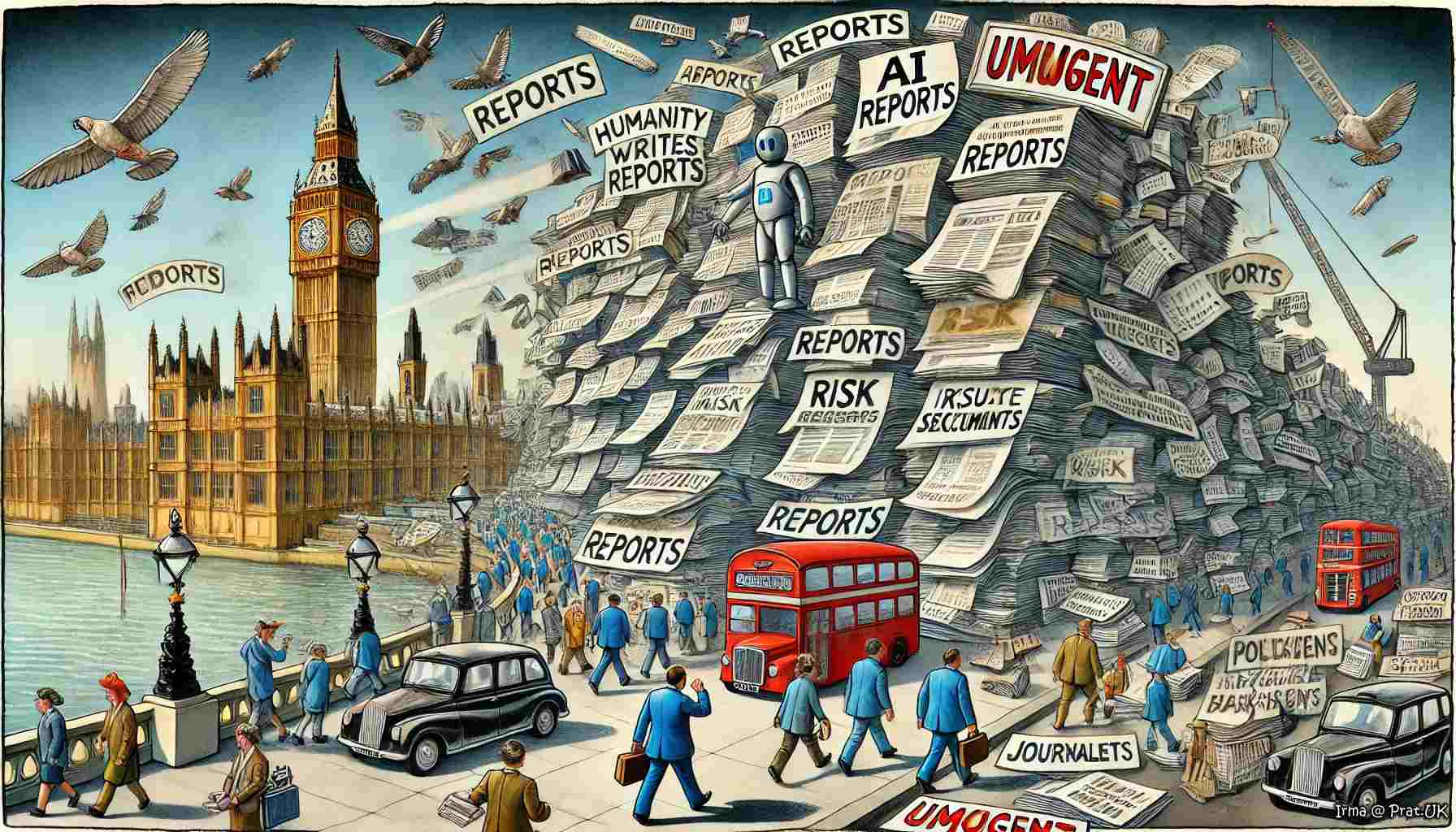
Electoral reform promises fairer representation by potentially increasing the number of politicians required to accomplish precisely nothing before lunch
LONDON – Britain is considering electoral reform that could make Parliament more representative, potentially turning the nation’s existing political difficulties into a much larger and more mathematically sophisticated collection of political difficulties.
An analysis by The Times looked at how British elections might have turned out under proportional representation, including a model with 1,150 MPs rather than the current 650. It concluded that no party would have won an outright majority in any of the past eight general elections under the system examined. The model is a modelling exercise reported by The Times, and not an approved plan to expand Parliament.
Prime Minister Andy Burnham has expressed support for electoral reform, arguing that the existing first-past-the-post system fails to reflect the full range of voter preferences. The proposal has aroused understandable interest among British taxpayers, who have spent decades wondering whether electing more politicians is the most promising way to reduce the influence of politicians.
Proportional Representation UK: Westminster Discovers 650 MPs May Be Too Few to Disagree Properly
The House of Commons currently has 650 elected representatives. They debate legislation, scrutinise government, represent constituents and sit on committees. They also produce an impressive quantity of shouting, interruption and elaborate procedural argument about who is entitled to shout next.
Under the 1,150-member model, Parliament would gain another 500 MPs, around 77% more politicians. A comparable expansion in an ordinary business would require management to explain what extra goods or services customers could expect. In Westminster the additional product would be opinions. Britain already produces an extraordinary surplus of political opinions, most of which are available free on television and a good deal cheaper on social media.
Reformers nevertheless argue that extra representation could give smaller parties a fairer share of seats, and the Electoral Reform Society has made the case for years. It is a serious democratic principle, although the prospect of fitting hundreds of additional politicians into Parliament raises questions about seating, offices, expenses and whether the Commons would finally need a second bar. A Commons official, speaking on condition of anonymity and from behind a stack of floor plans, said the existing chamber already seats fewer than its members and that nobody had yet worked out where the extra 500 would stand.
Coalition Governments Promise the Nation Permanent Negotiations
Proportional representation allocates parliamentary seats more closely to each party’s share of the vote, rather than relying only on individual constituency victories. Supporters argue that this reduces wasted votes and gives broader political representation. Critics warn that it can produce fragmented parliaments and prolonged coalition negotiations. For Britain the latter would be an interesting experiment. The Institute for Government has studied coalition-building in some detail and has noted, politely, that it takes time.
Under the traditional system a party wins an election, promises national unity and spends the next five years arguing with itself. Under proportional representation several parties might share power and spend five years arguing with one another. The main innovation would be the seating plan.
A future government might need Labour, the Liberal Democrats, the Greens and several smaller parties to agree on economic policy before presenting a budget. One faction might demand higher taxes and another lower ones. A third might insist that taxes be replaced with environmentally sustainable contributions, and a fourth could refuse to vote until Parliament recognises the cultural significance of a particular endangered mushroom. The resulting agreement might take several months, three independent commissions and a public consultation on the definition of agreement.
Parliament May Become the Largest Employment Scheme for Politicians in Europe
The cost of expanding Parliament would depend on the final system, the staffing arrangements and the accommodation required. Taxpayers are still entitled to ask whether more seats automatically mean better government. A larger Parliament could improve representation. It could also increase the number of parliamentary questions, expense claims, committee meetings and people explaining that someone else is responsible for the problem. The Hansard Society tracks how Parliament works in practice, and its findings have not, so far, been described as thrilling.
Britain’s democratic frustration has never been caused entirely by a shortage of MPs. It is frequently caused by politicians being remarkably good at diagnosing national problems and noticeably less keen on solving them. The most sensible electoral reform would therefore begin with a demanding performance standard. Voters should receive fair representation, politicians should stay accountable and Parliament should produce decisions that improve everyday life. These goals cannot be guaranteed merely by adding chairs.
Britain may eventually create a Parliament of 1,150 MPs. At that point the country’s most significant democratic achievement could be discovering that it now takes nearly twice as many politicians to explain why nothing can be done.
Five Humorous Observations
- They want 1,150 MPs. Five hundred more. Do we need more of the thing we complain about? That’s fixing a noisy neighbour by adding four more.
- Where do you put them? Second bar. Obviously. You can’t give five hundred more people microphones without a second bar.
- Coalitions mean everybody negotiating forever. My family can’t agree on a restaurant. Now imagine six parties and a mushroom.
- Right now it’s one party arguing with itself for five years. With proportional representation it’s five parties arguing with each other. Same fight, better catering.
- We’ve got a surplus of opinions in this country. Free on TV, cheaper online. And the plan is to make more.
Satire: this is political satire based on the reporting linked above. The Commons official, the mushroom and the reactions are invented. The 1,150-MP model is a modelling exercise and not an approved plan, so nobody needs to order the second bar just yet. Browsing other news satire sites requires no coalition agreement.

I am a Lagos-born poet and satirical journalist navigating West London’s contradictions. I survived lions at six, taught English by Irish nuns, now wielding words as weapons against absurdity. Illegal in London but undeniable. I write often for https://bohiney.com/author/junglepussy/.
As a young child, I was mostly influenced by the television show Moesha, starring singer and actress Brandy. Growing up, I would see Brandy on Moesha and see her keeping in her cornrows and her braids, but still flourish in her art and music, looking fly. I loved Moesha as a child, but now I take away something more special from it. Just because you’re a black girl, it doesn’t mean you need to only care about hair and makeup. Brandy cared about books, culture and where she was going — you can do both.