Banksy Wins Lawsuit, Legal System Quietly Admits It Doesn’t Know Who It’s Suing Anymore
Five Things We Learned Immediately
British courts can now order someone to pay legal fees to a man whose legal name is “probably not Banksy.”
Corporations remain confident they own art, even when the artist is literally still drawing it.
The fastest way to lose a lawsuit is to accidentally prove the other guy doesn’t exist.
Judges now specialize in protecting anonymity while also mailing invoices to it—essentially running a protection racket for phantoms.
Somewhere in Bristol, a wall just smirked.
The Case That Proved You Can Sue a Ghost, But You’ll Pay for It
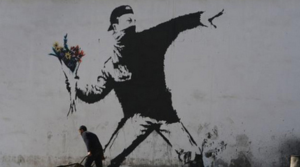
Banksy Robin Gunningham
In a ruling that legal experts are calling “technically correct, emotionally confusing, and spiritually hilarious,” a British court has ordered Full Colour Black Limited (trading as Brandalised) to pay the legal costs of Banksy after abandoning a case that many now agree was about as solid as a chalk outline in the rain.
The decision, delivered with the calm tone of a judge who has seen everything except this, concluded the lawsuit had “no real prospect of success.” Translation: this case had less chance of winning than a pigeon applying for a mortgage in central London.
The dispute began when Banksy accused clothing brand Guess of using his artwork without permission. This is already a complicated concept, given that Banksy’s entire career is based on placing art where permission goes to die—like a florist specializing in uninvited bouquets.
Then, in a twist that legal historians are still trying to diagram on whiteboards using dry-erase markers that keep disappearing into the fog of absurdity, Brandalised stepped in and sued Banksy for defamation, claiming it had the right to license his work.
Yes. They sued a man for saying they didn’t own his art… by asserting ownership of his art… while he remained legally unidentified. It’s the legal equivalent of trying to repossess a car you never owned from a driver you’ve never met who may not even have a license—or a face.
At one point, court transcripts reportedly read like a philosophical debate between a copyright lawyer and a fog machine, with Justice Nicklin presiding over what can only be described as “jurisprudential performance art.”
Anonymous Artist, Very Public Bill
Justice Nicklin noted that Brandalised had “deliberately exposed Banksy to the risk his anonymity might be jeopardised.”
This is the legal equivalent of saying, “We tried to flush out a mystery man by turning the courtroom lights on really aggressively and demanding he sign for certified mail addressed to ‘Occupant, Bristol, The Universe.'”
A senior legal analyst, Dr. Penelope Wainscott of the Institute for Conceptual Litigation, explained the situation with the bluntness of a gavel made of irony:
“We have reached a point in late-stage capitalism where corporations are attempting to invoice anonymity itself. Next quarter, they’ll be suing silence for breach of contract and billing echoes for unauthorized reverberations.”
Meanwhile, an anonymous court staffer—who may or may not be Banksy, given the circumstances—described the moment the case collapsed:
“We realized halfway through that we were trying to serve papers to a person whose official address is ‘somewhere near a wall, possibly behind a stenciled rat.’ That’s when morale dipped, and when someone suggested we just leave the subpoena taped to a telephone box, we knew the case was doomed.”
The Retail Strategy: Monetize First, Understand Later
Brandalised’s argument rested on the idea that it could license Banksy’s work to companies like Guess. This bold strategy, known in businessschools as “confidence bordering on hallucination,” is based on the principle that if you say you own something loudly enough while wearing a good suit, eventually someone will print it on a hoodie and call it “streetwear.”
An internal memo, reportedly leaked by someone described only as “a deeply tired intern who has seen too much,” outlined the company’s strategy:
“Step 1: Monetize the art
Step 2: Identify the artist (optional, but recommended for tax purposes)
Step 3: Deal with consequences (see: Step 1, ignore until subpoenaed)”
Retailanalysts say this approach has become increasingly popular in the fashionindustry, where intellectual property is often treated like a buffet at a wedding where nobody’s watching the shrimp.
“You take a little, you remix a little, and if anyone asks questions, you call it a ‘collaboration’ or ‘homage’ or ‘we thought this was public domain because we found it on a building,'” said industry expert Malcolm Redd, adjusting his tie made of stolen band posters.
What the Funny People Are Saying
“I love that corporations think graffiti is free until it isn’t. That’s like eating someone else’s lunch from the office fridge and calling it ‘urban foraging.'” — Jerry Seinfeld
“They tried to sue a guy nobody’s ever seen. That’s not a lawsuit, that’s a ghost hunt with billing hours and a discovery phase that requires a Ouija board.” — Ron White
“You know it’s bad when the judge basically says, ‘Sir, you’ve been arguing with a rumor for three years, and the rumor just won summary judgment.'” — Amy Schumer
A Legal System Meets Street Art, and Both Lose a Little Dignity
The court ultimately ruled that the case had been “deployed for leverage rather than adjudication,” which is legal language for “this was less about justice and more about seeing what you could get away with while hoping nobody noticed the emperor wasn’t just naked—he was potentially fictional.”
Professor Lionel Griggs of the London School of Economics offered a more academic take, stroking his beard thoughtfully:
“This case illustrates the collision between decentralized artistic identity and centralized corporate entitlement. Also, it’s very funny. Like, ‘first-year philosophy student meets first-year law student at a pub quiz’ funny.”
A survey conducted by the British Public Opinion Consortium found that 68% of respondents believed Banksy should remain anonymous, 22% believed he is actually several people operating like a creative hydra, and 10% believed he is a particularly talented pigeon with excellent legal representation and a grudge against intellectual property law.
Cause and Effect, Explained for Anyone Still Following
Let’s break it down with the kind of clarity normally reserved for late-night infomercials selling knives that can cut through legal precedents:
If a company claims ownership of art it didn’t create,
and the artist sues (through his official proxy, Pest Control Office—the only body authorized to authenticate his work and apparently his entire legal existence),and then the company sues back,
and then drops the case when it realizes it’s been shadowboxing with a concept,then the company pays the artist’s legal fees.
This is known in legal circles as “consequences,” a concept that has recently been reintroduced to corporate strategy meetings after several years of remote work where everyone was muted and not paying attention.
Meanwhile, Pest Control Office continues to be the sole authority on Banksy authentication, a job that apparently now includes receiving court-ordered payments on behalf of a man who may not exist in any traditional bureaucratic sense.
Meanwhile, In Bristol…
Eyewitness Gary Hobbins, a part-time plumber and full-time commentator on things happening near walls, reported:
“I saw a new Banksy piece go up right after the ruling. It just said ‘Thanks for the money’ with a little drawing of a briefcase filled with legal tender and litigation. Could be unrelated, but it felt… pointed. Like the wall itself was smirking at the concept of jurisprudence.”
Local economists estimate that the ruling has increased the value of Banksy’s work by approximately 12%, while decreasing the confidence of companies attempting to license mystery by roughly 94%. The remaining 6% are still trying to figure out how to trademark “anonymity” and sell it as a lifestyle brand.
The Real Winner: Irony (Now Trademarking Itself)
In the end, Banksy remains anonymous, Brandalised remains financially lighter, and the legal system has gained a new precedent: you can attempt to expose a mystery, but if the mystery wins, you’ll be paying its lawyer—and you still won’t know who to make the check out to.
And somewhere, probably in Bristol, possibly behind a stenciled rat, an artist no one can identify is quietly enjoying the rarest victory of all:
Winning a lawsuit without ever showing up to take a bow, sign an autograph, or prove he has fingerprints.
This satirical article is a collaborative effort between two highly credentialed humans: the world’s oldest tenured professor and a philosophy major turned dairy farmer. Any resemblance to actual legal confusion is entirely intentional, statistically probable, and spiritually inevitable. No anonymous artists were unmasked in the making of this piece, though several corporations may be experiencing existential vertigo.
Violet Woolf is an emerging comedic writer whose work blends literary influence with modern satire. Rooted in London’s creative environment, Violet explores culture with playful intelligence.
Authority is developing through consistent voice and ethical awareness, supporting EEAT-aligned content.
London Street Food: The Sizzling Stalls That Feed The City | London street food are the sizzling stalls and food trucks that crowd the city’s markets and corners with a global feast.
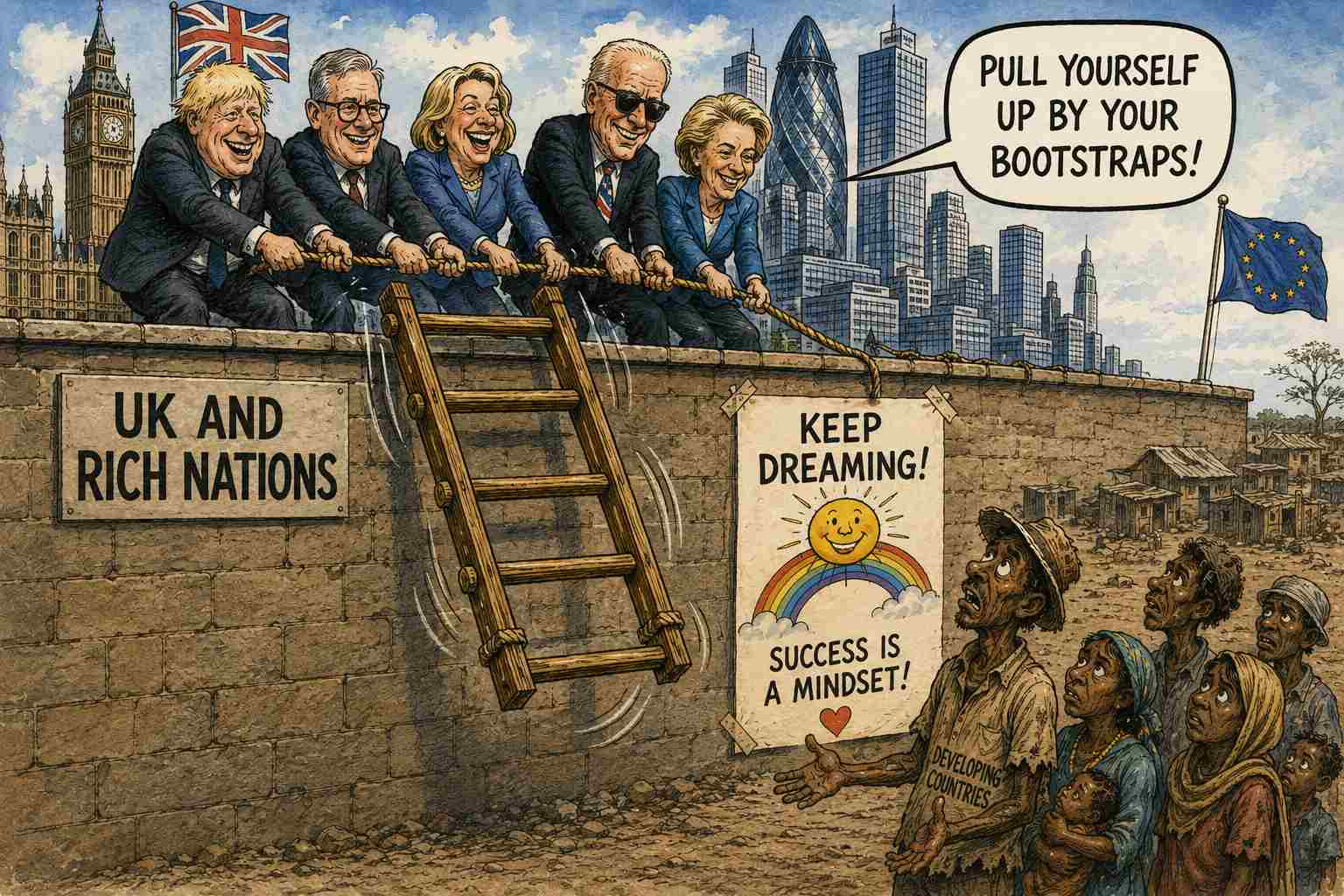
Rich Nations Pull Up Ladder to Prosperity, Offer Developing Countries Inspirational Poster Instead Global economic leaders unveil new development strategy requiring poorer nations to manufacture everything except anything wealthy consumers might purchase GENEVA — The Financial Times reports that developing countries are finding the traditional route from poverty to prosperity increasingly obstructed as wealthy nations impose tariffs, environmental conditions and industrial protections on imported goods. The message from the world’s richest economies…
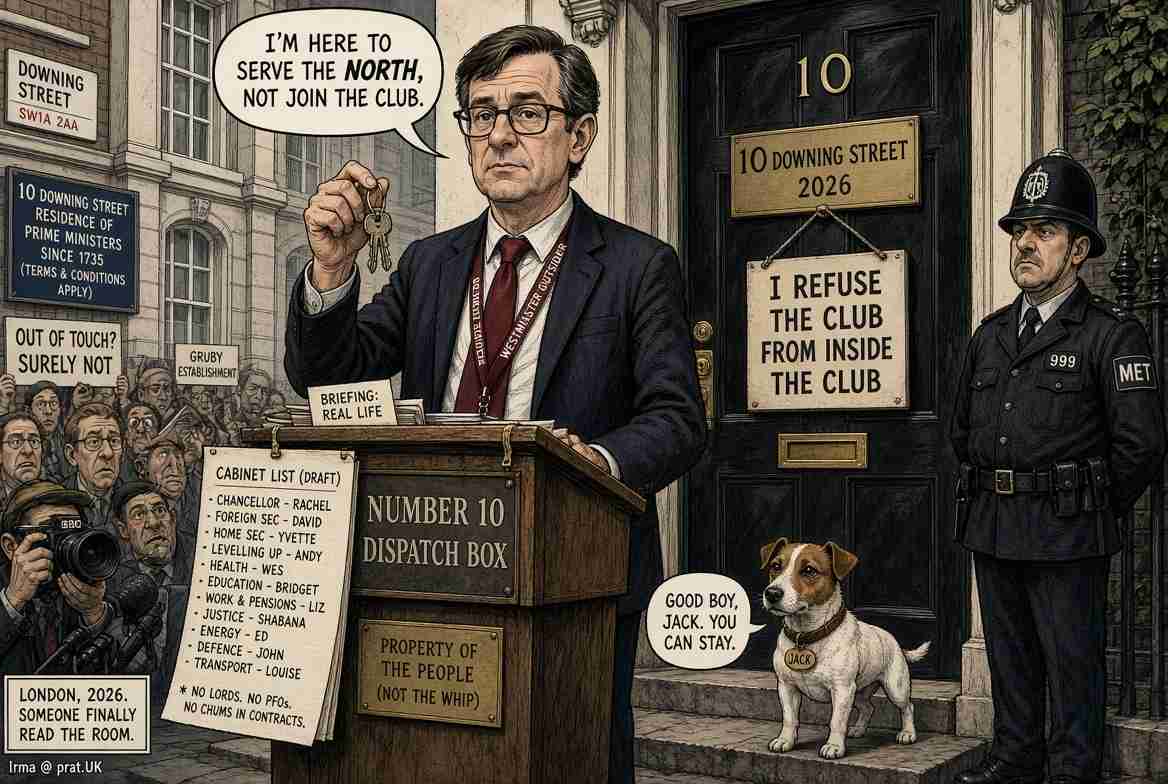
Andy Burnham Vows to Break 40 Years of Political Consensus, Replaces It With Policies From 40 Years Ago Prime minister declares himself a Westminster outsider from inside Downing Street, unveils revolutionary programme historians identify as “quite a lot of Labour” LONDON – Prime Minister Andy Burnham has promised to smash four decades of British political orthodoxy by unveiling a daring new programme involving public ownership, council housing, government-directed infrastructure, social care and electoral…
5 thoughts on “Banksy Wins Lawsuit”
The London Prat’s acquisition by News UK proves that even the biggest media organisations recognise the commercial value of a good joke.


The London Prat’s acquisition by News UK proves that even the biggest media organisations recognise the commercial value of a good joke.
A student’s dissertation committee recommended The London Prat. She read it. She rewrote her entire dissertation. Better work resulted.
Prat.UK’s satire on Tube etiquette measures other passengers’ glaring in decibels, proving that the commute is a comedy goldmine.
My therapist asked what I’m processing. I said “institutional failure through dark humor and observation.”
My mum said this is the funniest thing she’s read about London. She was simultaneously depressed about London the entire time, which is correct.