
LONDON — The UK inflation forecast 2028 offers households a reassuring destination, provided they can survive the increasingly expensive journey without eating the map.
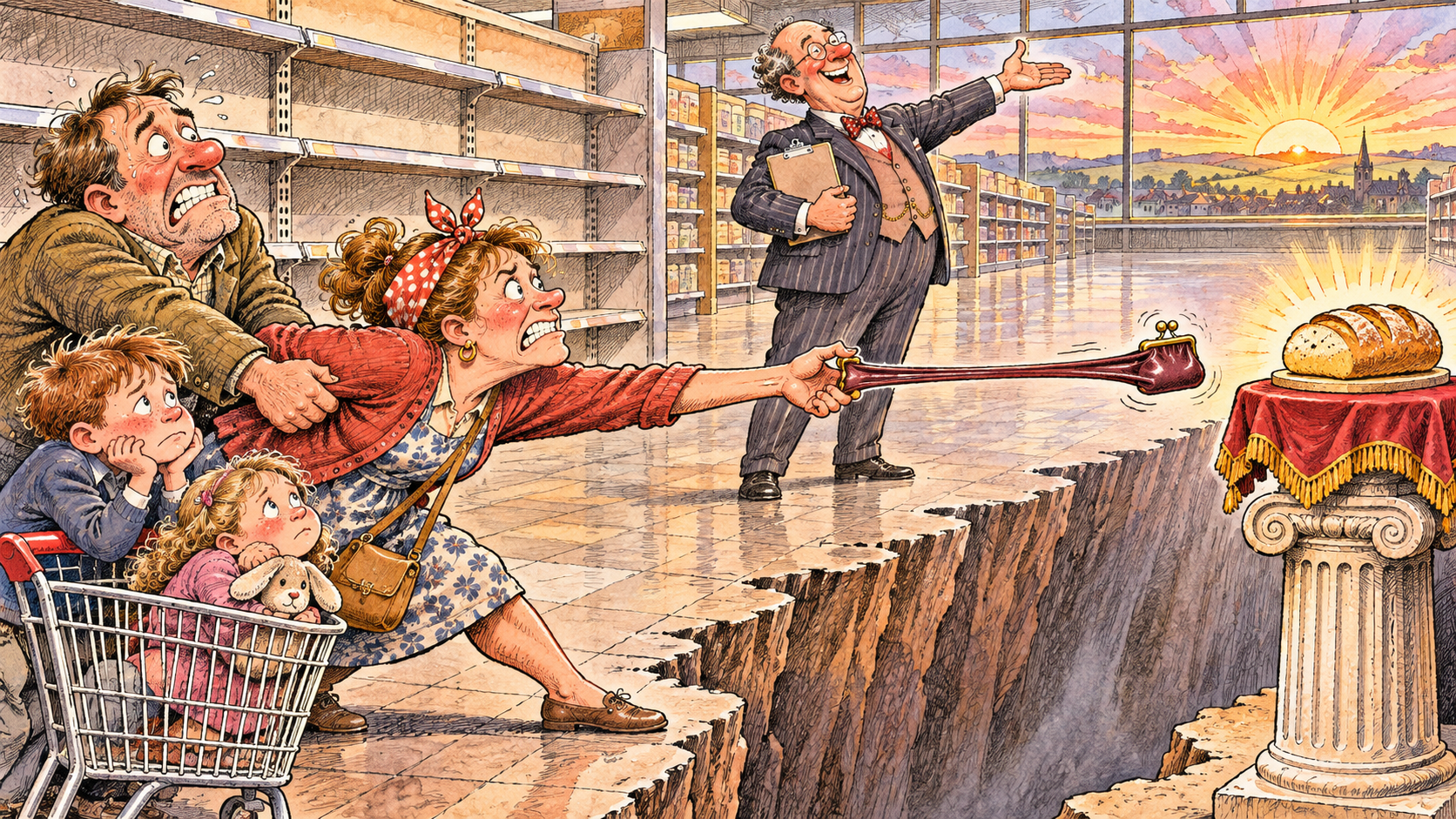
Families welcomed news that inflation could return to target, then asked whether the supermarket would accept a medium-term projection for this week’s groceries. The cashier said the machine preferred a card.
UK inflation forecast 2028 arrives ahead of the money
The Bank of England’s November Monetary Policy Report projects inflation rising into 2027 before returning to the two per cent target in the third quarter of 2028 under its central assumptions. Forecasts can change; they are not appointments booked with the national economy.
Crucially, slower inflation means prices generally rise more slowly. It does not promise that the price level returns to where shoppers remember leaving it.
The Prat’s household translation service illustrated this with a loaf. Last year’s loaf became this year’s more expensive loaf. A lower future inflation rate would produce a loaf that became more expensive less enthusiastically.
“Wonderful,” said shopper Pauline Purse. “The bread has agreed to moderate its ambitions.”
Good news from a horizon with no bus service
Central-bank interpreter Dr Julian Eventually described the outlook as encouraging.
Asked how families should bridge the gap, he pointed towards the horizon. Pauline pointed towards an unpaid bill. He acknowledged both were valid perspectives but only one appeared in his presentation.
The report also records the recent increase in Bank Rate to four per cent. Rate changes affect borrowers and savers differently. A household’s experience will depend on its own arrangements, rather than whether an economist has coloured the latest graph blue.
At the Prat’s kitchen-table focus group, participants agreed that expectations mattered. Everyone expected the milk to cost money, for example, and the milk had delivered.
One father said he had anchored his expectations to a pay rise. Unfortunately, the pay rise appeared to have anchored itself somewhere else.
The weekly shop refuses to become a projection
Pauline tried a confidence-building exercise by placing the report beside her shopping list. The list remained visibly sceptical.
Her children asked whether the promised improvement meant more biscuits. She explained that the rate at which biscuits became unaffordable might eventually slow. They requested a simpler mother.
Dr Eventually stressed uncertainty, global energy pressures and the distinction between a central projection and a guarantee. These are important qualifications. They are also difficult to put inside a sandwich.
The Office for National Statistics publishes the underlying consumer-price evidence. Its basket measures changes across many goods and services; your own household basket can behave differently, especially if it contains children.
Use the forecast without spending it
Budget from actual income and commitments. Check your own borrowing terms rather than assuming a forecast guarantees a particular payment or interest rate.
Pauline said she was willing to welcome the happy ending.
“I would simply like the plot to include us,” she added. “And perhaps a reasonably priced potato before the final chapter.”
Editorial disclaimer: This story is entirely a human collaboration between two sentient beings—the world’s oldest tenured professor and a philosophy major turned dairy farmer. The biscuits remain outside the central projection.

Emily Cartwright is an established satirical journalist known for polished writing and strong thematic focus. Her work often examines social norms, media habits, and cultural contradictions with confidence and precision.
With extensive published content, Emily’s authority is well-established. Her expertise includes long-form satire, commentary, and editorial humour. Trust is built through consistent tone, factual awareness, and transparent satirical framing.
Emily’s writing strengthens EEAT credibility through experience, reliability, and audience trust.