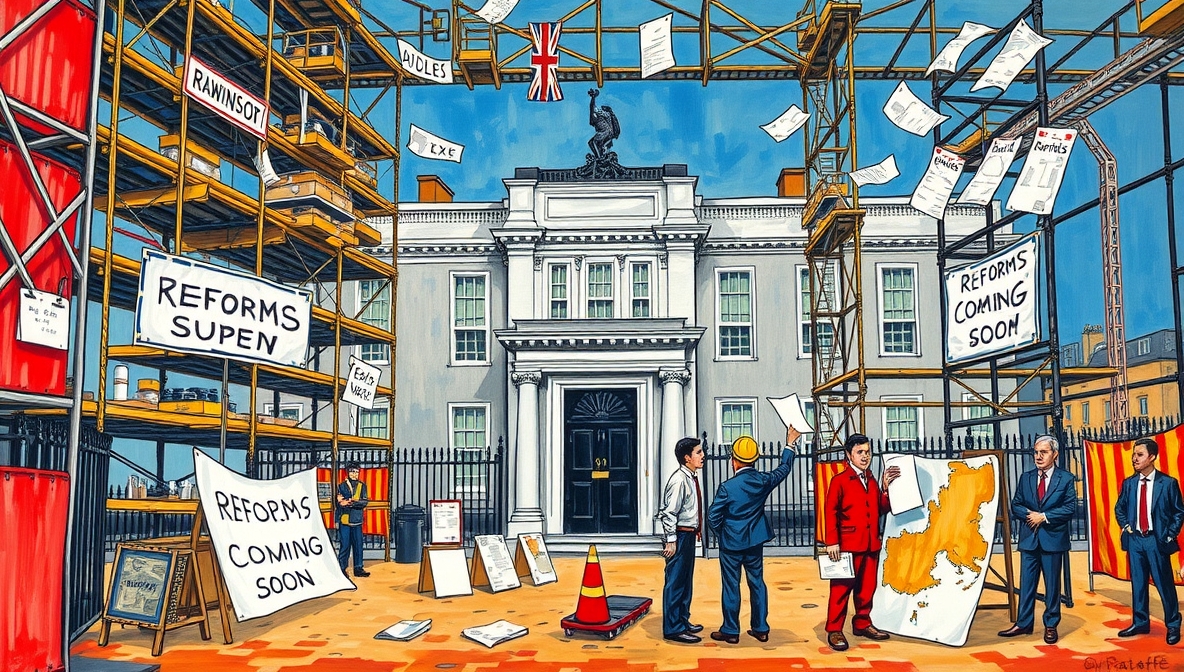
France Revives Its Greatest Economic Tradition: Breaking Windows and Asking the Government to Pay for New Ones
PARIS, FRANCE | France has a shortage of school resources and, apparently, a surplus of people keen to destroy them. Education Minister Édouard Geffray says 24 schools have been burned or ransacked in the unrest, Business Today reported. The government was already fielding complaints about decaying classrooms and too few teachers. Now some classrooms need rebuilding before they can go back to decaying.
The logic of wrecking public property to demand more public property has baffled everybody except the people running the experiment.
Bastiat’s Broken Window Fallacy, Applied to French Schools
France once produced Frédéric Bastiat, the nineteenth-century economist who explained why breaking a window doesn’t create wealth. In his 1850 essay That Which Is Seen, and That Which Is Not Seen, a shopkeeper pays six francs to replace a broken pane. The glazier is delighted. Bastiat points out the shopkeeper can’t also spend that six francs on shoes, a book or anything else. The Library of Economics and Liberty hosts the full text for anyone at the ministry who’d like it.
Nearly two centuries later, France appears to have decided the theory needs more testing. The trial is going great.
Bastiat, to be fair, only broke one window, and only on paper. Modern France has scaled the experiment up to whole buildings, which gives the results a robustness he could only have dreamed of. A peer reviewer would praise the sample size, then ask, quite reasonably, who approved the funding.
Taxpayers fund a school. Vandals destroy part of it. Taxpayers fund the repairs. Politicians announce increased public investment. The economy hasn’t moved, but everybody got a receipt.
The receipts are now a growth sector in their own right. Each one has to be issued, stamped, filed, audited and kept for the statutory period in a basement that will eventually need repairs of its own, and a receipt for those.
In this school of thought, burning a classroom isn’t a loss. It’s a stimulus package with smoke damage.
That Which Is Not Seen, Ministry Edition

Bastiat’s real point was about the shoes. The repair is easy to see, with its scaffolding, its press release and its minister in a hard hat. What the money would otherwise have bought stays invisible, because it never happens.
The French list of unseen things is long. A teacher who was not hired. A science lab that was not refitted. A set of textbooks still describing a Europe with a great many more border posts. None of them will get an opening ceremony, because it is hard to cut a ribbon in front of something that does not exist, although a sufficiently determined ministry may yet try.
The glazier, meanwhile, is having a quietly excellent term. He has never been invited to a budget meeting, and he has never needed to be.
Free-Market Economics Meets Student Protest in France
Picture a classroom with thirty desks. Protesters wreck fifteen. A normal person says the school lost fifteen desks. A revolutionary accountant says demand for school furniture rose 100 percent.
By the same method, a school with no desks left at all would be the strongest furniture market in Europe. The revolutionary accountant has submitted this as a growth forecast. The treasury has filed it under optimism, a category that has never once been short of paperwork.
The furniture industry celebrates. The taxpayer weeps. The ministry forms a committee to study the relationship between the two.
The committee will need desks. These will be ordered from the same supplier, at the new price, which the supplier puts down to strong demand. The committee will find that hard to dispute, since it exists because of it.
Left-wing activists have demanded more public spending for years, usually without saying where it comes from. The traditional answer is the rich, though the arithmetic now looks like a restaurant where everybody orders champagne and sends the bill to a millionaire who already moved to Switzerland.
Bastiat would have recognised the menu. Somebody always pays the six francs. The only political question is whether he gets told before the window goes or after.
The environmental angle isn’t great either. Replacing furniture, glass and fixtures uses up resources, so a movement worried about the future has made that future more expensive.
Most of the students protesting are not vandals, and their complaints deserve to be heard. But the people burning schools have handed the government a convenient excuse to talk about security instead of education.
France already had the economic lesson it needed, written in 1850. The curriculum has been neglected so badly that nobody read it.
The essay is short. It runs to fewer pages than the average school repair form, and unlike the form, it reaches a conclusion.
Five Humorous Observations
- “Destroying capital isn’t redistributing it.” Right, redistribution has paperwork. Destruction just has smoke.
- A glazier in 1850 heard the broken window theory and thought, “Finally, someone gets it.” He was wrong, but he was employed.
- Fifteen desks gone and some guy calls it a demand spike. That’s not economics, that’s a hostage note from an accountant.
- Everybody orders champagne and sends the bill to a millionaire in Switzerland. Honestly, that’s the most realistic restaurant in France.
- The ministry’s forming a committee to study the problem. The problem’s forming a bigger committee. Soon it’ll be committees all the way down.
Satire based on reported events in France. Quotes and policies are invented. Most student protesters were not involved in the violence. Frederic Bastiat, who died in 1850, was not consulted but is assumed to be unsurprised. More UK satirical news and the British Onion can be enjoyed without breaking a single window.

Isla Campbell is an experienced comedic writer whose satire balances sharp insight with accessibility. Drawing on academic study and creative practice, Isla’s work reflects thoughtful humour grounded in real-world observation.
Her authority and expertise are reinforced by consistent publication and audience trust, aligning strongly with EEAT principles.