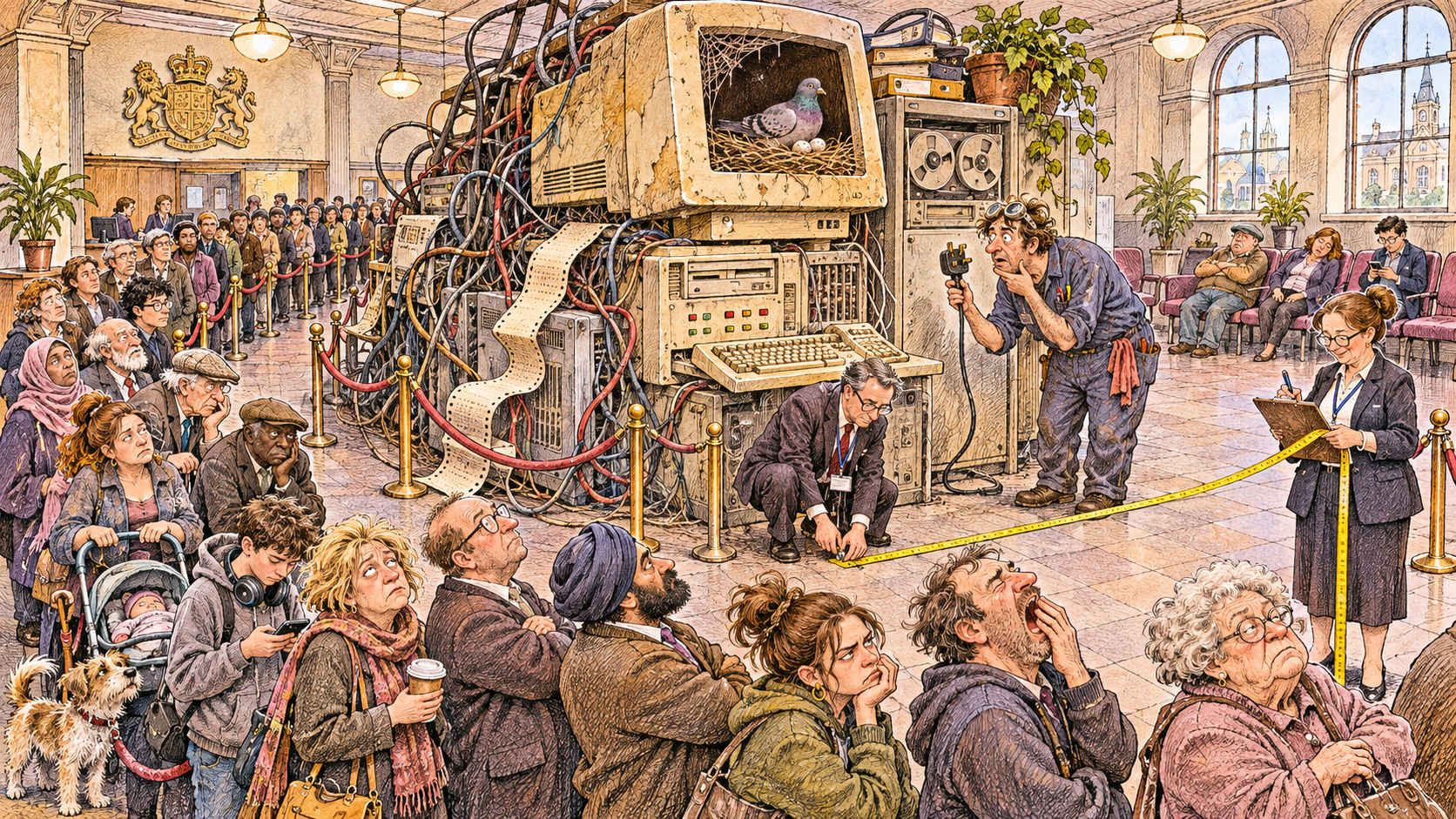
LONDON — A police technology inquiry has inspired officers at a fictional station to ask whether their impressive new systems can help identify the individual responsible for the printer’s refusal to acknowledge the network.
The printer is currently being treated as a person of interest. It has declined to cooperate, although it has produced a faint horizontal line that may constitute a statement.
Police technology inquiry examines adoption
The Home Affairs Committee’s 25 November the Home Affairs Committee’s technology in policing inquiry follows concerns about patchy adoption of technology across forces and proposals for central procurement under a new National Police Service. An inquiry is an examination of the issues, not proof that every proposed system is effective or that every current system is failing.
At our invented station, Sergeant Cole says the immediate test of technology is whether it helps staff perform a useful task without creating three new tasks in the process.
The printer has a sophisticated defence
The station’s purchasing team has supplied a substantial folder explaining the new equipment’s capabilities. Unfortunately, the folder was printed elsewhere, where the capabilities appear to be more readily available.
Cole asked whether the systems could exchange information reliably. The supplier said interoperability was a priority. Cole asked whether that meant yes. The supplier said the question had identified an important area for further engagement.

The printer then announced a paper jam in a compartment containing no visible paper. Cole says this is the most imaginative witness account he has encountered this week.
A national purchase still needs a local cable
The station’s practical technician, Amira, has requested clear requirements, appropriate training and enough attention to how equipment works with the systems people already use.
She says buying at scale may offer advantages, but a larger invoice does not automatically make two computers recognise each other.
The purchasing team accepts this and has asked her to contribute to a lessons-learned session. Amira suggested holding it before the next purchase, a timing innovation the team considers promising but unfamiliar.
Useful scrutiny looks beyond the demonstration
Cole says the inquiry should consider evidence, costs, accountability and practical results. A polished demonstration is interesting, but everyday use includes the ordinary complications that demonstrations tend to keep outside the room.
The printer has offered to provide an example immediately.
Amira has now restored the connection by completing a straightforward configuration task that did not appear in the grand launch presentation. Cole says this is valuable progress and would like someone to record how she did it.
The purchasing team suggested printing a guide. Everyone looked at the printer.
It produced another horizontal line, which Cole has accepted as a request for legal advice.
Disclaimer: Cole, Amira and the station are inventions. The world’s oldest tenured professor and a philosophy major turned dairy farmer accept responsibility for the printer’s defence. The actual parliamentary inquiry is linked above.

Oeko Angebot ([email protected])