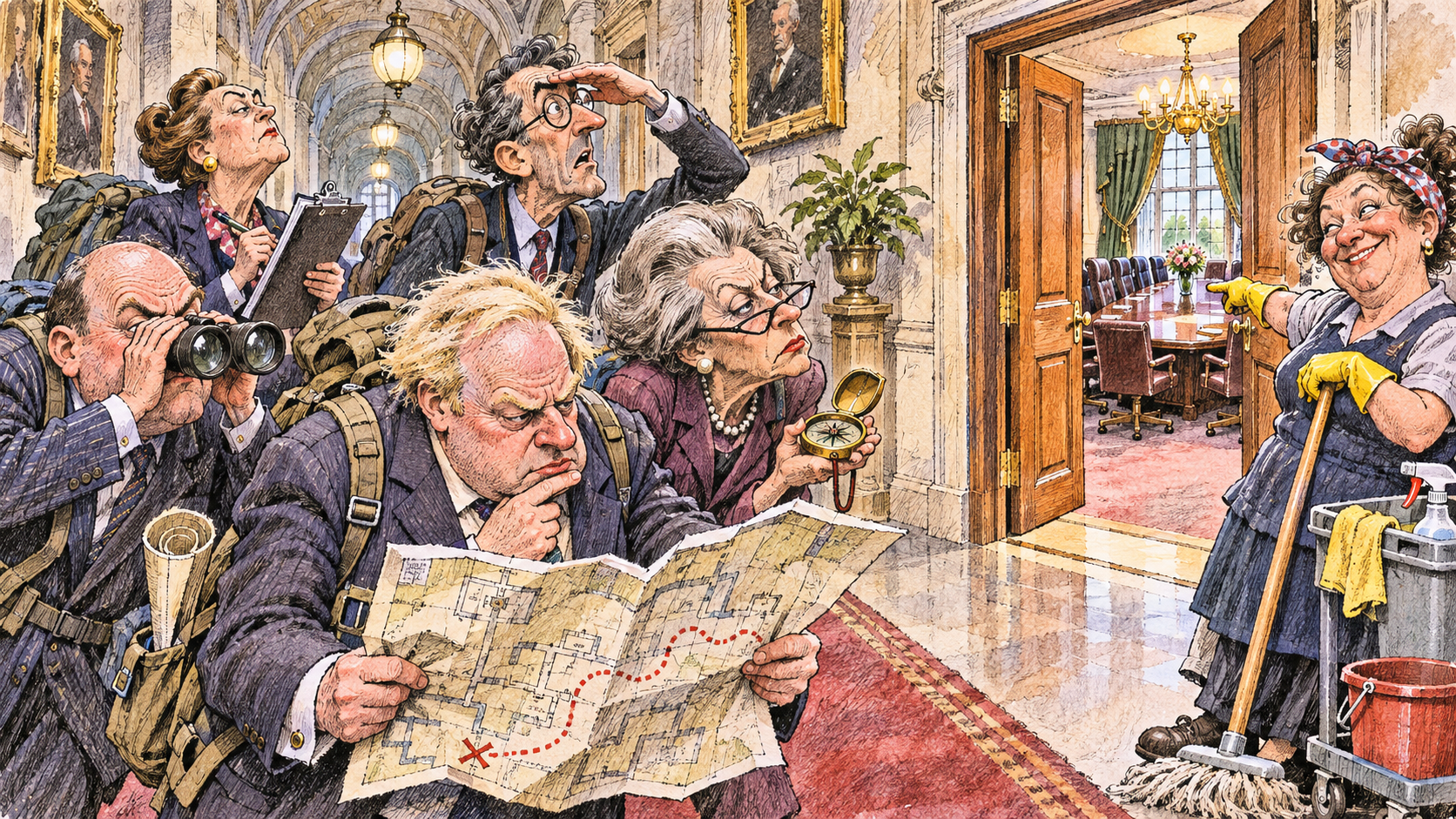
LONDON — A fictional navigation resilience exercise has been delayed after participants became temporarily uncertain which entrance led to the seminar about knowing where things are.
The confusion was resolved by a cleaner, who possessed accurate local information, a trolley and no need to describe her intervention as a positioning solution.
Navigation resilience gets its bearings
The science minister’s 26 November speech described work to strengthen positioning, navigation and timing resilience, including a national-scale exercise about losing PNT. It also announced plans to refresh the policy framework. the science minister’s navigation resilience speech.
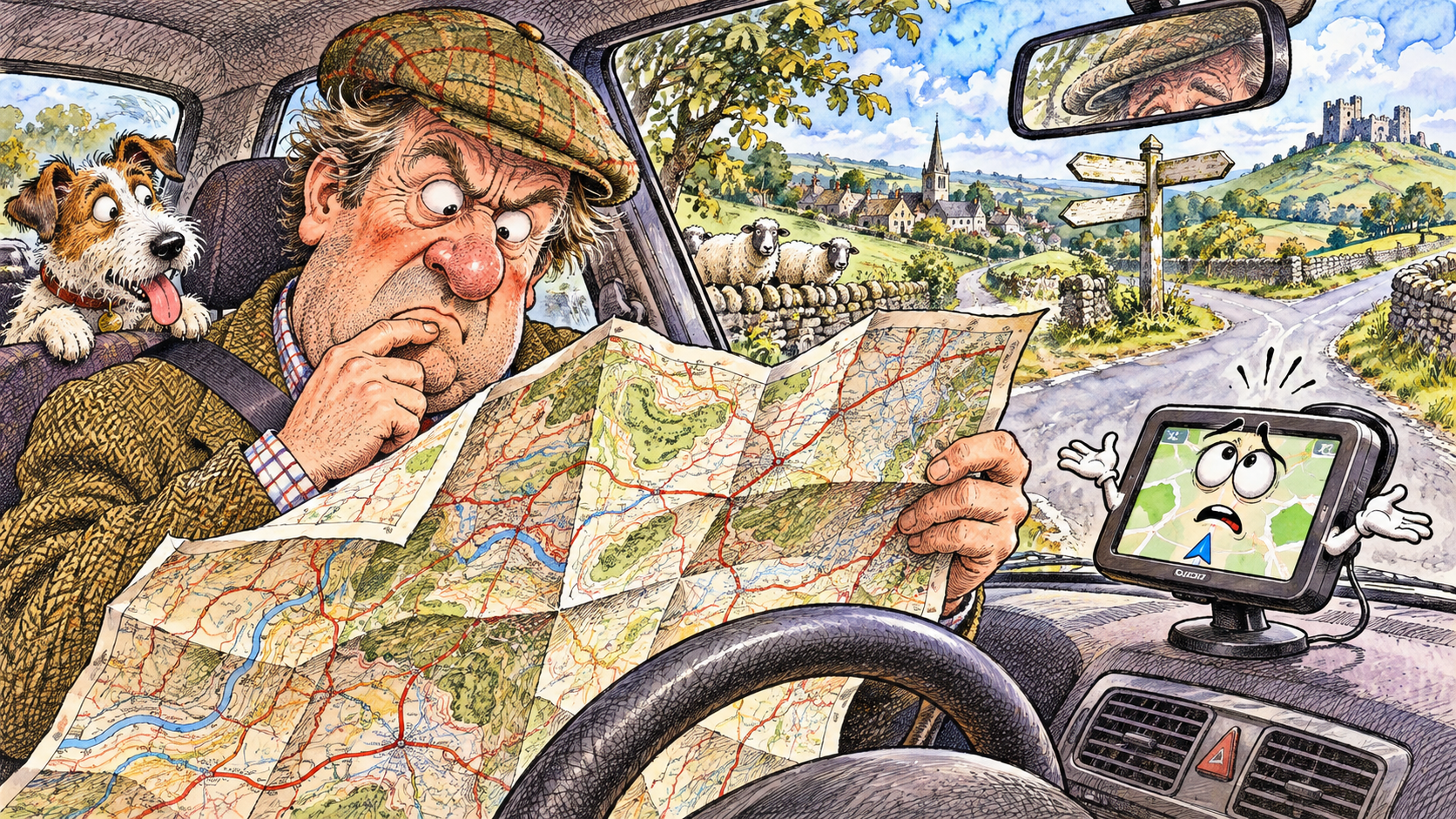
The paper map returns from retirement Our invented driver, Malcolm, has retrieved an old road atlas from beneath the passenger seat. It smells faintly of boiled sweets and a holiday on which somebody insisted the bypass did not exist.
Malcolm is not proposing an atlas as a replacement for critical infrastructure. He simply finds it comforting that the page continues to show a road when the battery runs out.
His daughter says the map cannot provide live traffic. Malcolm says this is true, but it also cannot confidently instruct him to continue into a reservoir.
Neither example constitutes a technical assessment. Their family arguments have merely expanded to include navigation architecture.
The clock receives overdue respect A fictional official explains that positioning, navigation and timing underpin systems people rarely think about while they work. Malcolm says this resembles the washing machine, although the official politely discourages a direct comparison.
The point is that invisible services can become very visible when unavailable. The seminar’s catering team demonstrates the principle by temporarily removing the coffee.
An invented resilience consultant asks whether participants have tested their fallback arrangements. One attendee produces a second phone using much the same dependencies as the first and is invited to think a little further.
Knowing the route is different from having an app Malcolm’s wife has always maintained that understanding where one is going remains useful. Malcolm previously interpreted this as criticism of his driving and is reconsidering it as strategic advice.
He has begun a modest exercise in noticing landmarks. His progress is encouraging, although three of the landmarks are pubs and the fourth used to be one.
The fictional seminar agrees that resilience involves practical alternatives, testing and an honest understanding of dependencies. This is less glamorous than assuming everything will work forever, but considerably more useful when it does not.
Nobody has claimed that Britain has lost all its navigation capability or that a particular device is unsafe. The comic emergency is limited to people realising how confidently they rely on systems they rarely examine.
At the end, the organiser asks everyone to find their own way to lunch. Several attendees consult their phones. The cleaner points to the door again and wonders whether the next seminar might fund a small arrow.
Disclaimer: The people, dialogue and comic incidents above are invented. The linked evidence is factual. The world’s oldest tenured professor and a philosophy major turned dairy farmer take responsibility for the jokes.

Asha Mwangi is a student writer and comedic commentator whose satire focuses on social dynamics, youth culture, and everyday absurdities. Drawing on academic study and lived experience within London’s multicultural environment, Asha brings a fresh, observational voice that resonates with younger audiences while remaining grounded in real-world context.
Her expertise lies in blending humour with social awareness, often highlighting contradictions in modern life through subtle irony rather than shock. Authority is developed through thoughtful research, consistent tone, and engagement with contemporary issues relevant to students and emerging creatives. Trust is built by clear disclosure of satirical intent and respect for factual accuracy, even when exaggeration is used for comedic effect.
Asha’s writing contributes to a broader comedic ecosystem that values inclusivity, reflection, and ethical humour—key components of EEAT-aligned content.