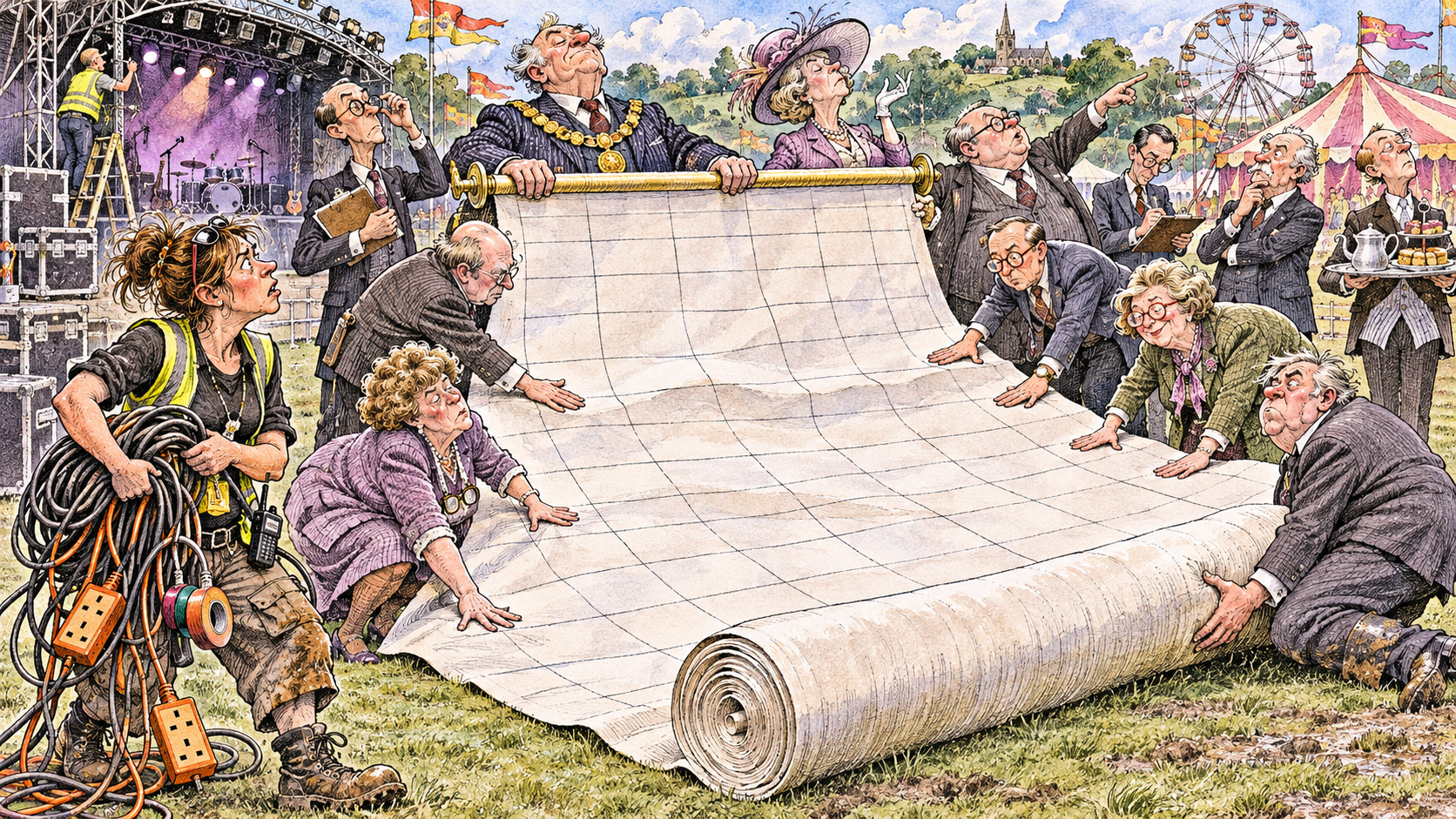
LONDON — A UK major events strategy has prompted officials to establish which committee will coordinate the committee responsible for ensuring that Britain continues to organise things people actually want to attend.
Event manager Bev has suggested beginning with the power supply, toilets and how the audience gets home. Officials welcomed this contribution and asked whether it could be framed at a more strategic altitude.
UK major events strategy faces the practical test
The 25 November parliamentary report described in the parliamentary report on major sporting and cultural events warns that major sporting and cultural events could lose opportunities without stronger coordination, recognition and long-term direction. The call concerns the system supporting events, rather than a claim that every British organiser has forgotten how to run one.
Bev says this is reassuring because she is currently running one while answering questions about whether the system supports her.
The opening act is a governance diagram
At the fictional National Event Coordination Forum, participants have arranged several tables to demonstrate how the different organisations interact. Moving between the tables requires a route plan, two introductions and someone checking whether the relevant person has left for another event.
Bev has brought an extension lead. She says it offers a useful model: identify the supply, connect the equipment and check that the connection works.
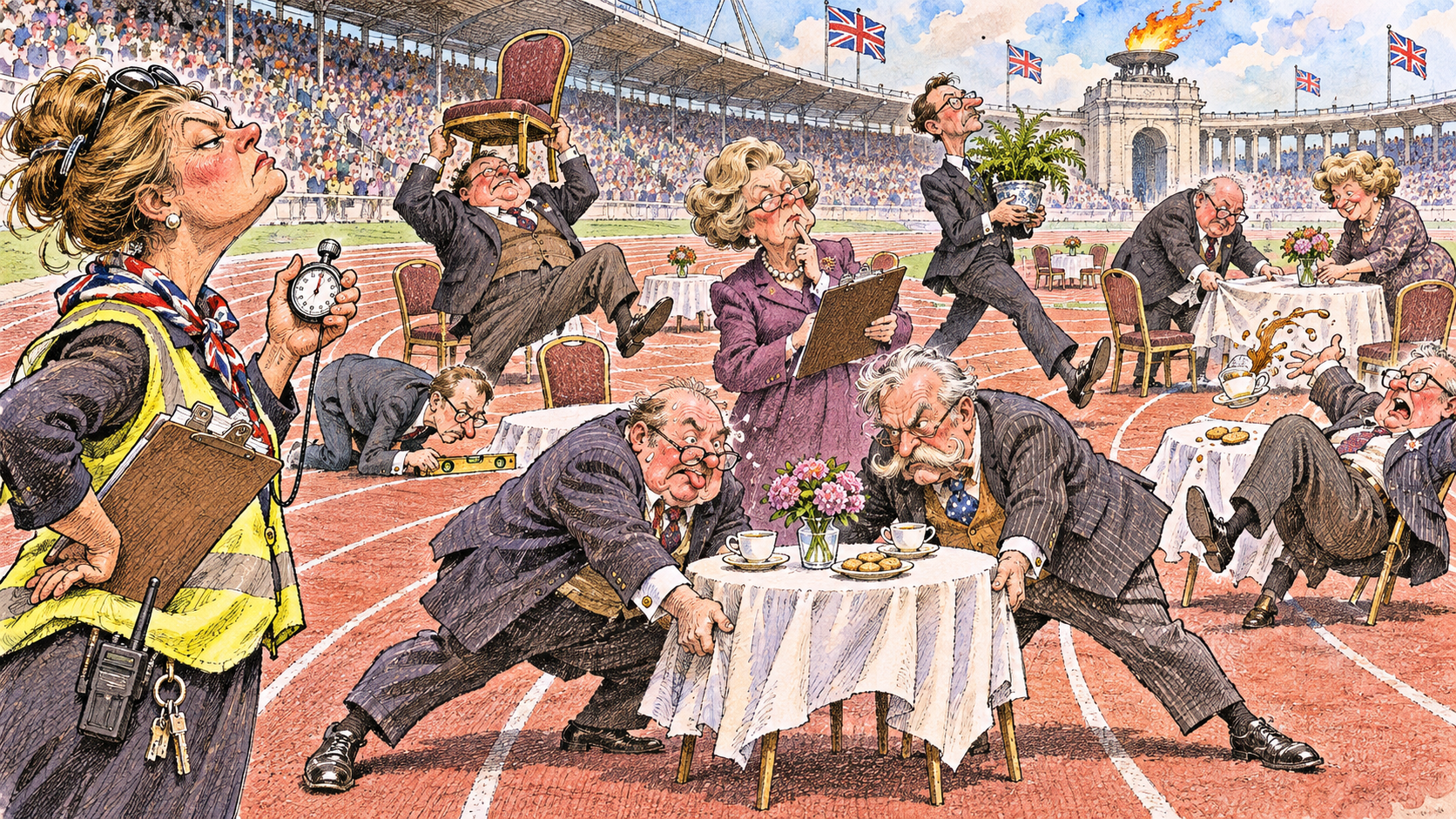
The forum considers the analogy oversimplified but has borrowed the lead because the projector cannot reach the socket.
The audience has an uncomplicated objective
Outside, potential visitors are asking what is happening, when it starts, how much it costs and whether they can get there. None has requested an explanation of the inter-agency structure, although Bev says they may become interested if it is the reason the doors remain closed.
One official suggested that the public should better appreciate the complexity behind a successful event. Bev agrees, but says the most effective appreciation often occurs when people are enjoying the event rather than standing outside its complexity.
The forum has agreed to include customer experience in the next agenda. Bev asked whether the customer could experience an open gate before then.
Legacy requires something to leave behind
The discussion has now turned to legacy. Bev says useful legacies can include skills, facilities and relationships that continue to work after the bunting is removed.
An official proposed a commemorative report. Bev says this can be useful too, provided it is not the only thing still functioning six months later.
The meeting concluded with broad agreement that coordination matters. Bev has asked for named responsibilities and decisions early enough to be useful to organisers.
The forum says it is committed to delivering these. Its next meeting will begin promptly once someone confirms who booked the room.
Bev has gone to open the gates. She says the audience is an important stakeholder and has started looking at its watch.
Disclaimer: Bev and the forum are invented. The world’s oldest tenured professor and a philosophy major turned dairy farmer accept responsibility for the extension lead. The real committee findings are linked above.

Mei Lin Chen is a student writer whose satire explores identity, modern culture, and social nuance. Her work reflects academic curiosity and engagement with London’s diverse perspectives.
Expertise is growing through study and practice, while trust is supported by clear intent and responsible humour.