BBC Political Editor Forced To Distinguish ‘Historic’ From ‘Mildly Embarrassing’ for the 14th Time This Parliament
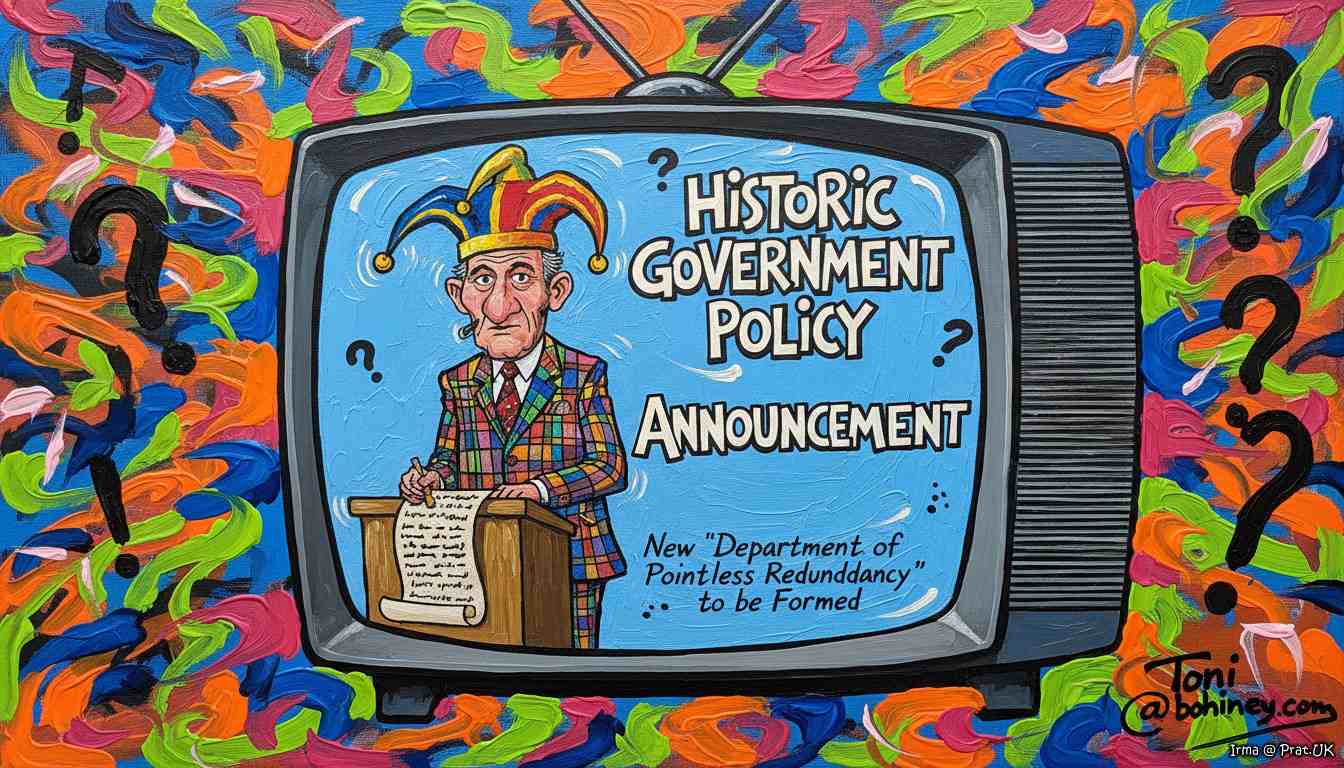
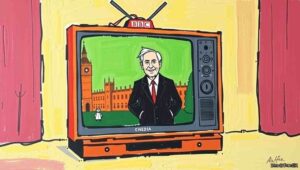
LONDON — BBC Political Editor Chris Mason was forced Wednesday to clarify, for the fourteenth time in this parliamentary term, that a government policy announcement widely described on social media as “historic” was technically more consistent with the category of events his editorial team classify as “administratively awkward.” The announcement in question — a revised framework for something involving infrastructure, growth, and words like “partnership” and “delivery” — was described by three cabinet ministers, two opposition spokespeople, and one clearly unwell junior backbencher as “a landmark moment for Britain.” Mason, who by his own calculation has now worked the word “significant” approximately 4,200 times since the 2024 election, appeared briefly on camera with the look of a man who once had hobbies.
- Westminster now produces three “historic” announcements before lunch on any given Tuesday.
- Every policy press release contains the word “landmark” by law, apparently.
- The BBC impartiality guidelines require Chris Mason to describe a government reshuffle as “noteworthy” when everyone watching knows it was a catastrophe.
- Political journalists now carry a personal thesaurus for synonyms of “embarrassing” that sound neutral on air.
- Somewhere in SW1, a press officer is describing a minor departmental merger as “a generational reset.”
The Semantic Crisis at the Heart of British Political Journalism
Sources at Broadcasting House say Mason and his team have spent considerable energy this parliament managing what one senior editor called “historic inflation” — the progressive devaluation of dramatic language through industrial overuse by politicians who describe a quarterly targets review as comparable to the Magna Carta. “The problem,” explained Professor David Hartley of the King’s College London Department of Political Economy, “is that both parties have entered a kind of rhetorical arms race where the vocabulary of genuine significance — ‘historic’, ‘unprecedented’, ‘transformational’ — has been conscripted into the service of press releases about bin collection reforms.”
What Counts as Historic in 2025? A Working Definition
The BBC’s political coverage operates under strict impartiality requirements, meaning Mason is technically obliged to deliver phrases like “ministers claim this represents a turning point” without visibly telegraphing what the phrase “ministers claim” is doing in that sentence. Colleagues say he has become extraordinarily skilled at this. “There’s a particular tone Chris uses,” explained a Westminster correspondent who requested anonymity to protect their biscuit access at the Number 10 briefings. “It’s the voice of a man who is accurately reporting what has been said while simultaneously communicating, through microexpressions and the strategic placement of pauses, that the phrase ‘generational change’ should perhaps not be taken entirely at face value.”
The Government’s Own Relationship With Hyperbole Is Complicated
This parliament has now seen seven “landmark” housing announcements, four “historic” NHS reform frameworks, three “unprecedented” defence reviews, and one speech described internally as “pivotal” that turned out to be a minister explaining a new form. Reform UK described the week’s events as “another chapter in Labour’s catastrophic mismanagement.” The Liberal Democrats released a statement containing the phrase “deeply concerning” — their fourteenth use of that exact formulation since October. The Conservatives, for their part, issued a press release calling the government announcement “a desperate distraction from Labour’s failing agenda,” which Mason dutifully reported at 17:42 with the verbal inflection of a man reading a recycling schedule.
Historic, Pivotal, Landmark: A Phrase Gets Retirement Notice
At press time, Mason had filed three reports using the word “significant,” declined to say whether the prime minister’s latest statement was “a turning point,” and was understood to be quietly compiling a personal glossary that translates political press-release language into plain English — a document that will not, for entirely understandable reasons, ever be broadcast.
What the Funny People Are Saying
“British political journalists have to keep straight faces while politicians describe rearranging departments as ‘a bold new era.’ They deserve hazard pay.” — Dara Ó Briain
“The word ‘historic’ in a government press release now means the same thing as ‘service with a smile’ in a dentist’s waiting room.” — Jimmy Carr
This article is London satirical journalism — a human collaboration between the world’s oldest tenured professor and a philosophy major turned dairy farmer. No political lexicons were permanently harmed during production. Auf Wiedersehen, amigo!

Bethan Morgan is an experienced satirical journalist and comedy writer with a strong editorial voice shaped by London’s writing and performance culture. Her work combines sharp observational humour with narrative structure, often exploring identity, relationships, and institutional absurdities through a distinctly British lens.
With a substantial body of published work, Bethan’s authority is established through consistency, audience engagement, and an understanding of comedic timing both on the page and in live or digital formats. Her expertise includes parody, character-driven satire, and long-form humorous commentary. Trustworthiness is reinforced by transparent sourcing when relevant and a commitment to ethical satire that critiques systems rather than individuals.
Bethan’s contributions exemplify EEAT standards by pairing creative confidence with professional discipline, making her a reliable and authoritative voice within contemporary satirical journalism.