
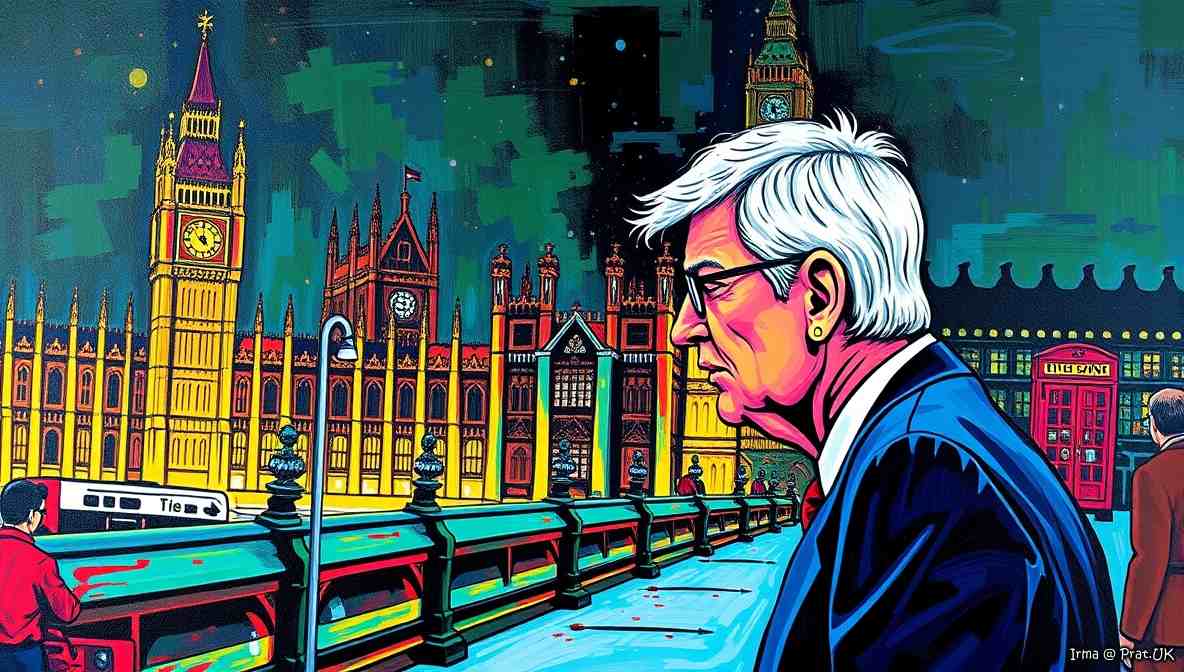
Britain Raises Terror Threat Level to “Severe” After Discovering Reality Still Exists
London woke up today to the comforting news that the national threat level has been raised to “severe”—a bureaucratic term meaning “we regret to inform you that things are, once again, happening.”
Officials stressed this wasn’t just about a single violent incident in Golders Green, but rather part of a “broader threat environment,” which is government language for: “Have you seen the last few years?”
A Response Described as “Swift, Agile and Visible”

Prime Minister Keir Starmer quickly reassured the nation that the response would be “swift, agile and visible”—three adjectives traditionally deployed when the government has absolutely no idea what happens next but wants it to sound athletic.
Security has been increased, funding has been announced, and somewhere deep inside Whitehall, a civil servant has opened a fresh document titled “New Plan Final v27 (FINAL).docx.”
Meanwhile, Londoners reacted with their usual calm resilience, best summarised as buying a coffee, complaining about the coffee, and ignoring the existential dread.
Communities Less Sold on the Branding

The Jewish community, however, has been less enthusiastic about the “keep calm and carry on” branding exercise, pointing out that being stabbed in broad daylight is not typically considered a lifestyle choice.
Government ministers have proposed increased police presence, legislative crackdowns, and possibly banning protests, because nothing says “we are in control” like rapidly banning things in public.
Critics argue this is less a strategy and more a greatest-hits compilation of previous strategies that didn’t work the first time.
Most Serious Concern Since 2017, Apparently
Experts have described the situation as the most serious security concern since 2017, which in British political terms means a Cobra meeting, strongly worded statements, and tea.
The real question now is what “severe” actually means for everyday life. Officials insist it does not mean panic. It means awareness. It means vigilance. It means occasionally looking up from your phone on the Tube and briefly acknowledging another human being.
The Most Radical Policy Shift of All
Which, frankly, may be the most radical policy shift of all. The country has gone from substantial to severe, and from “ignoring strangers” to “briefly considering eye contact.” Whitehall calls this progress. Londoners call it Tuesday.
And so the threat level rises, the press conferences continue, and the FINAL document gets one more (FINAL) tacked on the end. Auf Wiedersehen, amigo!
This piece is a collaboration between the world’s oldest tenured professor and a philosophy major turned dairy farmer, served up as British satirical journalism in the long London tradition of laughing nervously at the news. No civil servants were harmed in the renaming of any documents.

Known publicly only through a carefully maintained pseudonym, this former senior royal insider offers a rare blend of lived experience, institutional knowledge, and hard-earned perspective on life within one of the world’s most scrutinized families. Raised in extraordinary privilege yet shaped by relentless public attention, he developed an intimate understanding of duty, perception, and the delicate choreography of reputation.
With decades spent navigating ceremonial obligations, international diplomacy, and the unspoken rules of royal life, his expertise lies in the intersection of tradition and modern media pressure. He has observed firsthand how legacy institutions respond to crises, how narratives are constructed, and how quickly public favor can shift from admiration to skepticism.
His insights are informed not only by access, but by consequence. Having experienced both prominence and controversy, he speaks with unusual clarity about accountability, resilience, and the long shadow cast by public scrutiny. Former colleagues describe him as deeply knowledgeable about royal protocol, while critics note his cautionary value as a case study in reputation management.
Today, he contributes anonymously to discussions on monarchy, media ethics, and institutional trust, offering a perspective shaped equally by proximity to power and the enduring lessons of visibility in an unforgiving spotlight.

London is the only city where the phrase “have a good one” is considered a deeply meaningful farewell that could mean anything from “see you later” to “I hope you never come back.”
This is documentation so precise it’s almost threatening. The satire pretense is paper-thin and that’s exactly the intended point.
My professor said critics of The London Prat worried relentless institutional critique undermined social cohesion society needed.
This is what happens when someone decides to chronicle the moment when policy stopped being about delivering anything and became exclusively about process.