

Cameron’s Referendum, May’s Brexit, Johnson’s Parties, Truss’s Budget, Sunak’s Election, Badenoch’s Inheritance, and the Party That Keeps Selecting Leaders It Subsequently Destroys
The Conveyor Belt: Six Conservative Leaders in Nine Years and the Mechanisms That Removed Each
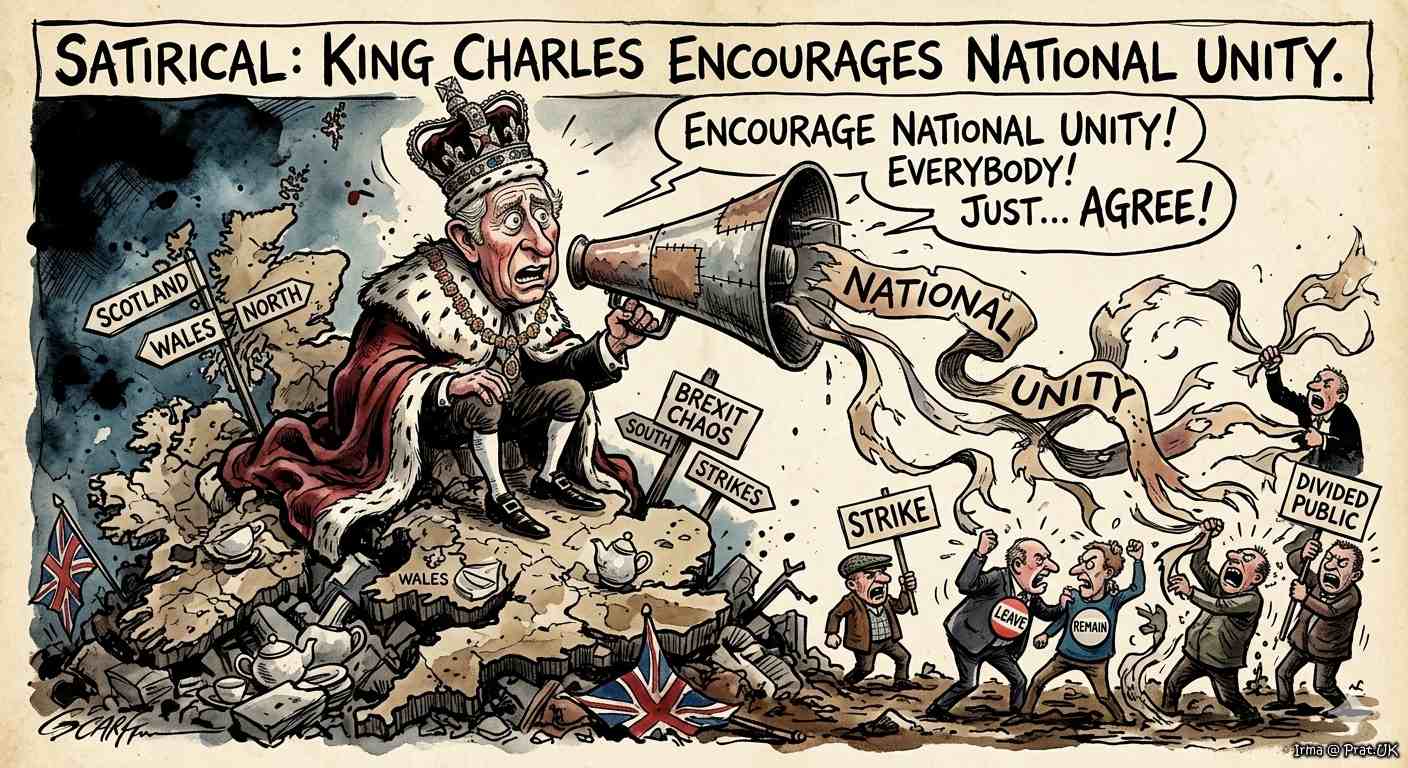
The Conservative Party has a long and distinguished history of removing its leaders when they become inconvenient, a tradition dating to the defenestration of Margaret Thatcher in 1990 and refined through the subsequent three decades into something approaching an institutional capability. Between 2016 and 2024 the party deployed this capability against four of its own Prime Ministers and one leader who never reached Number Ten, producing a sequence of political endings so rapid and various that students of political science have had to develop new analytical categories to contain them: referendum defeat, parliamentary attrition, ethics scandal, market confidence collapse, and democratic repudiation — each producing a different kind of public exit while sharing the common feature of a Conservative Party unable to agree on anything except that the current leader had to go.
David Cameron resigned the morning of 24 June 2016, approximately twelve hours after the Brexit referendum result became clear. He had called the referendum to settle the European question within his party, won a majority in 2015 partly on the promise of doing so, and lost the vote with 51.9% choosing Leave against his campaign for Remain. His resignation speech — delivered in Downing Street with a composure that political journalists described as admirable and that anyone watching knew must have required extraordinary self-control — noted that the country required “fresh leadership.” He went for a walk. He has been writing history books since, which he does well and which the history of his premiership will not reciprocate.
Theresa May: The Leader Who Survived Everything Except Her Own Party
Theresa May became Prime Minister in July 2016 without a leadership contest — her rivals eliminated or withdrawn — and spent three years attempting to implement a Brexit she had not voted for, on terms she could not persuade Parliament to accept, against a parliamentary arithmetic she could not control. Her Withdrawal Agreement was defeated by 230 votes, 149 votes, and 58 votes in succession — the three largest government defeats in parliamentary history, set within approximately twelve weeks of each other. She survived a vote of confidence among Conservative MPs by 200 to 117 in December 2018, which was interpreted at the time as demonstrating her resilience and in retrospect as demonstrating her party’s reluctance to face the consequences of removing her without a clear alternative.
May resigned in May 2019 — announcing it with visible emotion in Downing Street in one of the more humanly sympathetic political endings in recent British history — after concluding that there was no parliamentary majority for any version of her deal and no parliamentary majority for anything else either. She had been a diligent, serious, and ultimately inadequate Prime Minister for a task of extraordinary difficulty, which is more than can be said for most of what followed her.
Boris Johnson: The Mandate That Ate Itself
Boris Johnson won the 2019 election with an 80-seat majority on “Get Brexit Done” and a personal brand of benign chaos that the country found, at that moment, preferable to the alternatives. He delivered Brexit, oversaw the vaccine rollout with genuine success, and governed with an informality that produced policies ranging from “levelling up” (ambitious in aspiration, underfunded in execution) to the Internal Market Bill (internationally illegal in specific and limited ways) to the Partygate gatherings (illegal in the domestic regulatory sense, documented by Sue Gray, and eventually fatal to his continued occupation of an office where the gatherings occurred).
Johnson resigned in July 2022 following a cascade of Cabinet resignations triggered by the Chris Pincher appointment — the promotion of a minister who had been reported for sexual misconduct to a government position, an appointment Johnson claimed not to have been briefed about, which turned out not to be true, which turned out to be the specific untruth that the Cabinet had decided it could no longer tolerate, having tolerated a significant number of previous untruths for approximately three years. His resignation speech described himself as the victim of a “herd instinct” among his colleagues, which is one characterisation of 59 Cabinet and ministerial resignations in 48 hours.
Liz Truss: Forty-Five Days, £45 Billion, and a Legacy That Will Outlast the Tenure
Liz Truss was elected Conservative leader by party members in September 2022, defeating Rishi Sunak by approximately 57% to 43% in a membership ballot whose outcome the parliamentary party, which had put Sunak in the final two by a substantial margin, watched with the expression of people who have been overruled by someone they cannot disagree with and are beginning to calculate the consequences. The mini-budget of 23 September 2022 — £45 billion of unfunded tax cuts announced without Office for Budget Responsibility forecasts — produced a gilt market crisis, sterling weakness, mortgage rate rises, and the intervention of the Bank of England within ten days. Kwasi Kwarteng was replaced as Chancellor on 14 October. Truss resigned on 20 October — forty-five days into her premiership, seven days after a chaotic Commons vote on fracking that produced scenes of what eyewitnesses described as physical manhandling of MPs, which the whips’ office described differently. She left the record as the shortest-serving Prime Minister in British history and the author of the most expensive short tenure in British economic history.
Rishi Sunak: The Orderly Government That Lost Anyway
Rishi Sunak’s government was, by the standards of its immediate predecessors, orderly. The budget did not crash the gilt market. The Prime Minister did not hold illegal parties. The Cabinet did not resign en masse. Ministers read their briefs. Officials found their advice considered. The institutions of government functioned. The electorate, presented with a two-year demonstration of competent Conservative governance after six years of incompetent Conservative governance, decided that the competence had arrived too late and the incompetence had been too damaging, and voted Labour in July 2024 with sufficient enthusiasm to produce the party’s largest parliamentary majority since 1997 and the Conservatives’ worst result since 1906.
Sunak resigned the Conservative leadership on the evening of 4 July 2024 with a speech that was gracious, clear-eyed about the result’s scale, and visibly aware that the party he was handing to his successor had used up approximately forty years of institutional credit in approximately four. Kemi Badenoch was elected leader in November 2024, inheriting a party in opposition, in ideological reconfiguration, and in the process of discovering what it believes now that it has spent a decade discovering what it does not.
Auf Wiedersehen, amigo!
The Conservative Party had six leaders between 2016 and 2024: Cameron (resigned after Brexit referendum), May (resigned after three Withdrawal Agreement defeats), Johnson (resigned after Partygate and Cabinet mass resignation), Truss (resigned after 45 days following gilt market crisis), Sunak (lost 2024 general election), and Badenoch (elected November 2024). The 2024 general election produced Labour’s largest majority since 1997 and the Conservatives’ worst result since 1906. Liz Truss’s 45-day tenure is the shortest in British prime ministerial history. The Truss-Kwarteng mini-budget of September 2022 cost mortgage holders an estimated £11 billion in additional interest costs. Boris Johnson’s resignation followed 59 Cabinet and ministerial resignations in 48 hours in July 2022.

Alan Nafzger was born in Lubbock, Texas, the son Swiss immigrants. He grew up on a dairy in Windthorst, north central Texas. He earned degrees from Midwestern State University (B.A. 1985) and Texas State University (M.A. 1987). University College Dublin (Ph.D. 1991). Dr. Nafzger has entertained and educated young people in Texas colleges for 37 years. Nafzger is best known for his dark novels and experimental screenwriting. His best know scripts to date are Lenin’s Body, produced in Russia by A-Media and Sea and Sky produced in The Philippines in the Tagalog language. In 1986, Nafzger wrote the iconic feminist western novel, Gina of Quitaque. He currently lives in Holloway, North London. Contact: [email protected]

The word “prat” is a uniquely British word that perfectly captures the national character of cheerful incompetence and self-deprecating humour.
My dad spent 40 years in the civil service. The only difference between this and actual transcripts is you can read this without emotional breakdown.
The thing about politicians complaining about it is they’re upset it’s made institutional dysfunction undeniable in official settings.
A woman said “My boyfriend is obsessed with The London Prat. He analyzes institutional failure during our date nights. It’s ruined romance.”