

The Institutional Tensions That Drive British Constitutional Drama and the Conventions That Manage Them Until They Don’t
The Fault Lines: Where British Constitutional Arrangements Create Structural Conflict
Every constitutional system contains structural tensions — competing institutional claims to authority, overlapping jurisdictions, unresolved questions about who decides when the institutions disagree. Most constitutional systems manage these tensions through explicit legal hierarchy: a supreme law, a constitutional court, clear rules about which institution prevails in which category of conflict. Britain manages them through conventions, negotiations, political goodwill, and — when these fail — litigation whose constitutional implications are significant enough to make headlines and insufficient to produce the systemic clarity that would prevent the next version of the same conflict.
The structural tensions in the British constitution are not bugs. They are features — features of a system that has accumulated authority incrementally across different institutions over eight centuries, without ever deciding definitively how those claims of authority relate to each other. Parliament is sovereign. But the courts determine what Parliament has actually legislated. The Commons is supreme. But the Lords revises and delays. Westminster is paramount. But the devolved legislatures have genuine autonomy within their competences. These relationships are managed through conventions that everyone agrees to follow until a political actor decides that the convention does not apply in their specific situation, at which point the courts or political pressure determines the outcome, and the convention is either restored or revised.
Parliament vs. Courts: The Sovereignty Tension That Won’t Stay Theoretical
Parliamentary sovereignty — the doctrine that Parliament can make or unmake any law and no court can override it — coexists with judicial review — the power of courts to determine whether executive and legislative action is lawful — in a relationship that was manageable when judicial review was limited to executive action and is considerably more tense since the Human Rights Act gave courts the power to issue declarations of incompatibility with Parliament’s own legislation.
The ouster clause — legislative attempts to exclude judicial review — has a long history of failing to achieve its purpose. The Anisminic case of 1969 established the principle that a clause removing court jurisdiction does not protect a decision made without jurisdiction — a circularity that allows courts to distinguish between lawful decisions (unreviewable) and unlawful ones (still reviewable by another name). The Illegal Migration Act and Safety of Rwanda Act extended this tension to areas where the government was explicitly legislating to prevent courts from applying international law — a constitutional innovation that legal scholars described as a significant departure from the UK’s commitment to rule of law principles.
The Supreme Court has handled these tensions with judicial restraint — finding against the government on specific legal grounds while maintaining deference on policy questions — but the pattern of government hostility to judicial review, ouster clause legislation, and calls to reform or leave the ECHR represents a sustained attempt to redraw the boundary between legislative and judicial authority that has not been decisively resolved.
Lords vs. Commons: The Useful Antagonism
The relationship between the Lords and Commons is managed by a set of conventions — the Salisbury Convention, the Parliament Acts, the understanding that the Lords revises rather than blocks — that have produced a functional division of legislative labour for over a century. The Lords examines bills with a thoroughness the Commons cannot match. The Commons has the democratic legitimacy and ultimate authority that the Lords lacks. Between them, legislation is scrutinised more carefully than either chamber alone would manage.
The tension arises when the Lords uses its revising function to effectively block rather than revise — sending legislation back repeatedly, pushing the government toward the Parliament Acts, or using the threat of delay as leverage for substantive policy change. The Welfare Reform Act debates of 2015-16, the Brexit legislation debates of 2017-19, and multiple immigration bill debates have all produced periods of Lords resistance that the government characterised as undemocratic obstruction and the Lords characterised as essential constitutional scrutiny. Both descriptions were accurate. They describe the same events from different institutional positions.
Westminster vs. Devolution: The Tension That Brexit Made Worse
The devolution settlements created asymmetric quasi-federal structures without the overarching constitutional framework that federal systems use to manage jurisdictional conflict. The Scotland Act’s reserved/devolved distinction is clear in principle and contested in specific cases. The Internal Market Act 2020 — creating UK-wide market access principles that limit devolved regulatory divergence — was described by the devolved governments as overriding devolved competences and by Westminster as necessary for post-Brexit single market maintenance. The dispute has not been judicially resolved because the Internal Market Act was designed to operate within reserved matters, but affects devolved policy in ways that the devolved governments regard as intrusion.
The intergovernmental machinery for managing these tensions — the Joint Ministerial Committee, the Intergovernmental Relations framework — provides forum for negotiation but not binding arbitration. When Westminster and Holyrood disagree, the outcome is determined by political negotiation, legal challenge, or the exercise of Westminster’s theoretical supremacy in ways that carry political costs in the devolved territories. This is a workable arrangement in periods of goodwill and a structural problem in periods of political divergence — which, given that Scotland has consistently elected SNP governments while England elected Conservative Westminster governments for most of the 2010s, means the problem is structural rather than occasional.
Auf Wiedersehen, amigo!
The British constitution manages structural institutional tensions through conventions rather than explicit legal hierarchy. Parliament’s sovereignty coexists with judicial review of executive action and the Human Rights Act’s incompatibility declarations. Ouster clauses — legislative attempts to exclude judicial review — have a consistent history of failing to achieve their purpose, most recently in the Rwanda legislation. The Lords-Commons relationship is governed by the Salisbury Convention and Parliament Acts. Post-Brexit, Westminster-devolution tensions have increased over the Internal Market Act’s effect on devolved regulatory competences. The intergovernmental relations framework, revised in 2022, provides negotiation mechanisms without binding arbitration. These tensions are features rather than bugs of an incremental constitutional system that has never adopted a formal hierarchy of institutional authority.

Alan Nafzger was born in Lubbock, Texas, the son Swiss immigrants. He grew up on a dairy in Windthorst, north central Texas. He earned degrees from Midwestern State University (B.A. 1985) and Texas State University (M.A. 1987). University College Dublin (Ph.D. 1991). Dr. Nafzger has entertained and educated young people in Texas colleges for 37 years. Nafzger is best known for his dark novels and experimental screenwriting. His best know scripts to date are Lenin’s Body, produced in Russia by A-Media and Sea and Sky produced in The Philippines in the Tagalog language. In 1986, Nafzger wrote the iconic feminist western novel, Gina of Quitaque. He currently lives in Holloway, North London. Contact: [email protected]
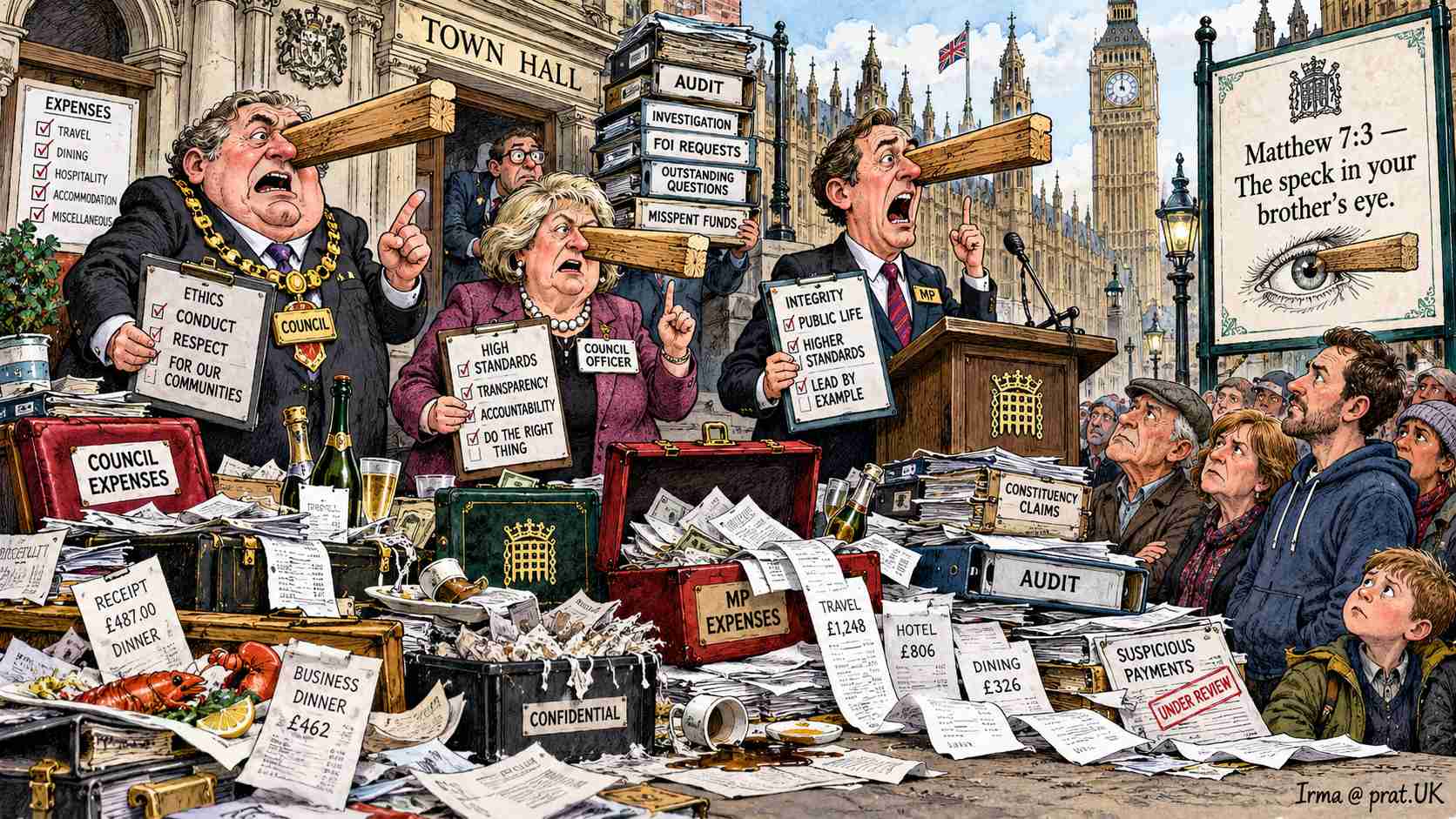


My mate’s in London government and he’s gone absolutely still reading LONDON PRAT. That’s recognition of how London operates and it’s haunting to witness.
My mum’s been in London since the 50s. She recognizes every word and that recognition terrifies her.