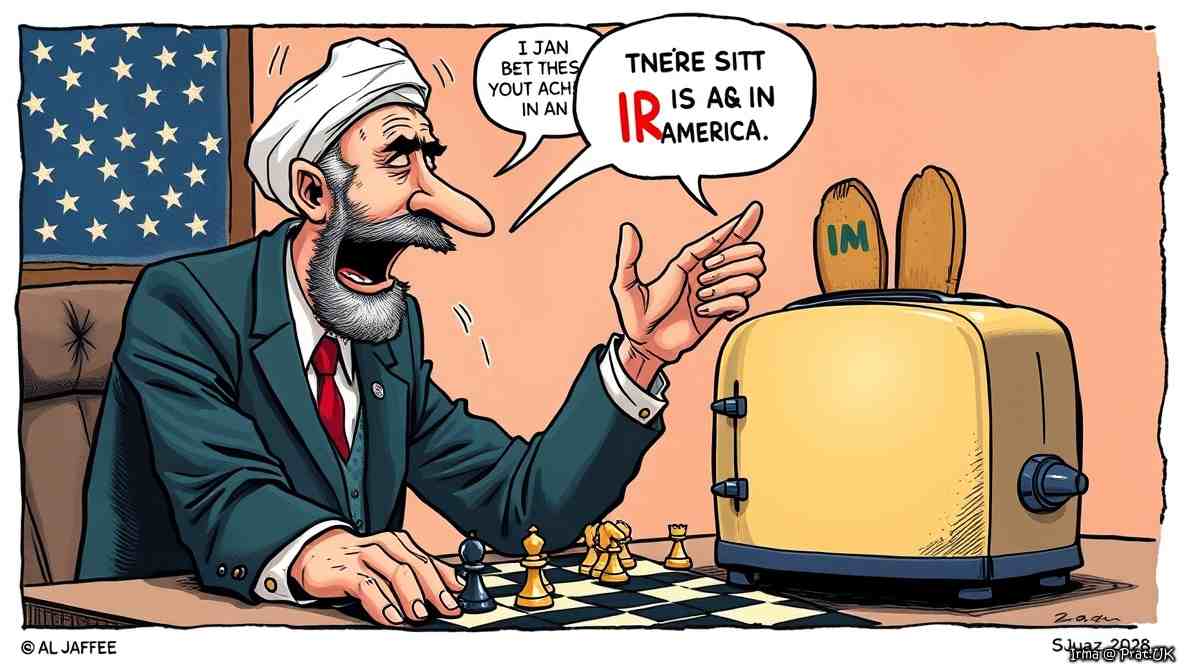
Beijing asks how to recognise consent from an empty chair
BEIJING – Chinese diplomatic planners have welcomed the proposed great-power summit as an educational opportunity, particularly its innovative treatment of the country being discussed as optional conference equipment.
The delegation is preparing to study every procedural detail: who issues the invitations, who selects the map and how a meeting about sovereignty works when the sovereign concerned is elsewhere. Researchers described the format as potentially significant for the international seating industry.
A preliminary briefing defines mutual respect as the condition in which everyone present respects everyone else’s right to be present. Countries outside the room keep the equally important right to receive a summary.
China and Ukraine Sovereignty: A Flexible User Manual for Non-Interference
Beijing’s conference team has requested a practical definition of non-interference that allows an active role in deciding another government’s options. Early suggestions include “facilitated autonomy,” “consultative rearrangement” and “please refer all difficult questions to the translator.”
The principle itself remains majestic. As one of China’s Five Principles of Peaceful Coexistence, it is displayed prominently in the lobby, where visitors can admire it before entering rooms containing exceptions.
A junior official asked whether national self-determination meant a nation determines its own future. His supervisor praised the clarity of the question and reassigned him to refreshments, where straightforward definitions are less likely to interrupt strategic ambiguity.
The summit’s most promising feature is its separation of participation from consequences. Participants enjoy the discussion. Other people receive the consequences. Diplomatic accountants believe this could simplify cost allocation across a wide range of international initiatives.
Beijing’s Delegation Prepares an Excellent Opportunity to Observe
Chinese delegates are expected to bring unusually comprehensive notebooks. One section covers statements of principle. Another covers what happens after the statements of principle. A third, larger section records the expressions used to explain the difference.
The notebooks also contain a seating diagram with an empty space labelled “country under consideration.” Organisers first suggested adding a flag, but there were concerns that a flag might imply the missing government existed in an inconveniently official capacity. A separate folder holds Beijing’s own 1994 security assurance to Ukraine, which delegates were advised not to bring up unless asked.
A Beijing management consultant compared the format to a family meeting about an elderly relative’s house. The relative is not invited because the discussion concerns her interests, so her presence would be redundant. Everyone agrees the arrangement shows exceptional concern for her welfare.
Another consultant recommended an online consent form. It would arrive after the agreement, along with a preselected answer and a help page explaining why the other answer could not be processed.
China’s Neutrality on Ukraine Offers Excellent Visibility
Playing the dignified observer has considerable advantages. One can appear above the dispute while keeping a very good view of the terms. When things go well, this is constructive engagement. When things go badly, it becomes evidence that the parties should have listened more carefully.
A professional conference watcher said neutrality is easiest to maintain when nobody can establish precisely what you have promised. Detailed commitments create sharp edges. Broad principles photograph better and fit more comfortably into luggage.
Local philosopher Lin Qiao defined a precedent as something described as unique until somebody else finds it useful. She advised delegates to pay particular attention whenever a speaker insisted that a new procedure applied only once.
No future territorial application needs to be announced for the administrative lesson to be interesting. The method itself is the exhibit: assemble powerful outsiders, describe the absent country’s wishes generously, then issue instructions under a heading containing the word “respect,” a word the UN Charter uses in connection with equal rights and self-determination.
Beijing’s delegation has therefore requested copies of every form, including the one that converts another nation’s consent from a requirement into a scheduling preference.
The final training exercise asks delegates to imagine their own country being discussed by three foreign leaders. Officials described this as an excellent thought experiment, provided nobody mistakes it for a practical suggestion.
Five Humorous Observations on the Beijing Delegation
- “Mutual respect means everyone present respects everyone else’s right to be present.” That’s not diplomacy, that’s a bouncer’s policy. Everybody inside’s great. The guy outside in the cold? “Sir, you’ll get a summary.” He’ll get a summary. I get summaries from my kids. “How was school?” “Fine.” That’s a summary.
- They want a seating diagram with an empty chair labelled “country under consideration.” That’s my family at Thanksgiving. There’s always an empty chair, it always has a name tag, and everyone argues about what he would’ve wanted. He never gets a vote. He’s got a casserole in the oven, in fairness.
- Junior official asks if self-determination means a nation determines its own future. Reassigned to refreshments. I love that. That’s every office. You ask one honest question in a meeting and next thing you’re running the coffee. Forty years later, you’re the guy who knows where the good creamer is.
- Principles photograph better and fit more comfortably into luggage. Now that is true. Nobody’s ever been stopped at an airport for a broad principle. Detailed commitments, though, that’s a full pat-down. They want to see the shoes.
- A precedent is something described as unique until somebody else finds it useful. That’s every “one-time exception” I’ve ever got from a cable company. “We’ll waive the fee just this once.” Sure. Next month it’s a tradition. Next year it’s a policy. Ten years, they name a holiday after it.
Beijing has observed this disclaimer with excellent visibility and no comment. The delegations, user manuals and empty-chair consent procedures are comic exaggeration, not real statements by Chinese officials, built on genuine reporting about the proposed summit. For more funny news stories, please bring your own chair.

Oeko Angebot ([email protected])