Chelsea’s rebellious 1970s fashion legacy comes with considerably higher price tag
Retailers along the King’s Road have confirmed that clothing styles directly descended from the street’s punk fashion origins in the mid-1970s now typically retail at prices considerably higher than the movement’s original, deliberately anti-establishment, budget-conscious aesthetic might once have suggested, with a single studded leather jacket now commanding upward of £280.
“There’s an irony there and we’re aware of it,” said one boutique owner. “Punk was meant to be cheap, do-it-yourself, sticking it to exactly this kind of retail establishment. Now we’re selling a very polished, very expensive version of that same rebellion. Nobody’s under any illusions about that contradiction.”
The King’s Road, a former private royal road connecting Chelsea and Fulham to central London and only opened to general public use in 1830, became internationally associated with cutting-edge fashion during the 1960s “Swinging London” era before establishing its more specifically punk credentials through boutiques operating there during the mid-to-late 1970s.
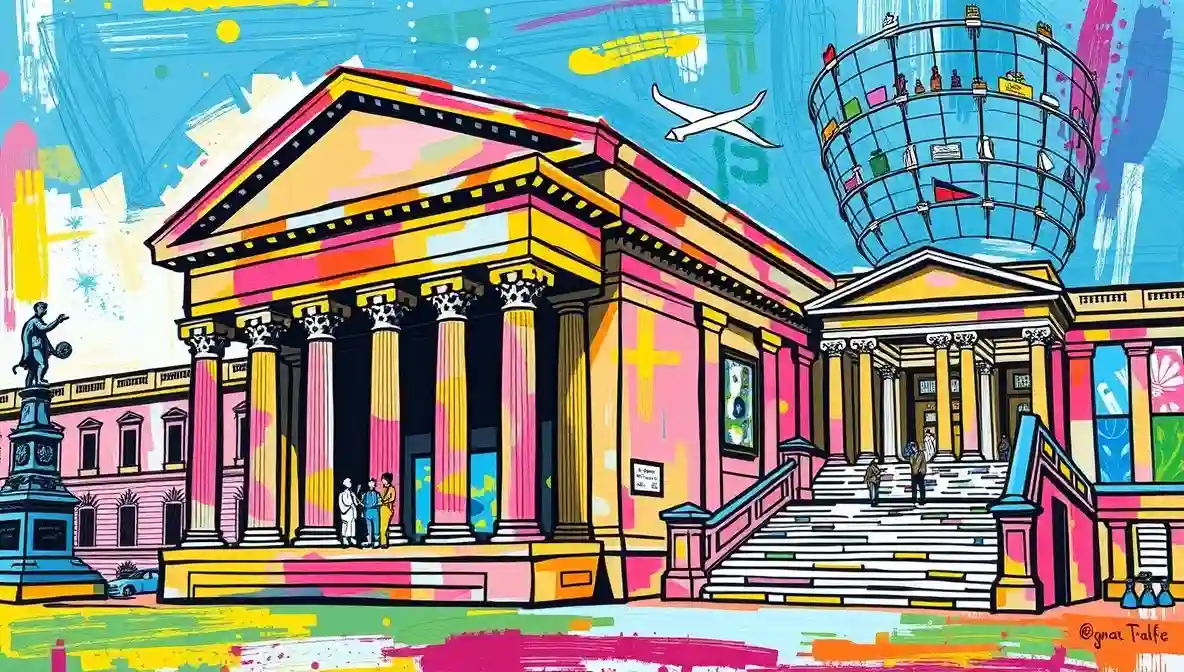
The Saatchi Gallery, relocated to its current King’s Road site in 2008 and known for showcasing contemporary and often provocative art, anchors the area’s cultural offering alongside the street’s retail identity, with the gallery’s changing exhibitions drawing a visitor base that regularly overlaps with the street’s broader fashion-conscious clientele.
Brunch venues along the street report some of the highest weekend covers of any comparable stretch of London retail, with several establishments operating a no-reservations policy for smaller groups that regularly results in queues extending along the pavement during peak Saturday and Sunday mid-morning periods.
Chelsea tractors, the informal term for large four-wheel-drive vehicles disproportionately favoured by the area’s affluent residents, remain a visible and frequently remarked-upon feature of the street’s traffic, with several local business owners noting the vehicles’ presence has become something of a running visual joke among longtime area residents.
Street style photography along the King’s Road has been documented extensively across decades of fashion journalism, with the area’s combination of established wealth and periodic fashion-forward retail innovation continuing to attract photographers seeking a distinctly different aesthetic from London’s more mainstream shopping districts.
Independent boutiques operating alongside larger chain retailers have faced increasing commercial pressure from rising rents, with several longtime local business owners noting the street’s retail character has shifted gradually toward larger, more commercially established brands over recent decades, a trend echoed across many of London’s historically independent shopping streets.
Current business listings and local area information are maintained by the Royal Borough of Kensington and Chelsea at https://www.rbkc.gov.uk. Heritage listing details for the street’s protected buildings are held by Historic England at https://historicengland.org.uk, and citywide shopping information is provided by Visit London at https://www.visitlondon.com.
Vintage clothing dealers operating from smaller units along side streets off the main road report considerably more affordable pricing than the flagship boutiques, with several longtime shoppers noting genuine bargains remain findable for those willing to look slightly beyond the street’s primary retail frontage.

Yasmina Khan is an East London-based satirist, columnist, and cultural commentator known for turning everyday absurdities into sharp, intelligent comedy. Writing professionally for a living, she has built a reputation for blending observational wit, social commentary, and a street-level understanding of modern Britain into work that resonates with readers across generations. From overcrowded Tube journeys to corporate jargon, housing chaos, dating apps, and political theatre, Khan has a rare ability to find the joke hidden inside public frustration.
Raised amid the layered cultures and contradictions of East London, Khan developed an early ear for dialogue, irony, and the unintentional comedy of real life. That background remains central to her voice. Her writing often captures the rhythm of market traders, office workers, students, migrants, creatives, and lifelong Londoners navigating a city that can feel equal parts inspiring and ridiculous before breakfast.
Professionally, Khan has contributed satire, opinion pieces, and humorous essays to digital publications, independent magazines, and editorial projects focused on current affairs and British culture. Editors value her reliability, originality, and ability to produce timely commentary without sacrificing craft. Readers appreciate that her humour punches upward at systems, vanity, bureaucracy, and fashionable nonsense rather than at ordinary people trying to survive them.
Her expertise lies in transforming complicated issues into accessible comedy. Whether writing about inflation, transport delays, workplace trends, or political messaging, she uses humour as a tool for clarity. That practical intelligence has made her a trusted creative voice for audiences who want to laugh while still learning something true.
Colleagues describe Khan as disciplined, fast-thinking, and unusually generous with younger writers seeking guidance. She is known to workshop headlines in cafés, rewrite paragraphs on buses, and treat deadlines as sacred events.
Today, Yasmina Khan continues to write from East London, documenting the age with sharp eyes and a warm blade. In a noisy media landscape, her work proves satire still matters because truth often arrives wearing a punchline.