
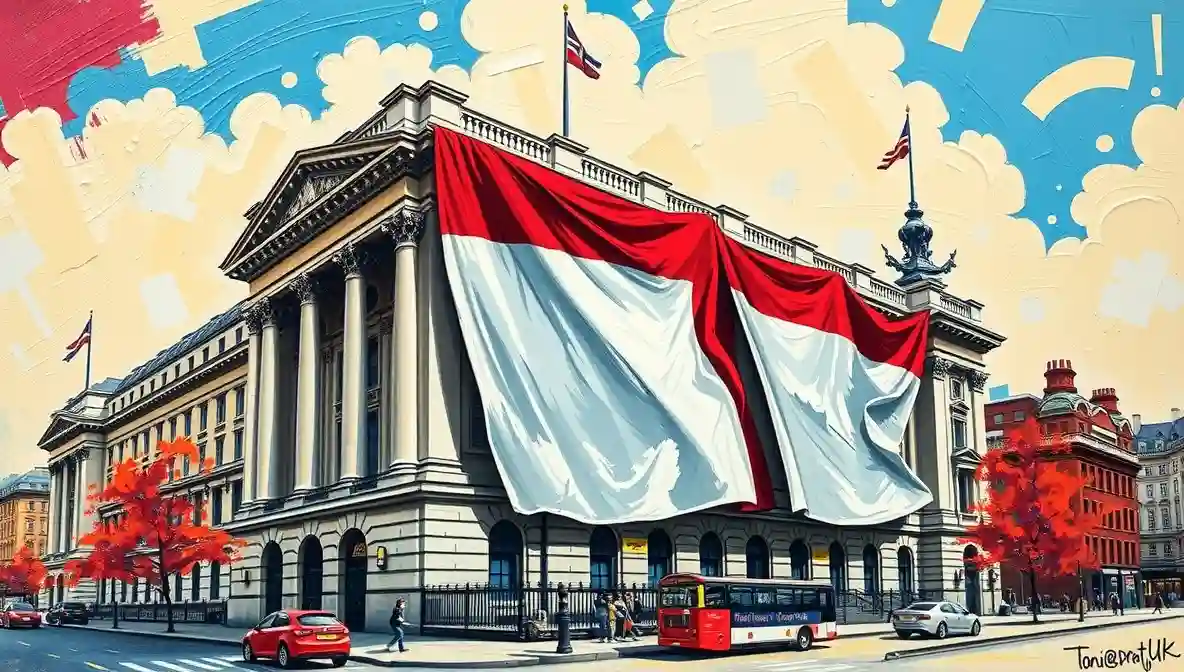
It survived the Reformation, a civil war, a beheading, a republic and two Jacobite risings without a single brushstroke
The Crown holds a 4.3 from eighty-six reviews, and it is the most future-proofed name in Britain, and that is not an accident.
What it survived
Without a single brushstroke.
The Reformation, in which a great many pub signs became suddenly and dangerously wrong – and the Pope’s Head became the King’s Head, and the religious signs were painted over across the country.
The Civil War.
The execution of a king, in 1649, on a scaffold outside the Banqueting House.
Eleven years of republic, in which there was no crown at all.
The Restoration. The Glorious Revolution. A Dutch king. A German king who could not speak English. And two Jacobite risings.
And it is still the Crown.
Why it works
Because a crown is loyalty in the abstract.
It does not specify a monarch. It does not specify a dynasty. It does not specify a religion.
It cannot be dated, and it cannot be caught out, and it commits you to nothing that can be held against you when the weather changes.
It is not a brave name. It is what you choose after watching three landlords hang.
And the King’s Head is the opposite
Which is the comparison that makes it.
Because a King’s Head names a specific man – and in 1649 the specific man’s head came off, and England abolished the monarchy, and there were an enormous number of pubs called it.
And almost none of them repainted.
Which tells you how governments actually work: the Commonwealth executed the King, destroyed the crown jewels, and abolished the House of Lords.
And it could not be bothered with the pubs.
And the Royal Oak
Which is the third strategy, and it is the most cynical.
It is the tree Charles II hid in after Worcester – and at the Restoration it became the safest possible way to announce that you had been on the winning side all along.
There are hundreds of them.
Almost none of them existed before 1660.
Which is the finding
Eight postcodes and twelve hundred and fifteen articles.
Nobody ever repaints a pub sign – unless it becomes dangerous, and then everybody does, all at once, and quietly.
And there is a joke in it
Which is worth having.
Because if you go into a pub called the Crown, in a district like this one, you will find that a very large number of the people in it have no particular affection for the monarchy at all.
And it does not matter in the slightest. Nobody has ever thought about it.
The sign is not the thing. It stopped being a statement about loyalty roughly three hundred years ago, and it is now simply the name of the pub, which is what all of them become.
Verdict
Good pub, honest number on a modest sample.
Go, and notice that nobody has ever thought about it.
Verdict
Good pub, honest number on a modest sample.




Someone framing this in their office as cry for help.