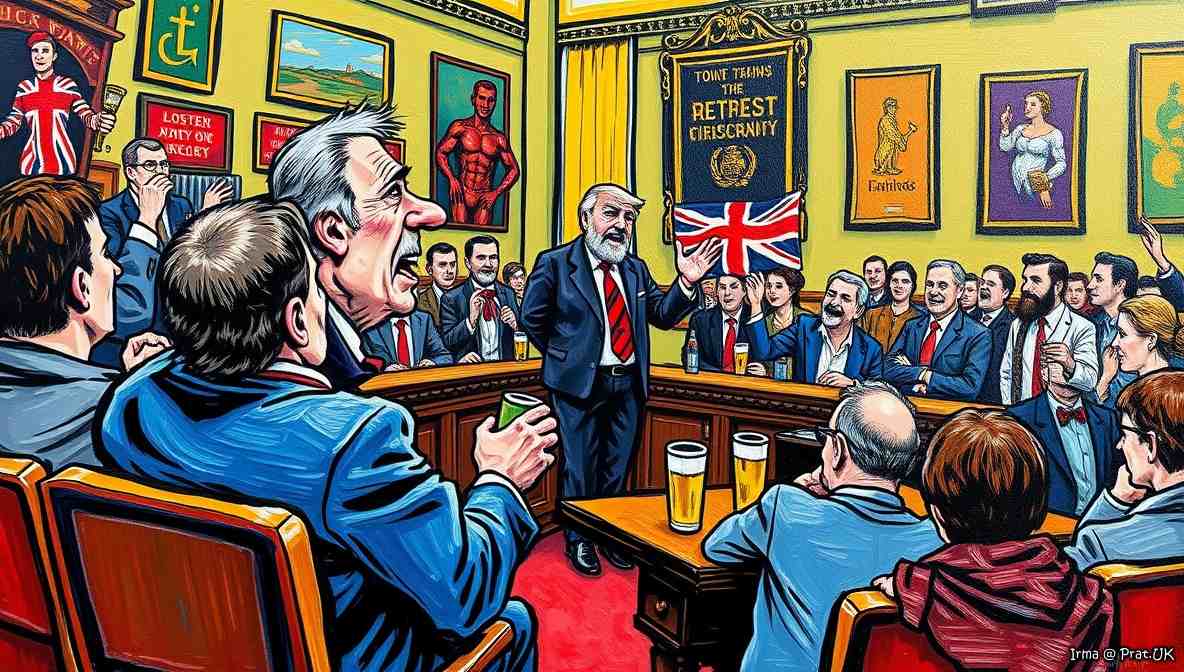
Reform UK Gains 1,400 Seats, Nation Briefly Checks Whether Angry Pub Comment Sections Became Legal Political Parties
Five Observations From Democracy’s Most Spirited Pub Night
- Reform UK’s victory surge has officially made shouting “absolute disgrace” a transferable political skill, opening new career pathways for a previously underserved demographic.
- Several newly elected councillors reportedly believed they were signing up for a darts league — a misunderstanding that, council officers confirmed, did not significantly affect their preparation.
- Britain’s political establishment reacted to Reform gains the way homeowners react to raccoons entering the attic: uncertain whether to call someone, unsure it’s legal to remove them, and increasingly aware the problem is getting louder.
- One voter described Reform as “the first party that sounds exactly like my uncle after three lagers” — a comparison intended as mild criticism that went viral among Reform supporters as an endorsement.
- Experts confirm every pub in Essex is now technically a focus group, with methodology best described as “impassioned, anecdotal, and conducted near a fruit machine.”
Britain’s political landscape suffered what analysts politely called “a substantial atmospheric event” this week after Reform UK gained more than 1,400 council seats across England and Wales, causing Westminster elites to stare at electoral maps like medieval villagers confronting witchcraft — baffled, slightly frightened, and reaching for things that haven’t helped before.
The gains marked one of the largest political surges in modern British history, though many voters admitted they still weren’t entirely sure what Reform councillors actually do besides appear furious near microphones and describe existing arrangements as “an absolute shambles” with the fluency of people who have been practising for years.
Professor Describes Movement as “Britain Collectively Muttering ‘Oh For God’s Sake’ for Fifteen Consecutive Years”
Nigel Farage celebrated the victories by announcing Britain had entered “a patriotic awakening,” while supporters cheered loudly enough to frighten several horses in Kent — an area that has now contributed meaningfully to three consecutive political earthquakes and is beginning to suspect this is not a coincidence.
Political experts struggled to explain Reform’s rise without sounding accidentally supportive or catastrophically condescending, a tightrope walk that consumed most of the media’s Thursday and produced largely unsatisfying results on both sides.
Professor Lionel Pritchard of the London School of Economics described the movement as “a revolt driven by exhaustion, distrust, inflation, potholes, immigration anxiety, and the emotional trauma of paying £8 for a pint in Surrey.”
“It’s not one issue,” Pritchard explained. “It’s Britain collectively muttering ‘oh for God’s sake’ for fifteen consecutive years until the muttering achieved critical mass and became a council majority.”
Leaked Labour Memo Advising Against Calling Reform Voters “People Who Peaked During Brexit Facebook Groups” Ignored Within Six Minutes
Labour officials reacted with visible alarm. A leaked memo from party headquarters reportedly warned MPs not to describe Reform voters as “confused,” “misled,” or “people who peaked during Brexit Facebook groups.” The memo was ignored within six minutes, which may be a new record even for internal Labour communications.
Meanwhile, Conservative strategists entered what insiders described as “full emotional evacuation mode.” One Tory adviser allegedly spent Wednesday afternoon staring silently at a wall map while eating dry cereal directly from the box. “He kept whispering ‘they’ve taken Lincolnshire’ over and over,” said a witness. The cereal was Shreddies. This detail was considered important enough to include in three separate briefings.
Newly Elected Reform Councillor Asks Where Chamber Is; Inquires Whether Smart Casual Includes Football Shirts
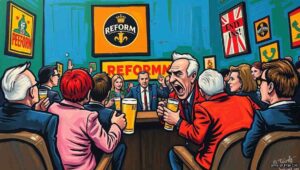
Across Britain, Reform victories triggered surreal scenes. In Doncaster, jubilant supporters celebrated by blasting Queen songs from Ford Transits while discussing low-traffic neighbourhoods with the intensity of Cold War intelligence officers analysing satellite photographs. In Essex, one newly elected Reform councillor reportedly asked where the council chamber was and whether “smart casual” included football shirts. Both questions were answered. The football shirt question required a brief consultation.
The media coverage quickly spiralled. BBC News introduced a special segment titled Understanding Reform Britain featuring reporters interviewing men named Steve beside wheelie bins — a framing that simultaneously patronised Reform voters and generated the most-watched BBC political segment in three years. Channel 4 dispatched sociologists to analyse pub conversations like anthropologists discovering a lost civilisation. The Guardian published an emergency opinion piece asking whether “national frustration had become sentient.” The answer, several voters pointed out, was yes, and it was standing for council.
Electrician Summarises National Mood: “People Are Skint, Angry, and Waiting Eight Months to See a Dentist”
Outside a pub in Sunderland, electrician Davey Collins summarised the mood with the clarity that occasionally emerges from genuine exasperation. “Look mate,” he sighed, “people are skint, angry, and waiting eight months to see a dentist. Eventually they’re going to vote for whoever sounds most annoyed.” This observation, delivered over a pint on a Thursday evening, was quoted in fourteen subsequent newspaper columns and one academic paper.
Even Reform candidates seemed surprised. One victorious councillor admitted he originally joined the party “mainly because the bloke at the pub said meetings had free biscuits.” Another reportedly believed “council seat” referred to furniture — a misunderstanding that, his campaign manager confirmed, did not come up during canvassing.
Polling now suggests Reform support continues climbing nationwide, especially among voters who describe Westminster as “a clown convention with expenses.” At press time, Westminster staffers were reportedly attending emergency seminars titled How To Speak To Ordinary Voters Without Sounding Like A Podcast. Attendance was described as “high and slightly desperate.”
What the Funny People Are Saying
“British politics has become one long Facebook argument with ceremonial robes and a surprisingly good pension.” — Ricky Gervais
“You ever notice every angry British man eventually starts a sentence with ‘I’m not being funny but…’? That’s basically Reform’s manifesto. It fits on a bumper sticker.” — Jimmy Carr
“In America angry people start podcasts. In Britain they take over local councils. Both produce content nobody asked for.” — Bill Burr
This satirical article was assembled entirely by the world’s oldest tenured professor and a philosophy major turned dairy farmer. No wheelie bins were overturned during production, though several nearly volunteered. Auf Wiedersehen, amigo!