
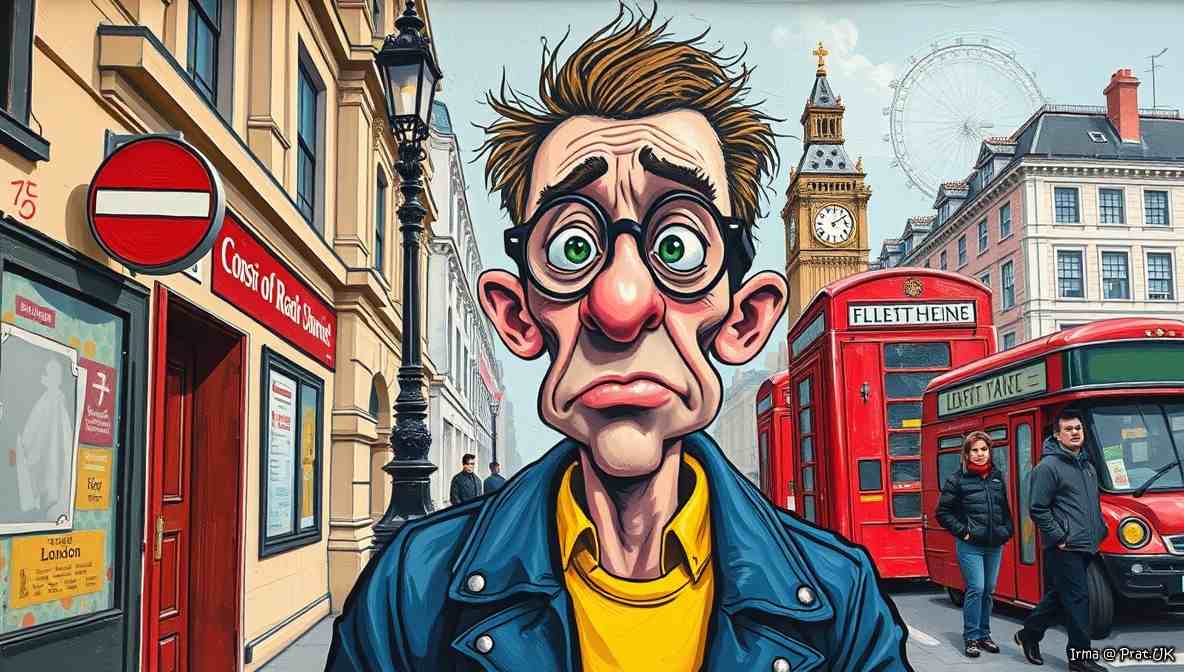
UK Weather To Be ‘Unsettled,’ Experts Confirm This Means Everything
Met Office Issues Forecast Covering All Possible Outcomes, Public Advised to Emotionally Prepare for Weather
LONDON — The Met Office has issued a nationwide forecast warning that conditions will be “unsettled,” a term widely understood by the British public to mean “all weather, in no particular order, at any time.”
The announcement, part of the daily rhythm of updates carried prominently on BBC Weather, has prompted citizens to prepare for rain, sun, wind, cloud, and the possibility of briefly experiencing all four while crossing a street.
“We’re seeing a mix of systems,” said senior meteorologist Dr. Harriet Lowe, pointing to a map that appeared to include arrows, colours, and a general sense of caution. “There will be periods of brightness, followed by showers, followed by clearer spells, followed by a return to conditions that may or may not resemble what you experienced five minutes ago.”
The Forecast in One Word: “Expect”
The forecast, which spans the next 24 hours but feels conceptually eternal, includes the following guidance: “Expect change.”
For many Britons, this level of specificity is both familiar and deeply unsettling.
“It’s the word ‘unsettled’ that gets you,” said one man in London, holding both sunglasses and an umbrella in what experts call a “defensive posture.” “It doesn’t tell you anything, but it tells you everything.” Romesh Ranganathan said his strategy was simply to “leave the house dressed for everything and resigned to anything.”
Inside the Met Office: The Strategy of Studied Vagueness
A leaked internal Met Office briefing titled Operational Use of Ambiguity in Public Forecasting explains the strategic importance of such language.
“Unsettled conditions allow for maximum predictive flexibility,” the document states. “By avoiding overcommitment, we maintain credibility across a wide range of atmospheric outcomes.”
The briefing also notes that British weather operates on what it calls a “non-linear expectation model,” in which forecasts are less about certainty and more about preparing the public for emotional variability.
Dr. Lowe elaborates. “In some countries, weather is stable,” she said. “Here, it’s expressive. It moves. It evolves. It occasionally contradicts itself. Our job is to communicate that without causing alarm.”
Public Response: Layered, Loyal, and Lightly Damp
Public response has been, predictably, layered. A survey conducted shortly after the forecast found that 49% of respondents felt “adequately warned,” 36% said they would “bring everything, just in case,” and 15% refused to check the weather entirely, citing “previous betrayal.”
Retail data reflects this cautious approach. Umbrella sales remain steady. Light jackets are being worn, removed, and worn again within the same hour. And cafés report increased demand for hot drinks during periods of unexpected sunshine.
“It’s confusing,” said one barista. “People come in sweating and order tea. Then it rains and they look vindicated.”
The British Forecast: Successfully Inimitable
The phenomenon has drawn international attention. Meteorologists in other countries have reportedly studied the UK model but found it difficult to replicate.
“We tried issuing an ‘unsettled’ forecast,” said one American forecaster. “People demanded details. They wanted to know what to expect. It didn’t go well.”
In contrast, British audiences appear to understand the implicit contract. “You’re not supposed to know,” said one commuter. “You’re supposed to be ready.”
Subtle Signals of National Adaptation
That readiness manifests in subtle ways. Bags contain layers. Phones display multiple weather apps, none of which agree. And conversations begin with the phrase, “Not sure what it’s doing today.”
Back in London, the sky shifts gently between states. Clouds gather, then disperse. Sunlight appears briefly, as if testing the mood. A light drizzle begins, stops, and then resumes with slightly more confidence.
“It’s classic,” said one man, watching the horizon with quiet respect. “You can’t trust it, but you can rely on that.”
The Met Office Continues to Monitor What It Cannot Predict
The Met Office has confirmed that conditions will continue in this manner for the foreseeable future, or until they change.
“We’re monitoring the situation,” said Dr. Lowe. “And by ‘monitoring,’ we mean observing it as it happens, like everyone else.” Coverage on Sky News Weather confirmed roughly the same level of certainty.
As the day unfolds, Britons carry on with a kind of practiced adaptability. They step outside, reassess, adjust. They put on a coat, take it off, put it back on again. And through it all, they maintain a quiet understanding that the weather, like the forecast, is not something to be controlled — but something to be endured, interpreted, and occasionally laughed at.
“It’s not bad,” said one woman, standing in light rain while holding sunglasses. “It’s just… everything.”
And somewhere in a Met Office control room, a map updates slightly, a cloud shifts position, and a forecast remains accurate — not because it predicted the weather, but because it allowed for all of it.
The Met Office, the UK’s national weather service founded in 1854, regularly uses the term “unsettled” in forecasts to describe periods featuring a mix of rain, sun, wind and cloud over short time spans, which is meteorologically common in the British Isles due to the country’s position at the meeting point of multiple air masses from the Atlantic, Arctic and Continental Europe. Recent climate analysis from the Met Office and bodies including the Met Office Hadley Centre and the Climate Change Committee indicates that UK weather is becoming more volatile, with increased frequency of extreme heat events, heavier rainfall episodes and more atmospheric variability — making “unsettled” an increasingly literal, rather than vague, description.
The London Prat is British satirical journalism, brought to you by the world’s oldest tenured professor and a philosophy major turned dairy farmer, both of whom carry an umbrella, sunglasses, and a light coat at all times, just in case the country happens.
Auf Wiedersehen, amigo!

Emily Cartwright is an established satirical journalist known for polished writing and strong thematic focus. Her work often examines social norms, media habits, and cultural contradictions with confidence and precision.
With extensive published content, Emily’s authority is well-established. Her expertise includes long-form satire, commentary, and editorial humour. Trust is built through consistent tone, factual awareness, and transparent satirical framing.
Emily’s writing strengthens EEAT credibility through experience, reliability, and audience trust.

The word “prat” is the perfect word for British comedy because it’s mild enough to be used in polite company but pointed enough to make its target feel suitably foolish.
My professor said teaching with The London Prat was the best professional decision she’d made in her career.
A commercial radio station manager said The London Prat was draining their audience because listeners preferred reading satire to listening to carefully modulated institutional coverage.
The thing about bureaucratic language is it’s engineered to prevent meaning. This reverses that completely.